
Xinhua News Agency, Global Magazine | From Farm to Table: A “Technology Feast” Linked by the Agricultural Chain
Source:Global Magazine View count:72920
Editor’s Note
In today’s globalized world, the potential and value of a single seed far exceed our imagination. Perennial rice represents a green rice-farming approach centered on innovation and shared benefits. This cutting-edge agricultural achievement, independently developed by Chinese scientists, has not only moved from the laboratory to vast farmlands, but also from China to the African continent—building a bridge between China and the world and contributing Chinese wisdom and solutions to global food security.
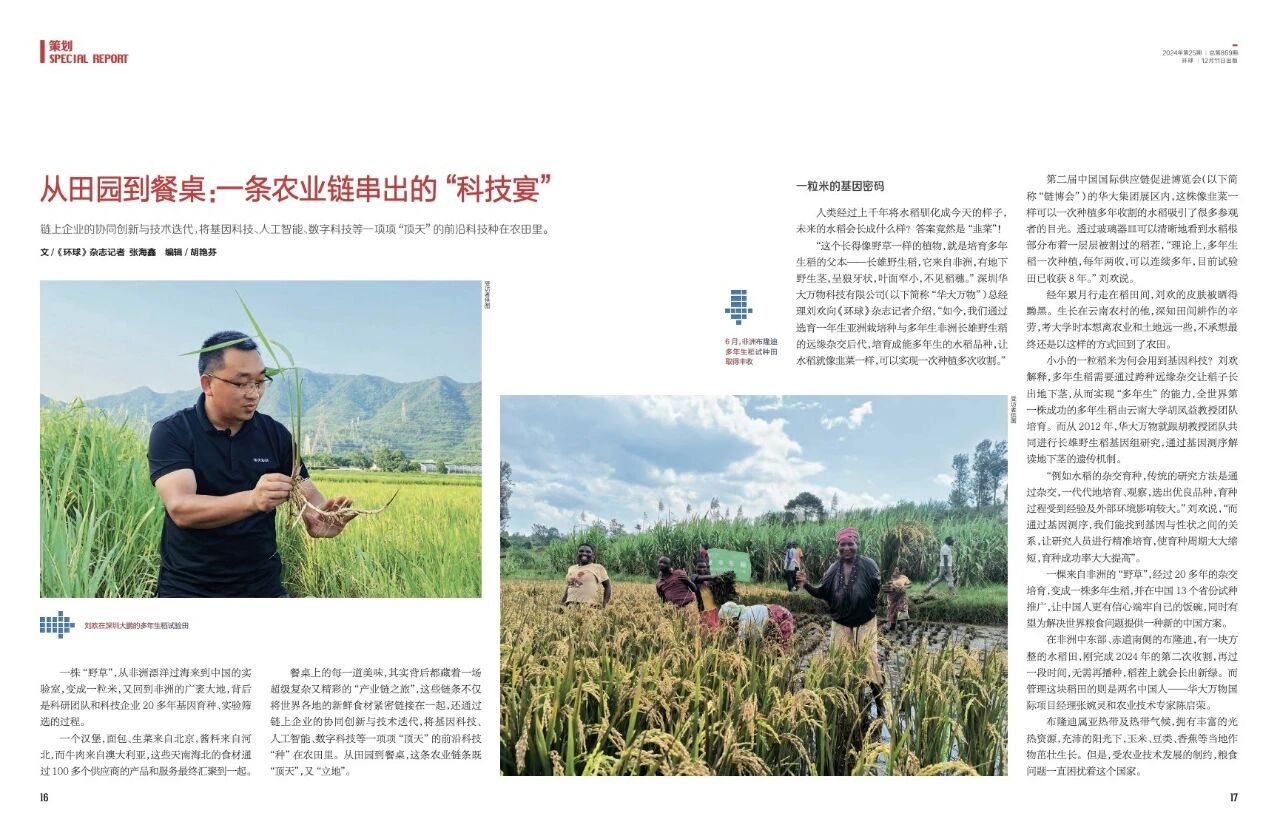
The text and images below are sourced from Xinhua News Agency’s Global magazine.
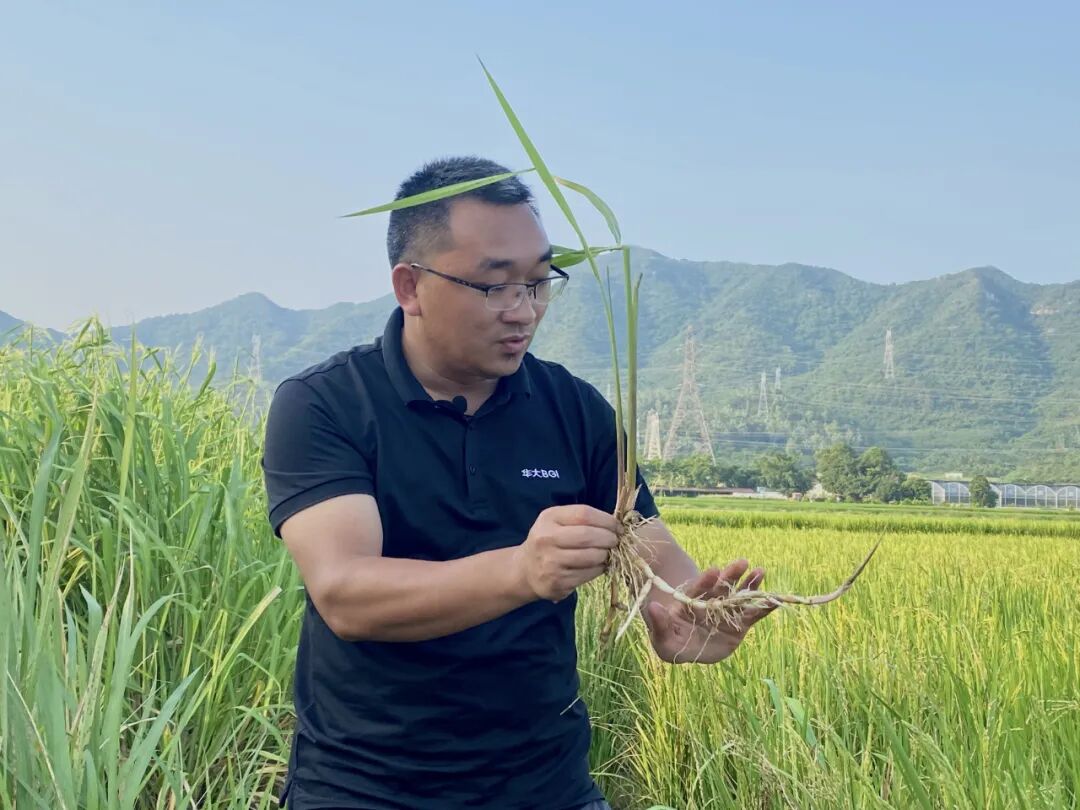
Liu Huan at the perennial rice experimental field in Dapeng, Shenzhen
By Zhang Haixin, Global Magazine
Edited by Hu Yanfen
A single “wild grass” traveled across the seas from Africa to a laboratory in China, transformed into a grain of rice, and then returned to the vast lands of Africa. Behind this journey lie more than 20 years of genetic breeding and experimental screening by research teams and technology enterprises.
A hamburger may contain bread and lettuce from Beijing, sauce from Hebei, and beef from Australia. Ingredients from across regions ultimately come together through the products and services of more than 100 suppliers.
Every delicacy on the dining table hides behind it an extraordinarily complex and fascinating “industrial chain journey.” These chains tightly connect fresh ingredients from around the world and, through collaborative innovation and technological iteration among enterprises along the chain, “plant” cutting-edge technologies—such as genomics, artificial intelligence, and digital technologies—into farmlands. From farm to table, this agricultural chain reaches both “upward” to advanced science and “downward” to the soil.
The Genetic Code of a Grain of Rice
After thousands of years of domestication, rice has become what we know today. What will rice look like in the future? The answer is surprisingly: chives.
“This plant that looks like wild grass is the male parent used to breed perennial rice—Oryza longistaminata,” said Liu Huan, General Manager of Shenzhen BGI Bioverse Technology Co., Ltd. (hereinafter referred to as “BGI Bioverse”), to Global magazine reporters. “It comes from Africa, has underground rhizomes, wolf-tooth-shaped structures, narrow leaves, and no visible panicles. By selecting and breeding distant hybrid offspring between annual Asian cultivated rice and perennial African Oryza longistaminata, we have developed rice varieties that can grow perennially—allowing rice, like chives, to be planted once and harvested multiple times.”
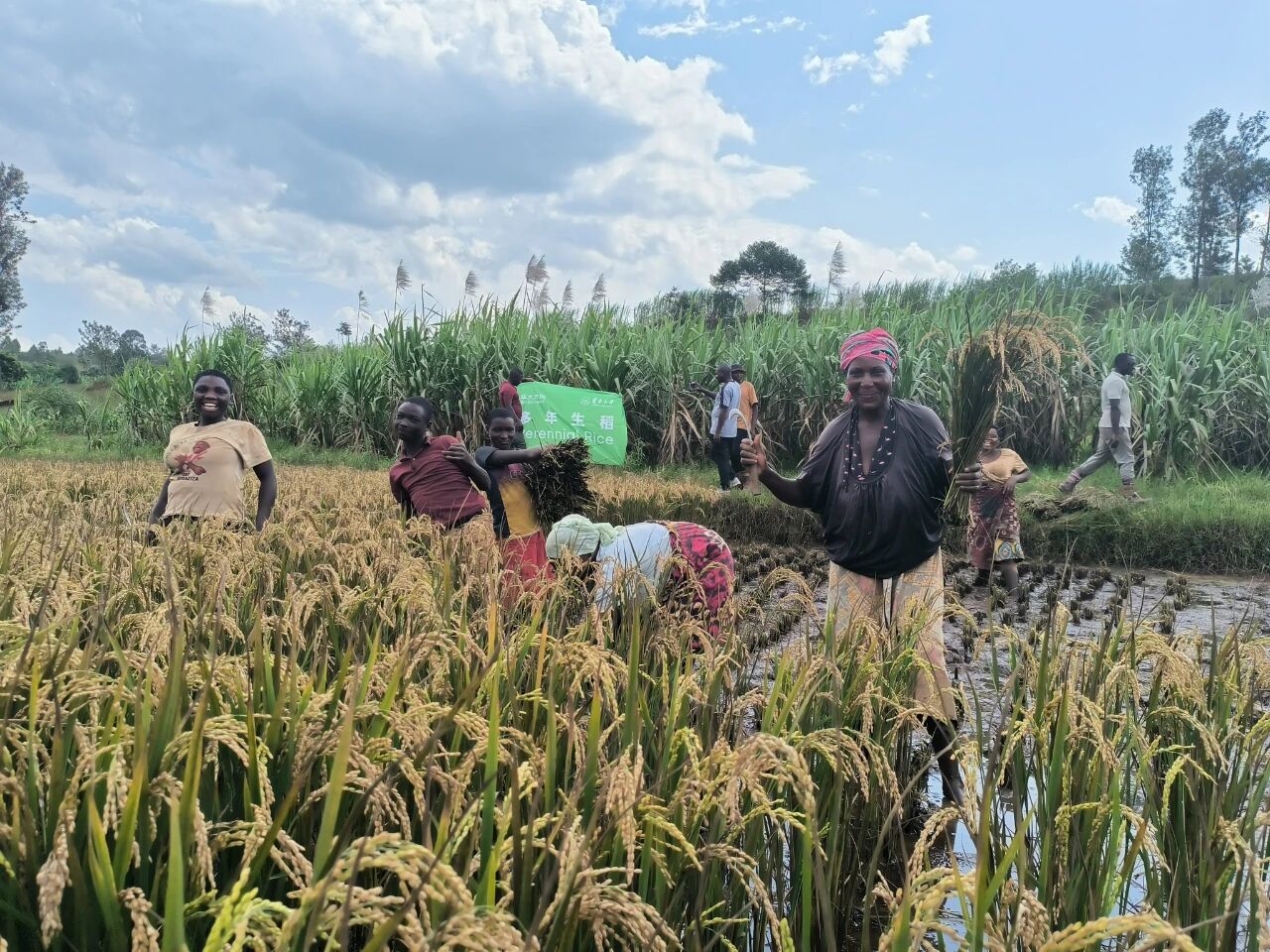
In June, perennial rice trial fields in Burundi, Africa, achieved a bumper harvest
At the BGI Group exhibition area of the Second China International Supply Chain Promotion Expo (CISCE), this chive-like rice—capable of being planted once and harvested over multiple years—attracted many visitors. Through glass containers, one can clearly see layers of cut rice stubble distributed around the roots. “In theory, perennial rice can be planted once, harvested twice a year, and continue producing for many years. Our experimental fields have already been harvested for eight years,” Liu said.
Walking through rice fields year after year, Liu’s skin has grown dark from the sun. Raised in rural Yunnan, he deeply understands the hardship of farm work. When applying for university, he once hoped to stay far away from agriculture and land, yet ultimately returned to the fields in this very way.
Why does such a small grain of rice require genomic technology? Liu explained that perennial rice must acquire underground stems through distant cross-species hybridization to gain its perennial capability. The world’s first successful perennial rice was developed by Professor Hu Fengyi’s team at Yunnan University. Since 2012, BGI Bioverse has collaborated with Professor Hu’s team on genome research of Oryza longistaminata, using gene sequencing to decode the genetic mechanisms behind underground stems.
“For example, traditional hybrid breeding relies on crossing generation after generation, observing and selecting superior traits—a process heavily influenced by experience and environmental factors,” Liu said. “With gene sequencing, we can identify the relationships between genes and traits, enabling precise breeding, greatly shortening breeding cycles and significantly improving success rates.”
A “wild grass” from Africa, after more than 20 years of hybrid breeding, has become perennial rice and has been tested and promoted in 13 provinces across China—strengthening China’s confidence in securing its own food supply while offering a new Chinese solution to global food challenges.
In Burundi, located in east-central Africa south of the equator, a neatly arranged rice field has just completed its second harvest of 2024. After a short time, without re-sowing, fresh green shoots will emerge from the stubble. Managing this field are two Chinese professionals—Zhang Wanling, International Project Manager at BGI Bioverse, and agricultural technical expert Chen Qirong.
Burundi has a subtropical and tropical climate with abundant light and heat resources. Under plentiful sunshine, local crops such as maize, beans, and bananas grow vigorously. However, limitations in agricultural technology have long troubled the country’s food supply.
Returning from Africa a month ago, Liu still vividly remembers the cooking bananas there. “They are higher in starch and lower in sugar. For many people living in poverty-stricken areas of Africa, a few bananas a day provide all their energy,” he said. Thus, enabling African friends to eat rice became a shared aspiration of Liu and his partners.
Prudente Natar Maheromeza, national project leader in Burundi, noted that perennial rice not only simplifies rice production processes but also significantly increases yields. Trial results show that the first-season yield is twice that of traditional rice in Burundi. With continued optimization and promotion of planting techniques, he hopes to further expand the planting area nationwide.
Beyond Burundi, perennial rice is also taking root in countries such as Uganda, Madagascar, and Malawi. The global journey of a single grain of rice has not only brought advanced Chinese technology to Africa, but also infused China–Africa friendship into the soil.