
Sanlihe | Shenzhen, China’s Only City Without “Rural Areas,” Starts to “Farm”
Source:BGI Bioverse View count:222222
Shenzhen is the only city in China without rural areas. Yet it has the largest number of leading agricultural enterprises among China’s first-tier cities.
A total of 235 agricultural giants are clustered here, including 14 national-level leading enterprises, the most in Guangdong Province. In 2025, the total revenue of these enterprises exceeded 200 billion yuan.
Why can Shenzhen, which does not do much farming itself, sit in the front row of the agricultural table?
The answer is not in Shenzhen, but in rice fields more than 2,000 kilometers away.
In August this year, a rice field in Sarawak, Malaysia’s largest state by area, had just seen its first harvest. But a few years ago, people on this land were still worried that rice could not be self-sufficient.
Southeast Asia is an important global rice production and export region, but Malaysia, constrained by limited land area, climate change and population growth, produces only about one quarter of its total national grain consumption locally. In Sarawak, food has long relied on imports, and the rice self-sufficiency rate is only about 21%.
To solve the food problem, after comparing options around the world, Malaysia chose Perennial Rice developed by the Hu Fengyi team at Yunnan University. The variety has strong environmental adaptability and stable yields; one planting can be harvested for multiple years, eliminating the annual plowing and repeated sowing that farmers most dread due to labor and cost pressures.
But an excellent variety in the laboratory must cross more than distance to land in overseas fields. Cross-border seed introduction approval, variety registration, and supply-demand matching cannot be completed by a university laboratory through a few business trips. For technology to land, a third party that understands both technology and overseas expansion is needed as a hub. Shenzhen companies filled this critical gap.
In the above case, Yunnan University led scientific research and trial planting, Sarawak provided the application scenario, and BGI Bioverse, under BGI Group, was responsible for breeding selection and iteration and commercial promotion. When Perennial Rice moved to another country, climate and soil conditions changed completely. Which specific variety can survive and produce stable yields locally would take years of empirical trial planting.

But BGI Bioverse, together with the Yunnan University team, refined the standards according to local climate and soil. They incorporated Sarawak’s soil and hydrological conditions into the planting process, revised the planting methods one by one according to real conditions to suit the local area, and then guided local farmers and technicians hand in hand.
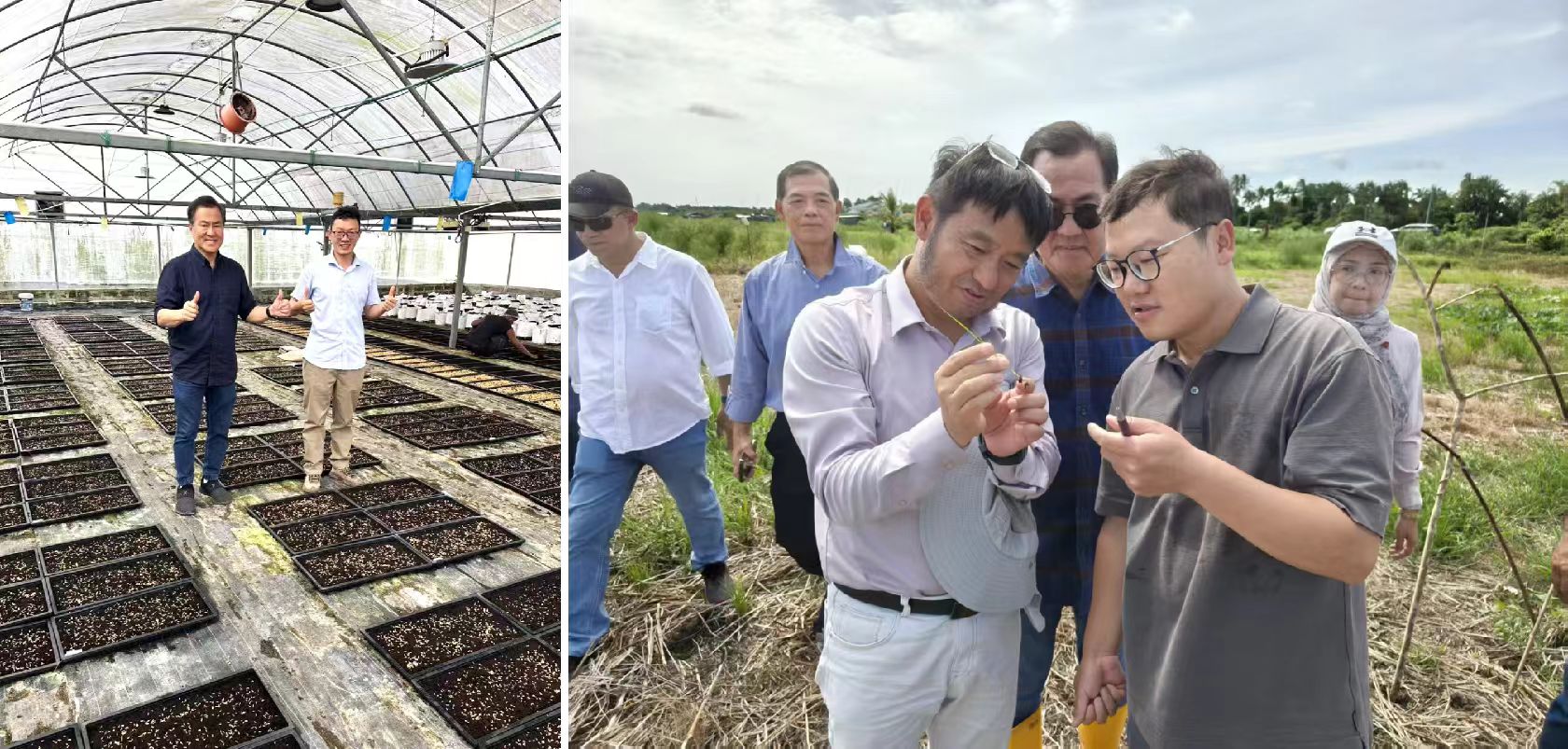
Under BGI Bioverse’s breeding iterations, in the first-season trial, 31 varieties (lines) were screened by local soil and water conditions, and five varieties remained. Among them, PR28 achieved a yield per mu more than twice that of local traditional varieties.
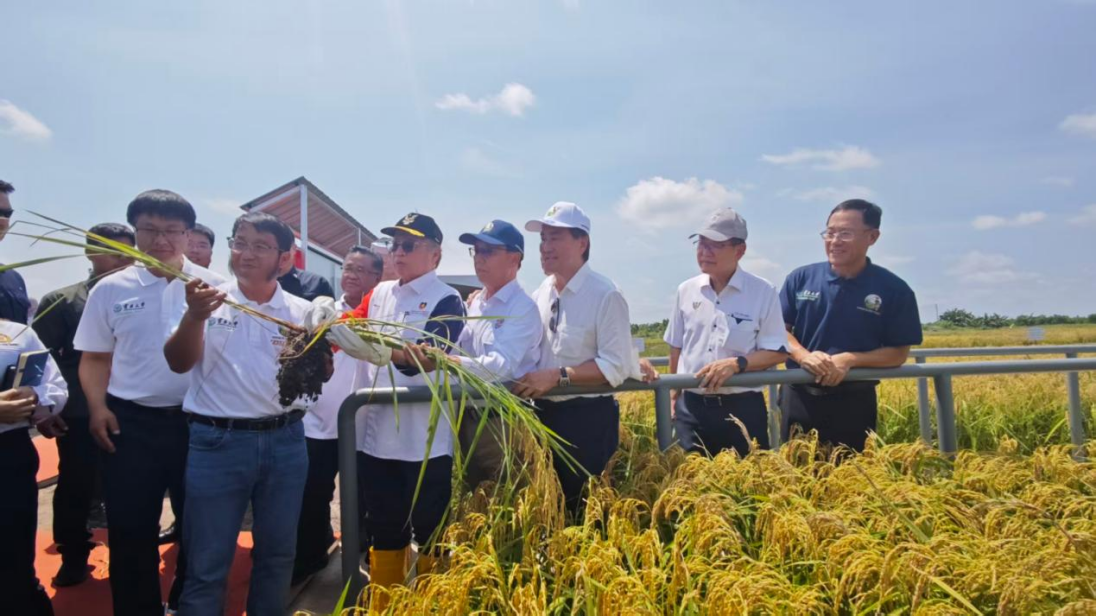
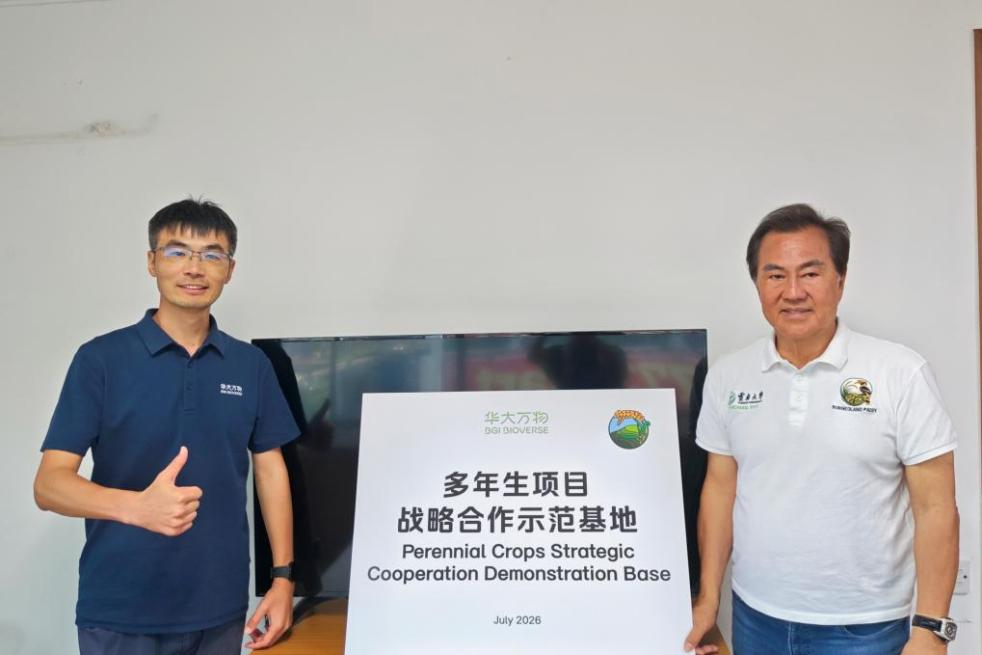
At the same time as the first harvest, BGI Bioverse and local enterprises established a strategic cooperation demonstration base. This means BGI Bioverse did not “leave after the trial” but provided opportunities for continuous iteration and further optimization of local Perennial Rice.
In Asia-Pacific cross-border cooperation, Shenzhen companies increasingly play the roles of “technology integrator” and “turnkey solution provider.” They localize breeding plans, digital farmland management, agricultural product supply chains and other services according to local climate, soil, water resources and industrial foundations, helping relevant economies improve food production and circulation efficiency.
Qu Jian, vice president of China Development Institute (Shenzhen) and dean of its Qianhai Branch, said in an interview with Sanlihe that Shenzhen’s international comparative advantage in the agricultural industry lies in integrating agricultural genetic breeding, AI agricultural machinery, digital agriculture, port logistics, cold-chain transport and cross-border finance. In other words, Shenzhen does not merely sell seeds or equipment; it is better at providing a complete set of smart agriculture solutions.
In other words, Shenzhen acts as an “orchestrator” of the agricultural industrial chain, rather than farming itself.
In traditional perception, to judge a place’s agricultural strength, one first looks at whether it has large tracts of farmland. Shenzhen’s exploration provides a new sample. Qu Jian said that modern agriculture is no longer just “farming”; capital, technology, markets, brands and industrial chain integration capabilities are becoming important factors determining modern agricultural competitiveness.
Shenzhen’s current path is “headquarters in Shenzhen, bases across China, markets worldwide.” In this way, although Shenzhen has little land, it can organize the agricultural industrial chain through capital, technology and supply chain advantages, attracting many leading agricultural enterprises to gather.
Genetic breeding, soil remediation, drones, intelligent agricultural machinery, smart farmland management... Shenzhen can provide corresponding solutions for every link in the modern agricultural industrial chain.
In November this year, the APEC Economic Leaders’ Meeting will be held in Shenzhen. Food security has long been a major shared concern of the Asia-Pacific region and is also an important topic at this year’s APEC ministerial meetings.
As early as August, the 11th APEC Ministerial Meeting on Food Security adopted the Principles Document on Enhancing the Resilience of Asia-Pacific Food Systems through Innovation and Digitalization, calling on economies to apply innovations and digital technologies such as artificial intelligence to improve decision-making capabilities across the entire food system chain.
Shenzhen indeed does not farm much land, but it can “grow” technology, “grow” solutions and “grow” services. Shenzhen, the city without rural areas, is turning itself into an “interface” for agri-tech going global.
This article is sourced from Sanlihe.