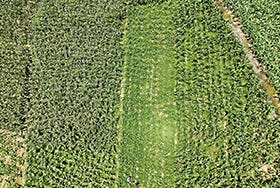

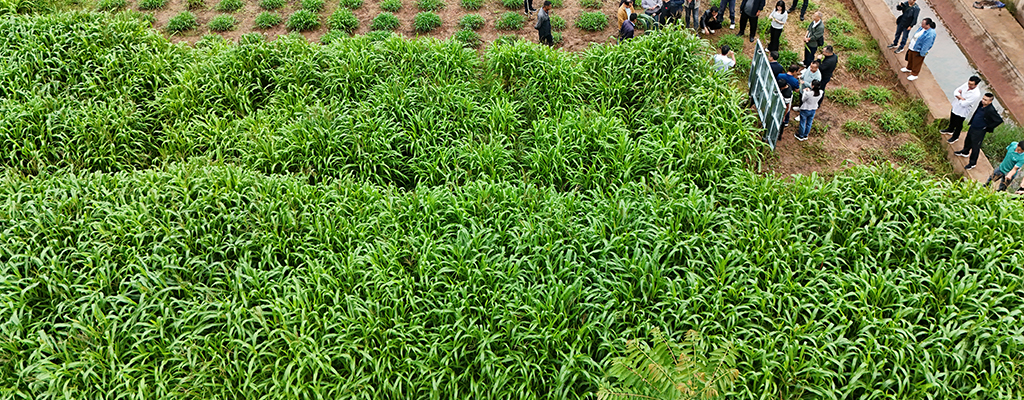
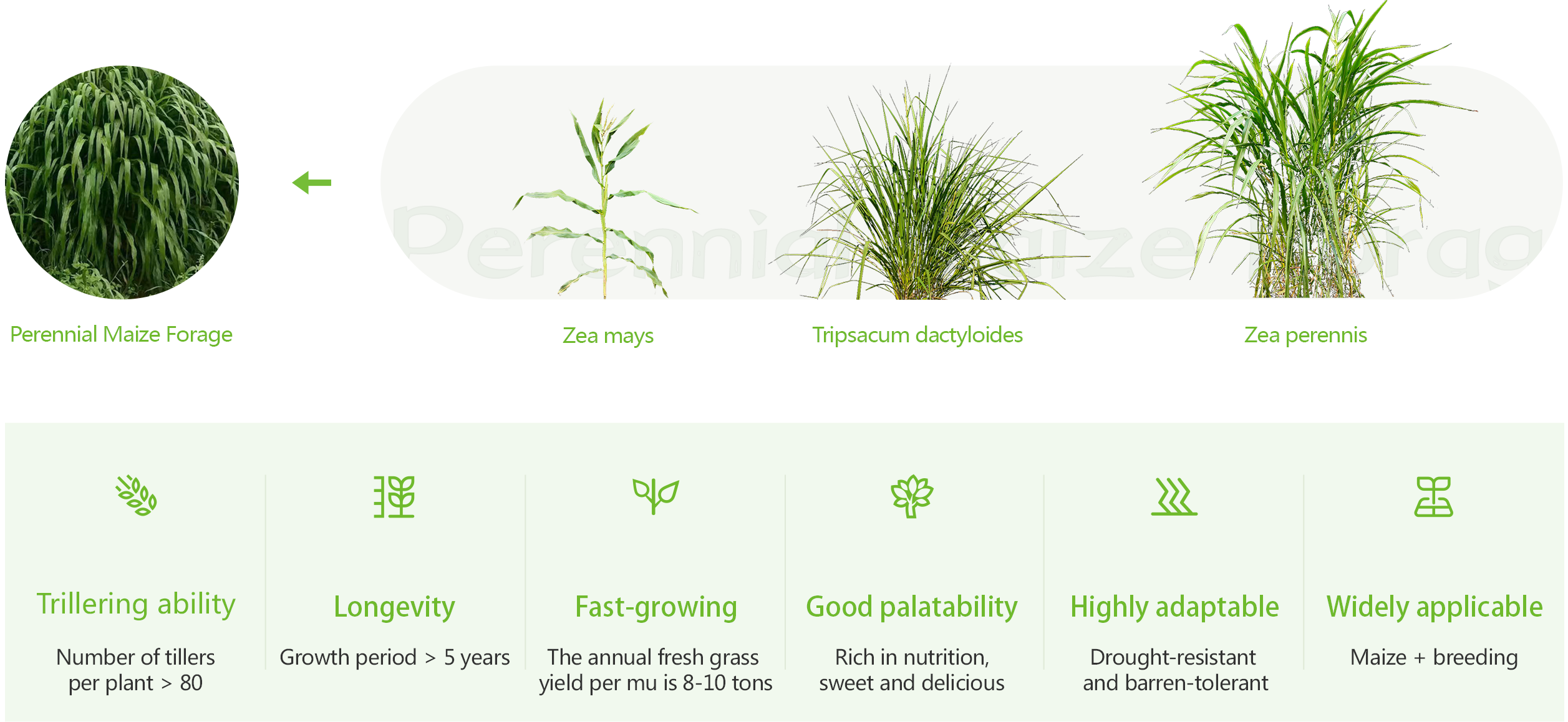
Perennial Maize Forage is a high-quality forage developed through multi-species hybridization, polyploidization, and chromosome recombination using Zea mays, Tetraploid Tripsacum dactyloides, and Zea perennis as materials.
It has a well-developed root system, grows rapidly, and has strong regenerative capacity. Once planted, it can be used for many years, with 3-4 harvests per year. Its stems and leaves are tender, green, and juicy, which are favored by animals. During the tasseling stage, the crude protein content reaches more than 10%, indicating high nutritional value. Economically, it has high yield and can be processed into silage, which can improve the efficiency of breeding and cultivation. Ecologically, it can consolidate soil, conserve water, and improve soil quality. It is suitable for the climates in southern and southwestern China, contributing to the sustainable development of agriculture.
-

10+
Cumulative demonstration and promotion provinces
-

35
Cumulative demonstration and promotion areas
-

3,333.33+
hectaresCumulative national demonstration and promotion area