
Perennial Rice – Selected as a Leading Variety for Grain and Oil Production in 2022 by the Ministry of Agriculture and Rural Affairs of the People's Republic of China
Source:BGI Bioverse View count:23423
On September 6, the Ministry of Agriculture and Rural Affairs released the Leading Varieties and Key Promotion Technologies for Grain and Oil Production in 2022 (Document No. Nongban Ke〔2022〕22). A total of 29 leading rice varieties were recommended in this announcement, among which Perennial Rice was included.
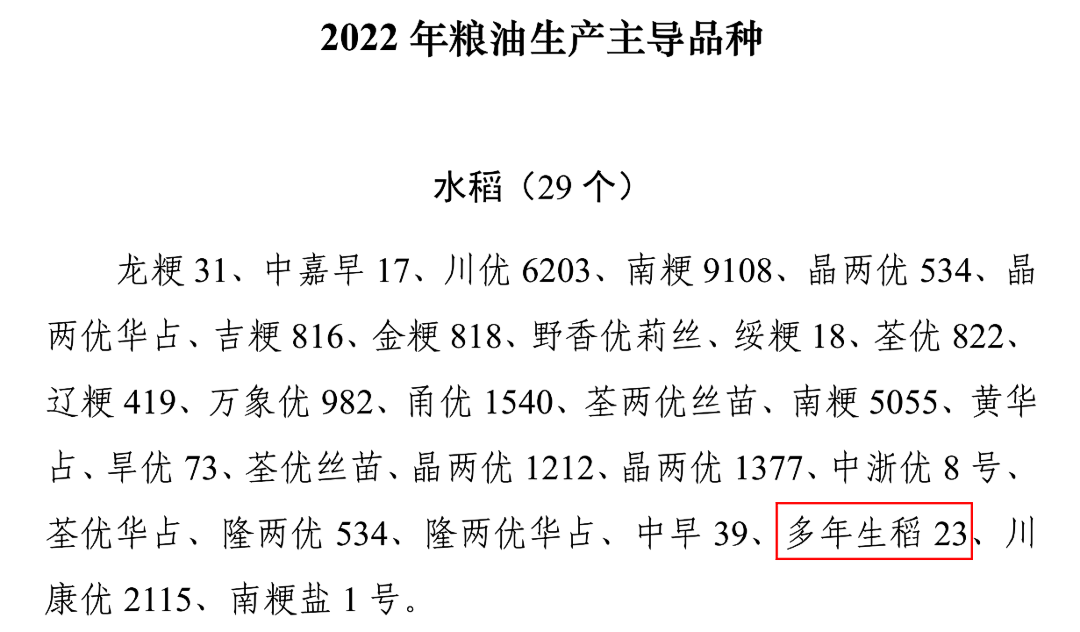
Perennial Rice is an independent research achievement of the team led by Professor Hu Fengyi from Yunnan University. Bred from Oryza longistaminata with well-developed rhizomes, it enables one-time planting and continuous harvesting for 3–6 years, making it the only staple food crop with perennial traits worldwide. Its unique perenniality distinguishes it significantly from the annual growth cycle of conventional cultivated rice. As a groundbreaking innovation in rice breeding, it was selected as one of the 2018 International Agricultural Technology Innovations by the Food and Agriculture Organization of the United Nations (FAO).
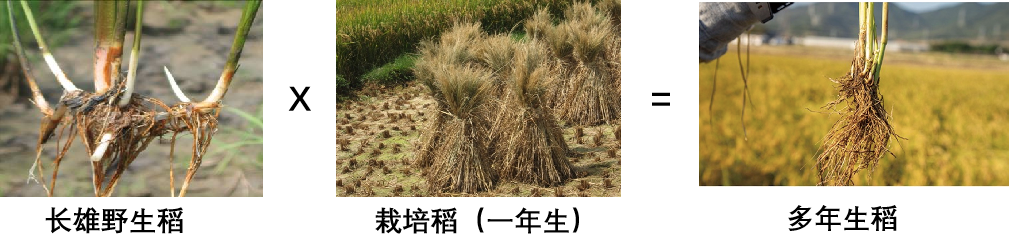
Figure 1 Breeding Process of Perennial Rice
Perennial Rice 23, registered as Dian Shen Rice 2018033 and officially approved in 2018, is a japonica perennial rice variety. It was developed through hybridization between female parent RD23 and male parent Oryza longistaminata, followed by multiple generations of self-crossing and selection with the assistance of Marker-Assisted Selection (MAS) technology. Suitable for promotion in rice-growing areas below 1,600 meters above sea level, it features a compact plant type, moderate plant height, strong tillering ability, excellent perennial performance, and good ripening color in later growth stages. It maintains stable yields across years and seasons with good grain quality and an appropriate growth period. The average yield reaches 598.46 kg per mu (equivalent to 8,976.9 kg per hectare) in single-cropping japonica rice regions. It shows high resistance to rice blast and false smut, moderate resistance to sheath blight, but is susceptible to bacterial blight. Its grain quality meets the Grade 3 High-Quality Rice Standard issued by the national agricultural authority.
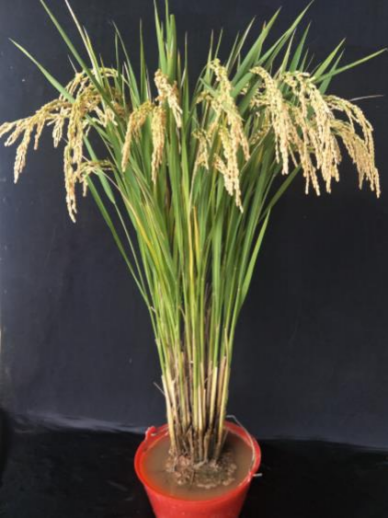
Figure 2 Perennial Rice 23
01
Perennial Rice can be harvested continuously for over 3–5 years with a single planting. Its outstanding advantages are reflected in the simplified production process: starting from the second year (or second cropping season), rice cultivation eliminates the need for seed purchasing, seedling raising, plowing, harrowing, and transplanting. Only field management and harvesting are required, making it a highly simplified rice production technology. After harvesting, axillary buds on the rhizomes of the remaining stubble germinate into new seedlings in the next season (year), enabling cyclic regrowth and realizing one-time planting with multi-year harvesting.
Compared with annual rice varieties, Perennial Rice reduces production input costs by more than 50%. In Yunnan Province, for example, it cuts direct costs by approximately 500–600 yuan per mu (7,500–9,000 yuan per hectare). Moreover, no tillage is needed for consecutive years, which reduces labor, fertilizer, and pesticide inputs while enhancing soil natural properties and fertility.
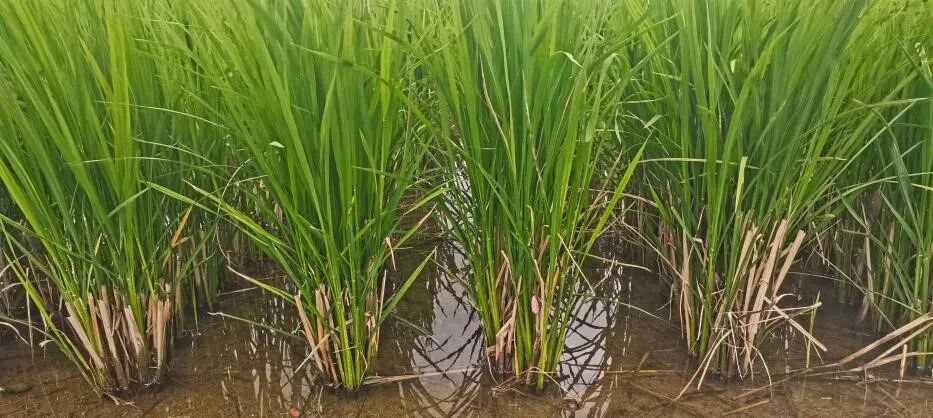
Figure 3 Axillary Buds on Rhizomes of Perennial Rice Stubble After Harvest
02 Variety Breeding and Achievements
In terms of variety development, two additional varieties bred by Professor Hu Fengyi’s team—Perennial Rice 25 (PR25) and Perennial Rice 107 (PR107)—have obtained official approval from the Yunnan Provincial Crop Variety Approval Committee, with registration numbers Dian Shen Rice 2020041 and Dian Shen Rice 2020042 respectively. Regional trials are currently underway for new lines under breeding, including japonica soft rice lines Perennial Rice 26 and 27, and indica soft rice line Perennial Rice 109, all featuring perennial traits.
In addition, the team has secured two national invention patents:
Method for Breeding Perennial Rice Using Asexual Reproduction Characteristics of Oryza longistaminata (Patent No. ZL201710132494.2)
Cultivation Method for Perennial Rice (Patent No. ZL201910273354.6)
The team has also won prestigious awards: in 2017, their research on Genomic Variation Mechanisms of Rice Adaptive Evolution received the Second Prize of Yunnan Provincial Natural Science Award; in 2021, the Method and Application of Breeding Perennial Rice Using Asexual Reproduction Characteristics of Oryza longistaminata was honored with the First Prize of Yunnan Provincial Technological Invention Award.
03 Industry Promotion and Cooperation
In April 2022, BGI Group signed strategic cooperation and joint venture agreements with Yunnan University, co-founding Shenzhen BGI Cloud Valley Technology Co., Ltd. This university-enterprise collaboration leverages the respective advantages of Yunnan University’s research strength and BGI Group’s technological and industrial resources. It aims to deepen the integration of production, education, research, and application, and make positive contributions to the promotion and industrialization of Perennial Rice technology.
To date, Perennial Rice has been trialed and promoted at 117 locations across China, covering a total area of 2,543 mu (169.5 hectares) in 13 major rice-growing provinces including Yunnan, Hainan, Guangdong, Guangxi, Hubei, Hunan, and Jiangxi. Internationally, it has been introduced for trials in 17 countries such as Laos, Myanmar, Thailand, Bangladesh, Iran, Uganda, and Ethiopia.
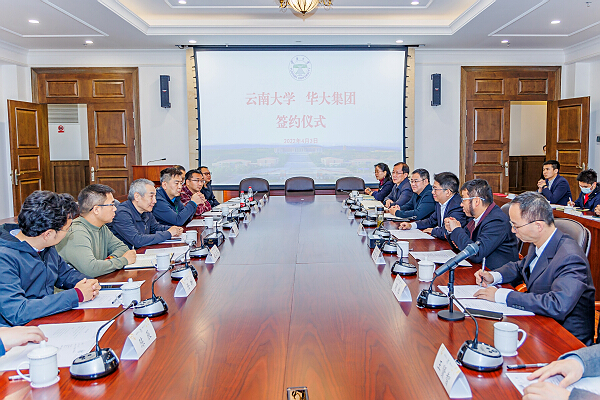
Figure 4 BGI Group and Yunnan University Sign Cooperation Agreements
Most importantly, Perennial Rice not only simplifies cultivation practices but also achieves yields equivalent to local conventional rice varieties. It boasts broad prospects for popularization and application globally.