
Two Harvests a Year, over 9,000 kg per hectare: Perennial Rice Benefits Madagascar
Source:BGI Bioverse View count:976532
Madagascar is located off the southeastern coast of Africa and is the world’s fourth-largest island, renowned for its unique flora and fauna. Its rich and diverse ecosystems and climates provide favorable conditions for cultivating a wide range of crops.
Rice is the staple food of the local population, with annual per-capita consumption exceeding 100 kilograms. However, in recent decades, factors such as climate change, deforestation, and underdeveloped transportation infrastructure have posed serious challenges to the country’s traditional agricultural development.
Today, Madagascar is taking concrete measures to address these challenges. Through cooperation with BGI Group, the country is applying genomic technologies to breed improved rice varieties while also promoting local pilot cultivation of perennial rice.
Perennial rice is an innovative variety originally developed by the research team led by Professor Hu Fengyi at Yunnan University. Using Oryza longistaminata as the male parent and Asian cultivated rice as the female parent, the team combined distant interspecific hybridization with whole-genome molecular marker-assisted breeding technologies from BGI. After more than 20 years of dedicated research, they successfully developed this high-quality variety.
Recently, the Fifth African Union Specialized Technical Committee on Agriculture, Rural Development, Water and Environment (ARDWE) approved the inclusion of Chinese perennial rice into the AU agricultural technology promotion framework, listing it in the AU Seed and Biotechnology Program 2024–2025. At present, perennial rice is the world’s only commercially viable perennial grain crop and has been selected as an “International Agricultural Innovation Technology” by the Food and Agriculture Organization of the United Nations.
Compared with annual rice, perennial rice needs to be planted only once and can be harvested for multiple consecutive years without tillage—much like chives—achieving “one planting, multiple harvests.” This significantly reduces maintenance, production, and labor costs. As an agricultural innovation that combines inclusiveness with sustainability, perennial rice has attracted widespread attention from the global agricultural community and governments around the world due to its enormous potential.
In early 2023, Madagascar introduced perennial rice and achieved remarkable results, with an average annual yield exceeding over 9,000 kg/ha, greatly reducing various production costs. This progress also marks the latest achievement of the sustained rice-focused cooperation between BGI Group and the Government of Madagascar, which began in 2018.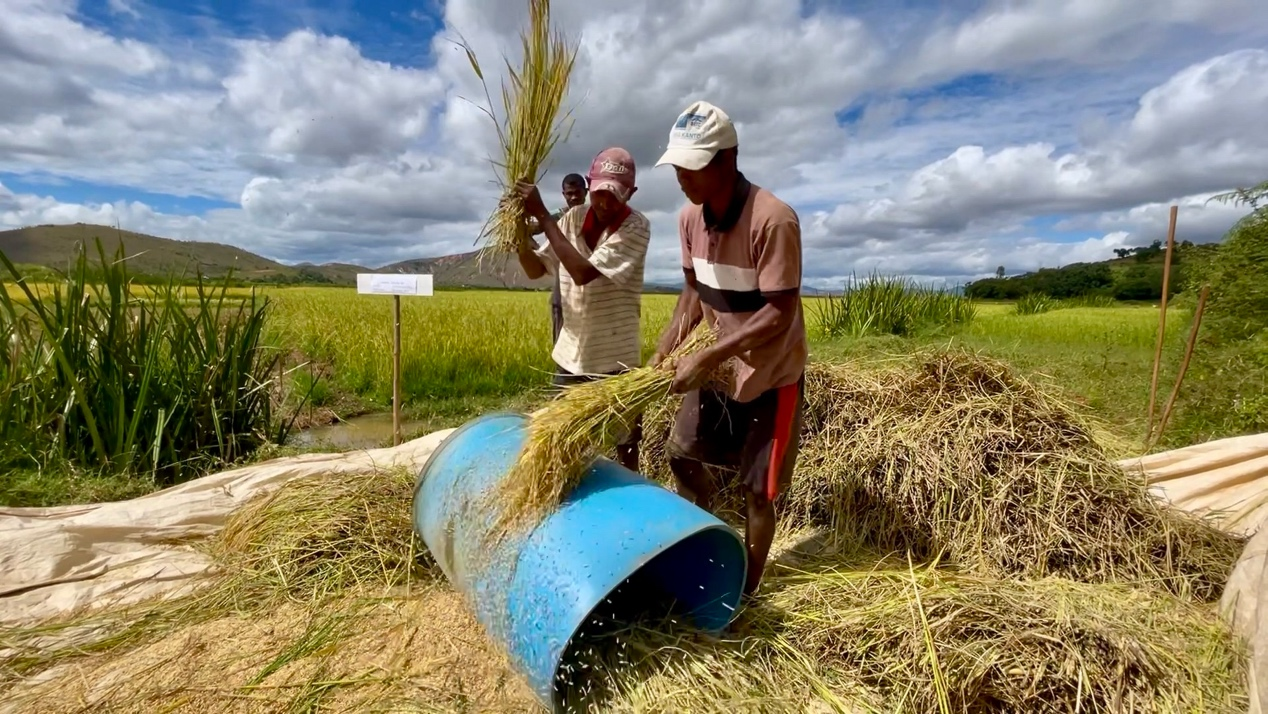
“Perennial rice yields two to three times more than local rice varieties. It not only increases crop output but also reduces planting costs. As Madagascar strives to promote sustainable food production, this breakthrough has far-reaching implications. Moreover, perennial rice has gained recognition and support from local farmers,” said Arolalaina Ramboasalama, an agricultural technician with the Ministry of Agriculture in the Ambohidratrimo region.
In recent years, BGI Bioverse, a subsidiary of BGI Group, has been committed to the global promotion of perennial rice. To date, more than 100 pilot trial sites have been established across China, covering 13 major rice-growing provinces, including Yunnan, Guangdong, Guangxi, Hunan, Fujian, Jiangxi, and Hainan. In line with the Belt and Road Initiative, perennial rice has also expanded beyond China’s borders, with trial cultivation underway in countries such as Myanmar, Laos, Uganda, Côte d’Ivoire, and Nigeria.
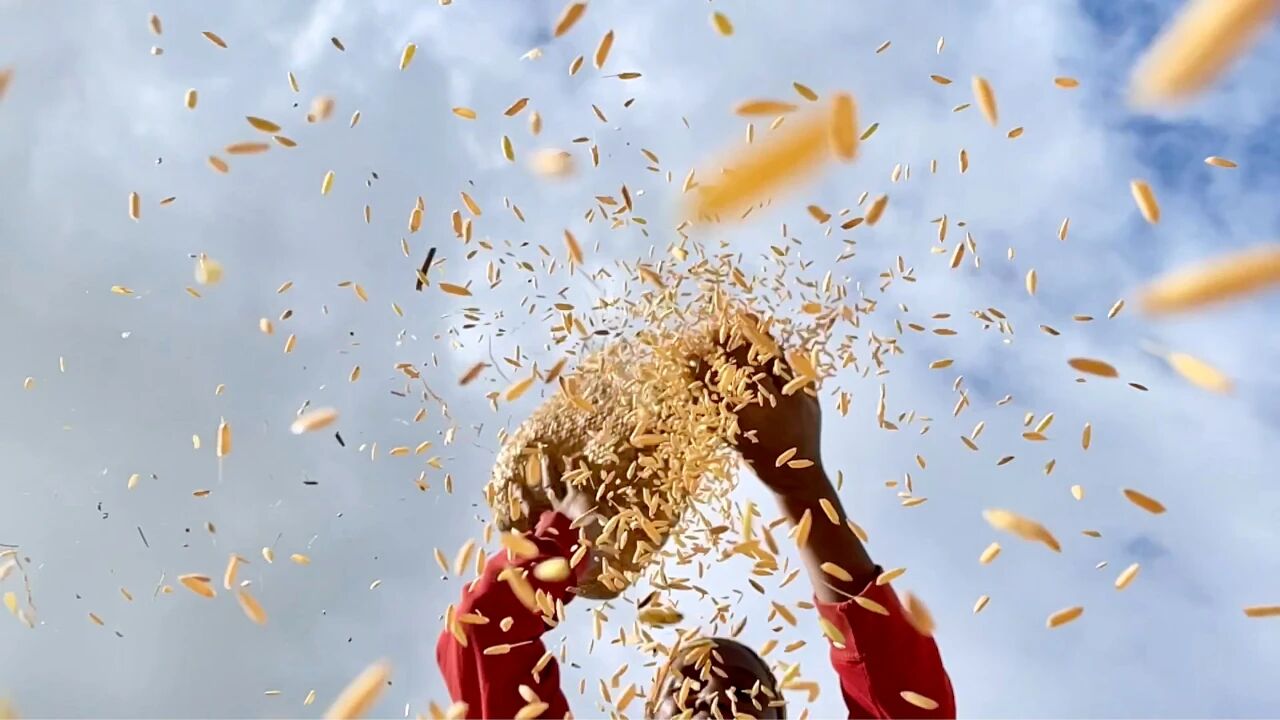
In the future, BGI will continue to advance research into inclusive agricultural technologies, drive agricultural innovation, and contribute greater scientific and technological strength to addressing global food security challenges.