
Ask & Answer | Why Does BGI Invest in Long-Term Research on Perennial Crops?
Source:BGI Bioverse View count:63829
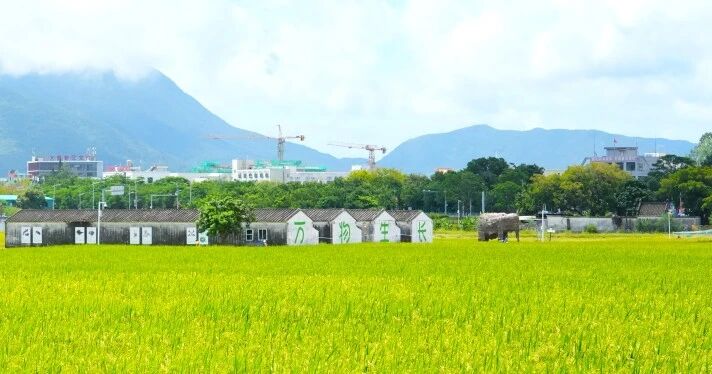
Climate Warming: Rethinking the Transformation of Agricultural Models
In 2023, the hottest year on record since meteorological observations began, global temperatures once again sounded the alarm. Since the mid-20th century, the global average temperature has increased at a rate of 0.15 °C per decade, and warming is expected to continue through the middle of this century [1]. The Earth is experiencing a prolonged “fever,” one that not only makes the planet uncomfortable but also profoundly affects all life it sustains.

Rising temperatures have led to more frequent extreme weather events—such as droughts, floods, and typhoons—posing direct threats to human life. Beyond these immediate risks, climate change has also severely affected food security and water resources, causing declines in crop yields and deterioration of water quality, which in turn impact human health.
Rapid global climate change is driving a transformation in agricultural models. On one hand, annual crops such as wheat and rice, developed through long-term artificial breeding, have made enormous contributions to human survival. On the other hand, traditional agricultural practices have had deep negative impacts on ecosystems. Frequent tillage disrupts soil structure, releases greenhouse gases, and reduces soil productivity. Annual crops generally have weaker adaptability to environmental change and face dual challenges to both yield and quality under increasingly volatile climatic conditions.
No-Till Carbon Sequestration: The Natural Advantages of Perennial Crops
Numerous studies have shown that perennial crops possess significant growth and ecological advantages. By maintaining year-round soil cover, no-till practices allow these crops to develop extensive root systems, improving water-use efficiency, enhancing drought tolerance, and reducing dependence on water resources. At the same time, no-till practices increase soil microbial activity, promoting the accumulation of soil organic matter. For example, after five years of planting perennial energy crops, total soil organic carbon increased by 1,500 ± 400 to 4,500 ± 1,500 kg C ha⁻¹ [2].
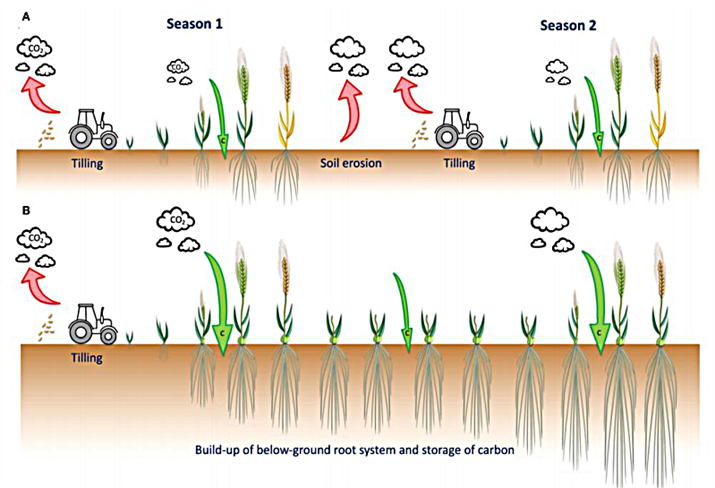
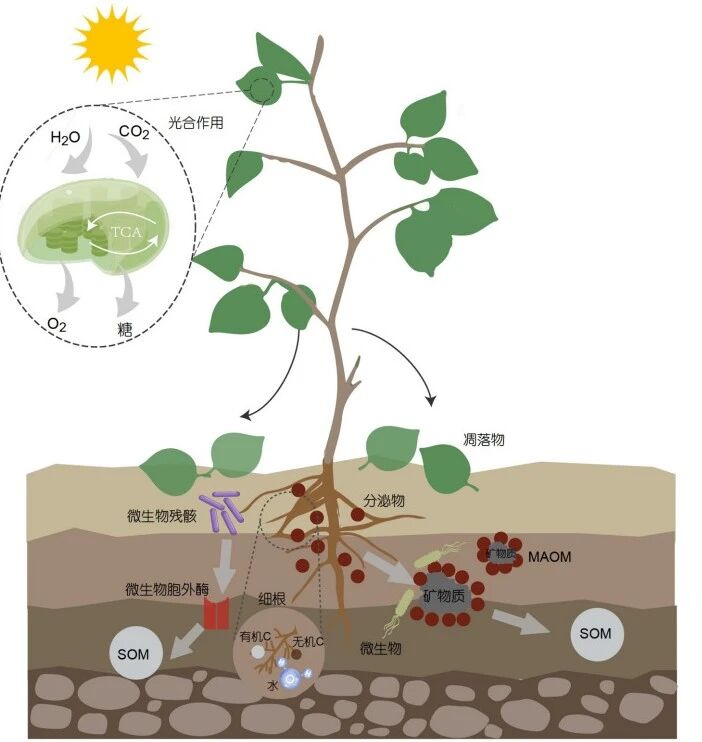
A study conducted in Alberta, Canada, found that perennial rye absorbed atmospheric CO₂ at a rate 6.24 times higher than that of annual crops [3]. The rational use and protection of perennial plant resources can help mitigate global warming, reduce the frequency and intensity of extreme weather events, and enhance human safety. In addition, carbon-sink trading can generate economic benefits, providing income for local communities and farmers.
One Planting, Multiple Harvests: The Production Benefits of Perennial Crops
The 2023 State of Food Security and Nutrition in the World report指出 that, compared with 2019, the global number of hungry people increased by 122 million.
In China, the complex changes in both domestic and international environments have placed higher demands on food and key agricultural product security. Crop production faces challenges such as increasing resource constraints, uneven farmland quality, and high production costs. Low profitability in grain farming has discouraged young people from engaging in agriculture, leading to serious farmland abandonment in rural areas. The 14th Five-Year National Crop Development Plan emphasizes the integrated promotion of key technologies—such as centralized seedling cultivation and no-till transplanting—in South China and Southwest China.
Perennial crops enable “one-time planting with multi-year growth,” effectively reducing expenditures on seeds, tillage, weeding, labor, and fertilizers, thereby improving farmers’ economic returns. This allows farmers more time and resources to improve their quality of life and pursue other economic activities. Research published in Nature Sustainability by Professor Hu Fengyi’s team at Yunnan University shows that perennial rice saves 68–77 labor days per hectare per season and reduces production inputs by 46.8–51%, significantly enhancing farmers’ economic benefits.
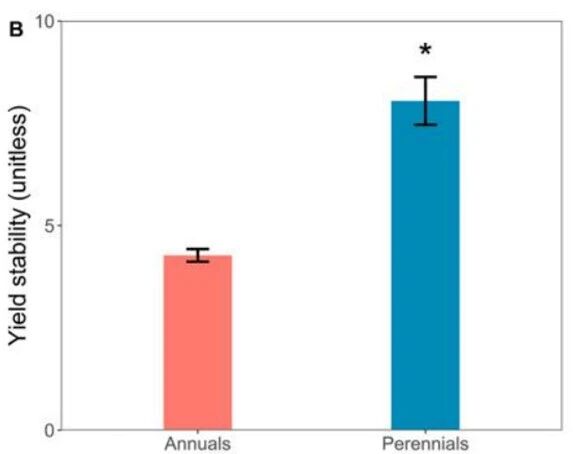
In a five-year continuous observational study in central Denmark, perennial crops increased biomass yield by 19% and yield stability by 88% compared with annual crops [4]. Improved yield stability strengthens the resilience of food systems and safeguards food security—an especially critical advantage under conditions of climate instability and population growth.
BGI Vision: Genomics for the Benefit of Humanity
Since its founding in 1999, BGI has remained committed to the mission of “genomics for the benefit of humanity,” striving to advance life sciences through technological innovation. Against the backdrop of active global responses to climate change, BGI has turned its focus toward sustainable agricultural development, particularly the cultivation of perennial crops as an innovative agricultural solution. With their low tillage frequency, long life cycles, high resource-use efficiency, and strong environmental adaptability, perennial crops provide robust support for sustainable agriculture. Leveraging its deep expertise in genomics, BGI is advancing the development of perennial rice, aiming to reduce agricultural production costs, stabilize crop yields, and contribute to the long-term prosperity of agriculture.
References
[1] Ministry of Ecology and Environment of the PRC; National Development and Reform Commission; Ministry of Science and Technology, et al. National Strategy for Climate Change Adaptation 2035 (2022-05-10).
[2] Ruf, T.; Emmerling, C. Soil Use and Management, 2020, 36(4): 646–657.
[3] Keunbae, K.; et al. Agricultural and Forest Meteorology, 2022, 314.
[4] Ji, C.; Erik, P. L.; Uffe, J. Agriculture, Ecosystems & Environment, 2022, 330.
[5] A. E. C.; Cecilie, H. T.; Sophia, T.; et al. Frontiers in Plant Science, 2022.
[6] Zheng, T.; Zhou, Q.; Ouyang, S. Chinese Science Bulletin, 2023, 68(24): 3155–3171.