
Yield Increased by 13.1%! BGI’s “The Intelligent Eco-Soil Initiative” System Helps Daming County Peanuts Resist Disease and Improve Quality
Source:BGI Bioverse View count:66666
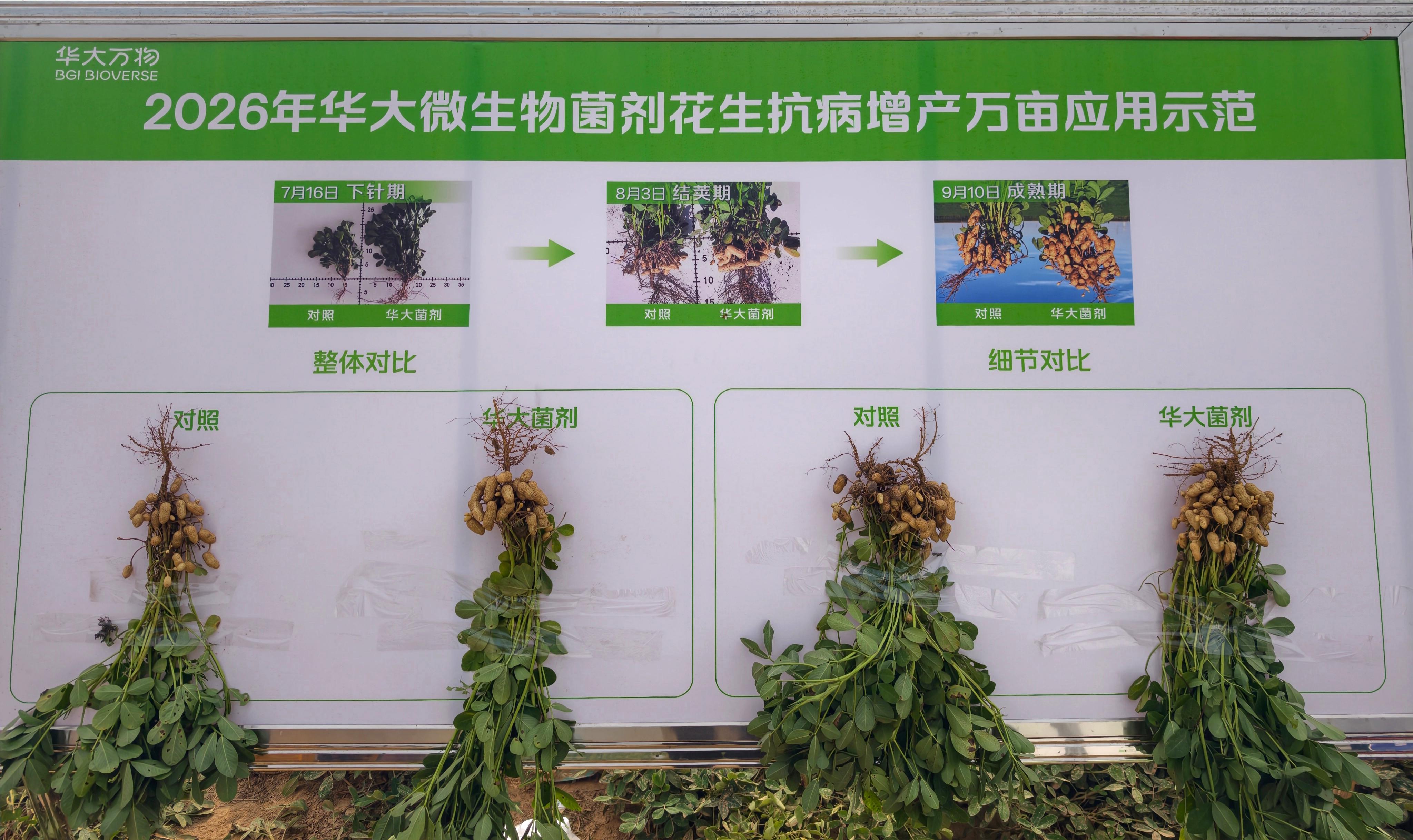
On September 13, the 2026 BGI Microbial Agent Peanut Disease Resistance and Yield Increase 10,000-Mu Application Demonstration Observation Meeting was held in Daming County, Handan City, Hebei Province. Actual harvest yield measurement showed that peanut fields using BGI microbial agents increased yield by 67.1 kg per mu compared with control fields, with a yield increase rate of 13.1%. At the meeting, BGI Group and the Daming County People’s Government formally signed a strategic cooperation agreement.

Wang Shichen, Secretary of the CPC Daming County Committee, and his delegation; Wang Jian, co-founder and Chairman of BGI Group, and his delegation; Wang Jin, Chief Expert of the Hebei Peanut Industry Technology System; as well as enterprise representatives and grower representatives attended the event.
BGI’s “The Intelligent Eco-Soil Initiative” System Takes Root in 10,000 Mu of Peanut Fields
Daming County, Hebei Province, is “China’s Hometown of Peanuts” and a National Regional Peanut Improved Variety Breeding Base.
At the Shawomiao Planting Base in Sunjiandian Town, participants went into the fields to inspect peanut growth and learn in detail about the application of BGI’s “The Intelligent Eco-Soil Initiative” System at the demonstration base.

This demonstration base focuses on peanut disease prevention and control and green quality and efficiency improvement. It integrates BGI’s green prevention and control technology model of “soil testing + ecological assessment + biological control,” building an integrated green planting system for soil improvement, quality enhancement, and yield increase.
Peanut plants treated with BGI microbial agents were neat and robust, with thick leaves, well-developed root systems, dense root nodules, significantly reduced disease incidence, and many plump pods.
Wang Shichen said that Daming’s peanut industry has a foundation and scale, but also faces tasks such as improving quality and efficiency and protecting arable land. Daming County will, in line with actual conditions, promote the full implementation of BGI-related products and technologies, with a focus on advancing the construction of The Intelligent Eco-Soil Initiative laboratory. It will also explore cooperation around peanut breeding, microbial agents, integrated planting and maintenance solutions, and a closed loop for green food safety processing, so as to promote the transformation of technological achievements and industrial upgrading.
Wang Jian said that from multi-omics analysis of soil life big data to field application, agricultural development also requires the continuous upgrading of a complete technology system. What BGI does is not just microbial agent products, but integrating multi-omics data and combining AI technology to build an analyzable, regulatable, and systematic solution for arable land improvement and green planting. He hoped to join hands with Daming to use cutting-edge technology to help
improve quality and increase income in specialty agriculture.
Microbial Technology Offers a New Path for Peanut Disease Resistance and Yield Increase
At the symposium, Wang Yayu, Director of Microecology Projects at BGI Wanwu, and Wang Jin, Chief Expert of the Hebei Peanut Industry Technology System, each delivered keynote reports. They shared technical pathways and practical progress on the application of agricultural microbial technology in green prevention and control of peanut diseases and per-unit yield improvement, as well as the advantages and development prospects of high-oleic peanuts.
13.1% Yield Increase, Remarkable Results in Disease Resistance and Quality Improvement
Wang Jin read the report on behalf of the yield measurement working group. Data showed that peanut fields using BGI microbial agents increased yield by 67.1 kg per mu compared with control fields, with a yield increase of 10.8%–13.1%, and outstanding disease resistance and quality improvement effects. This technology model is mature, practical, replicable, and scalable, providing a high-quality practical solution for stable peanut production and income growth and arable land protection.
Jointly Building a Soil Digitalization Joint Laboratory
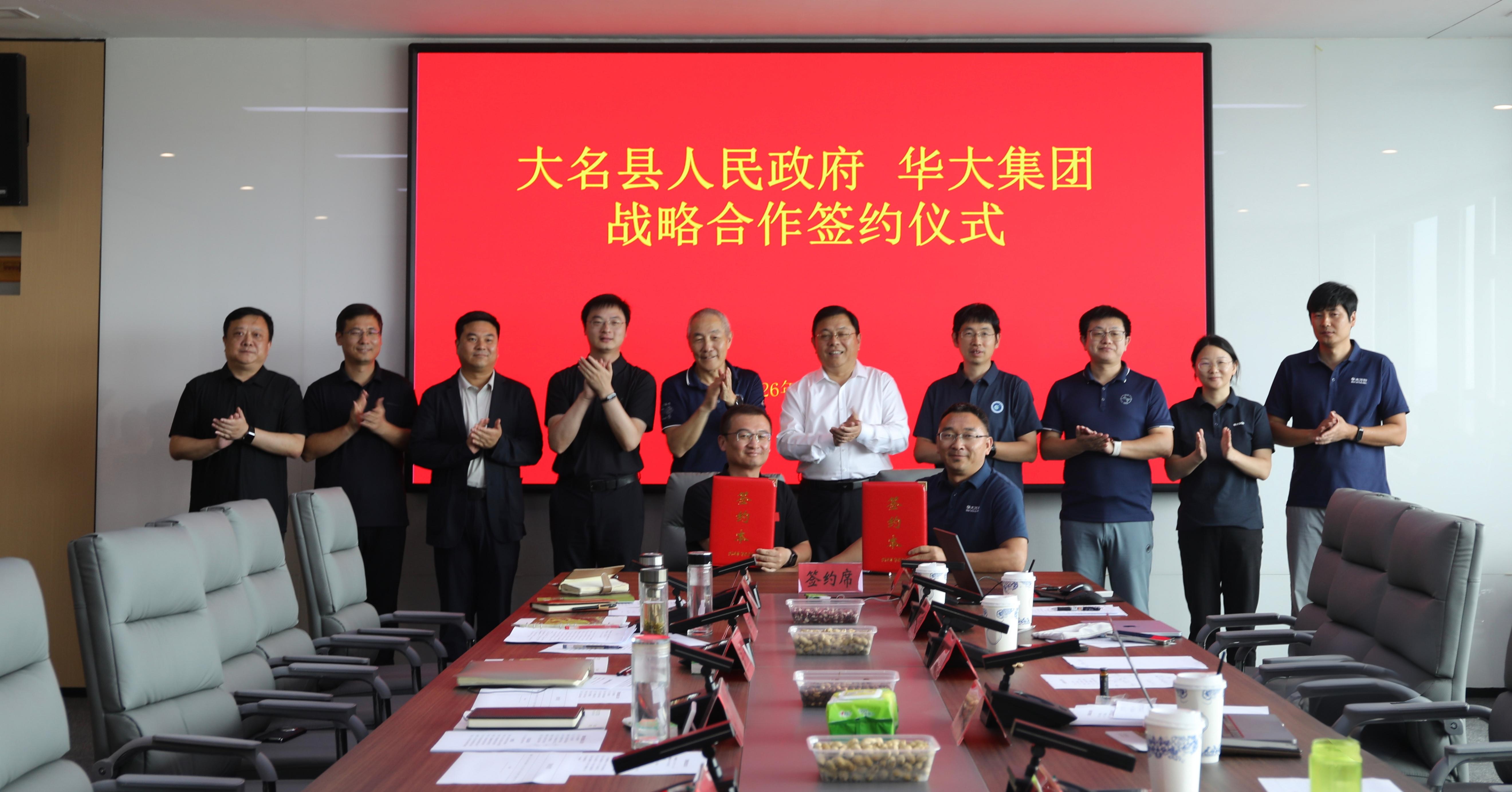
Witnessed by all participants, BGI Group and Daming County signed a strategic cooperation agreement. According to the agreement, the two sides will jointly build a farmland soil microbial database and health evaluation system for Daming County, construct an integrated green planting technology system, empower brand value enhancement, jointly build a soil digitalization joint laboratory, and establish a long-term cooperation mechanism.
This observation meeting and signing are important practices in empowering specialty agriculture with technology and supporting rural revitalization. Next, BGI Group will leverage its advantages in agricultural microbial technology and multi-omics platforms for soil life big data, join hands with Daming County to create a demonstration model for peanut per-unit yield improvement and green development, and help Daming steadily leap from a “large industrial county” to a “strong science and technology county.”