
Aksu Project Successfully Passes Acceptance: BGI Bioverse Helps Bridge the “Last Mile” of Agricultural Technology Extension
Source:BGI Bioverse View count:44555
Recently, the Grassroots Agricultural Technology Extension System Reform and Construction Project in Aksu City, Xinjiang, passed its acceptance review. As the technical service provider for the project, BGI Bioverse, together with the technical team from Tarim University, established two modern agricultural science and technology demonstration bases in Aksu City, promoted the adoption of 8 key technologies and 2 leading crop varieties, cultivated 20 agricultural science and technology demonstration entities, and provided training to more than 650 agricultural technicians and farmers.
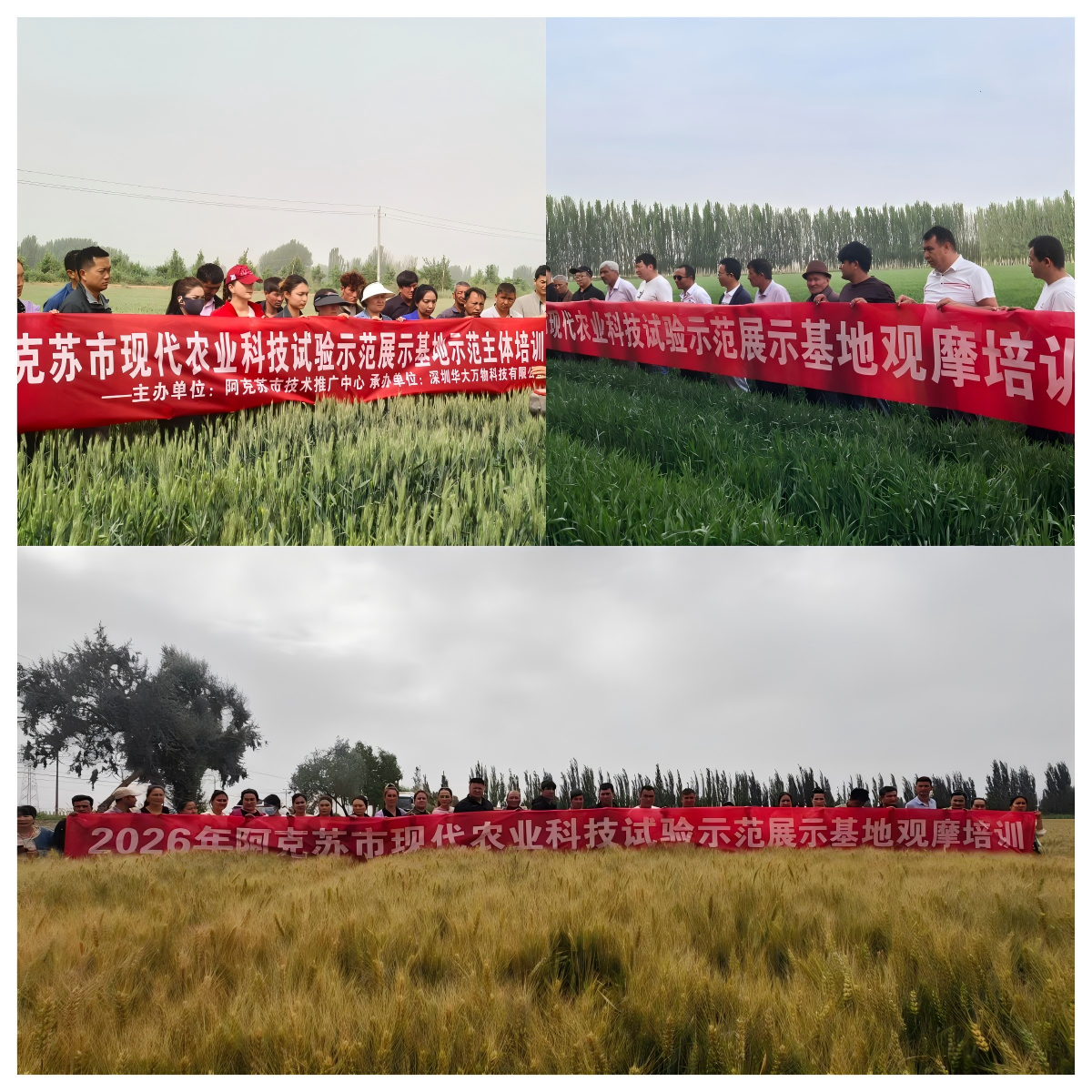
Bringing Technology to the Field: Solving the “Last Mile” Challenge
In April 2026, BGI Bioverse was officially selected as the technical service provider for the “Aksu City 2026 Grassroots Agricultural Technology Extension System Reform and Construction Project.” The mission was clear: bridge the “last mile” of agricultural technology extension and ensure that advanced, applicable technologies truly reach villages and households.
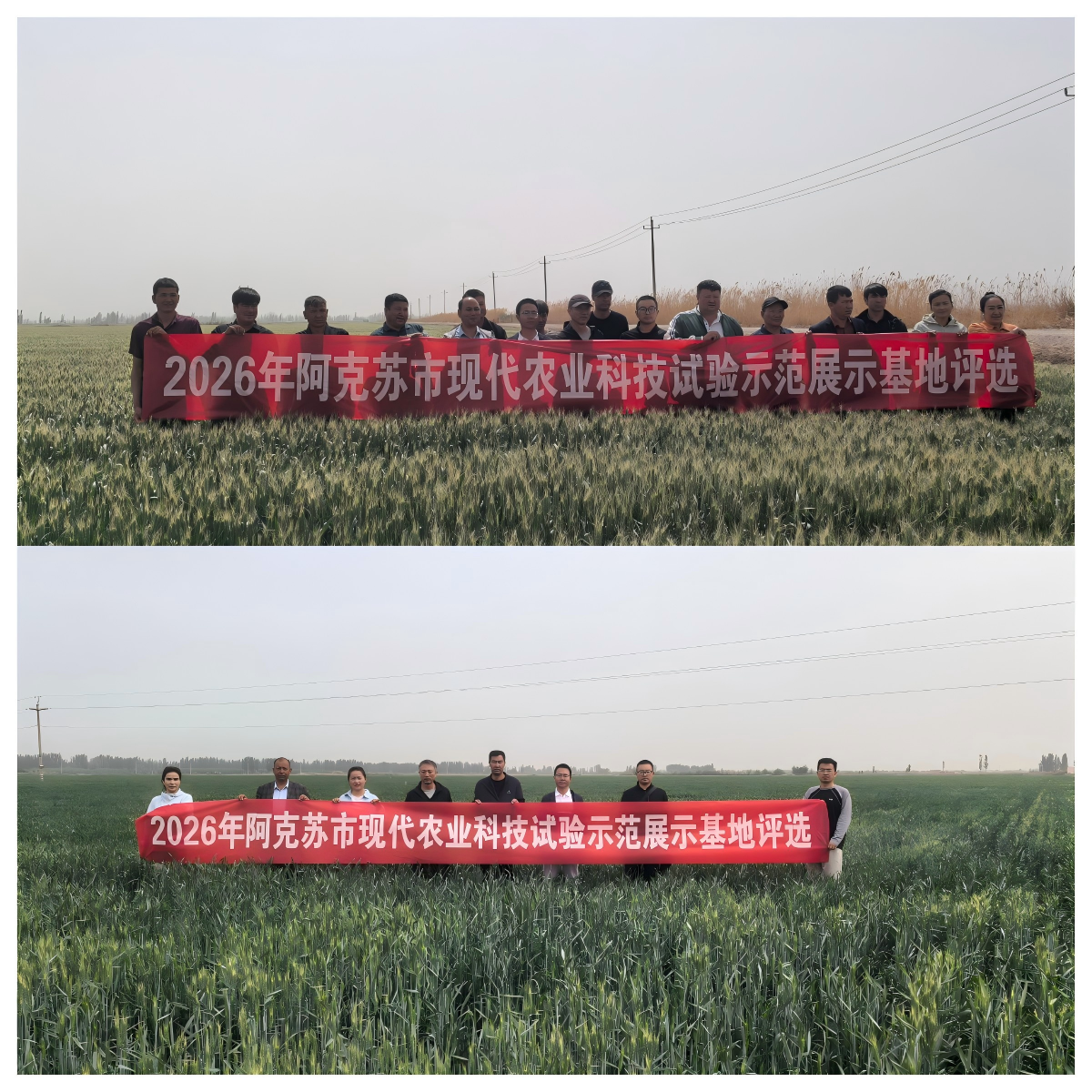
The project relies on an extension model of “research team + technical service provider + demonstration base + demonstration entity + radiating farmers,” building a complete technology transmission chain from experts to fields.
What Changes Have Two 600-Mu Demonstration Bases Brought?
The Wheat High-Yield Cultivation Demonstration Base focuses on the wheat variety Xindong No. 59 and integrates key technologies such as high-quality, high-yield winter wheat cultivation, chemical control to prevent lodging and increase yield, green fertilization for quality and yield improvement, and mechanized harvesting loss reduction, achieving dual improvements in yield and economic benefits.
The Wheat-Maize Composite Planting High-Yield and High-Efficiency Demonstration Base focuses on the maize variety Tianyu No. 1885 and integrates technologies such as dry sowing and wet emergence of maize, seeding machinery allocation, green fertilization for quality and yield improvement, and precision regulation of dense planting.
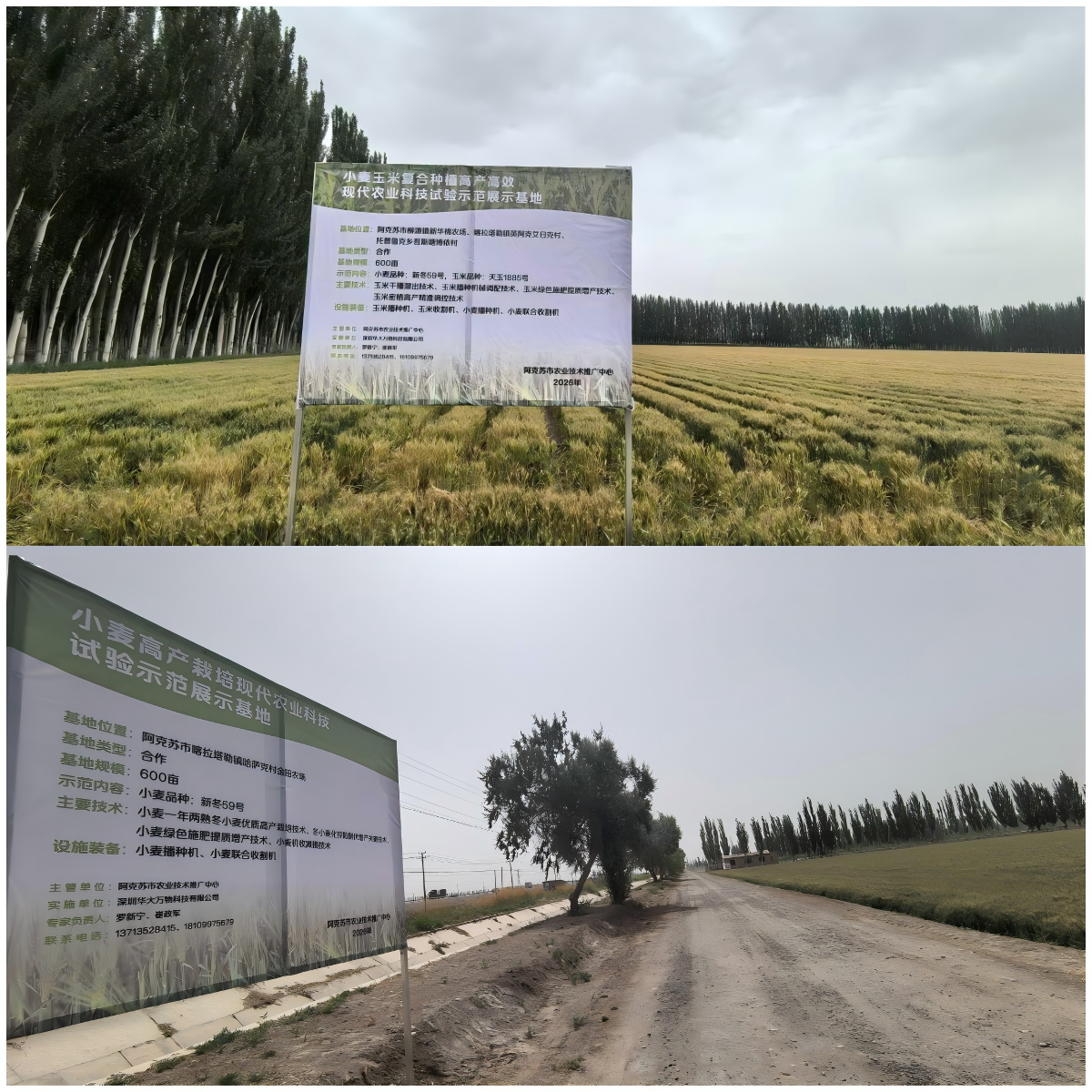
During the project, the BGI Bioverse team, together with experts from Tarim University, repeatedly went into the fields and conducted multiple on-site planting technology guidance sessions and symposia. Experts Luo Xinning and Ma Shuaiguo provided on-site guidance on key technologies for wheat intercropping with maize, helping farmers optimize planting structures and promoting dual improvements in the yield and quality of wheat and maize.
In August 2026, each base organized yield measurement and acceptance. The results showed that the comprehensive benefits were significantly higher than those of single-cropping models. The entire transmission chain—from “expert instruction” to “demonstration household operation” to “radiating household follow-up”—was fully operational, and the effectiveness of technology extension was widely recognized by grassroots farmers.
At the Wheat High-Yield Cultivation Demonstration Base, 230.7 mu of wheat achieved an actual harvested yield of over 800 kg per mu, exceeding the target task of 750 kg per mu. At the Wheat-Maize Composite Planting High-Yield and High-Efficiency Demonstration Base, on June 18, 200 mu of wheat achieved an actual harvested yield of 532 kg per mu; the intercropped maize has entered the grain-filling stage and is expected to reach 800 kg per mu. The plot has the potential to achieve “1.3-ton-per-mu field” yields.
A Good Model Must Be Replicable
The project also established full-process archives covering technical guidance, training services, demonstration extension, and assessment and acceptance, making technology extension rule-based and evidence-based, and accumulating institutional experience for subsequent replication and extension.
The key to agricultural modernization lies in science and technology. Reform and construction of the grassroots agricultural technology extension system is a critical measure for bridging the “last mile” of agricultural science and technology into villages and households. The successful acceptance of the Aksu project has verified the feasibility of the “research team + technical service provider + demonstration base + demonstration entity + radiating farmers” agricultural technology extension pathway.