
Technology-Driven, Cooperation Without Borders | China’s First Africa-Oriented Perennial Rice Technology Aid Training Successfully Concludes
Source:BGI Education Center View count:87643
Introduction
On October 18, 2023, the Practical Cooperation Projects List of the Third Belt and Road Forum for International Cooperation was officially released. The project “Promoting Perennial Rice Technology in Uganda and Other Countries” was included under the category of “People’s Livelihood and People-to-People Connectivity.” As the world’s only commercially available perennial grain crop jointly developed by BGI Group and Yunnan University, perennial rice can significantly alleviate production and social challenges such as labor shortages, reduce agricultural production costs, stabilize crop yields, and promote the sustainable development of agriculture.
The first national-level foreign aid training program themed on perennial rice—the African Perennial Rice Technology Training Program—was jointly organized by the Ministry of Commerce, hosted by Longping High-Tech, and co-organized by BGI Academy and BGI Bioverse. The program was held on September 17, 2024, at the BGI Space-Time Center. A total of 33 agricultural officials and technical professionals from nine countries, including Nigeria, Ethiopia, and Ghana, participated in a one-week training program at BGI.
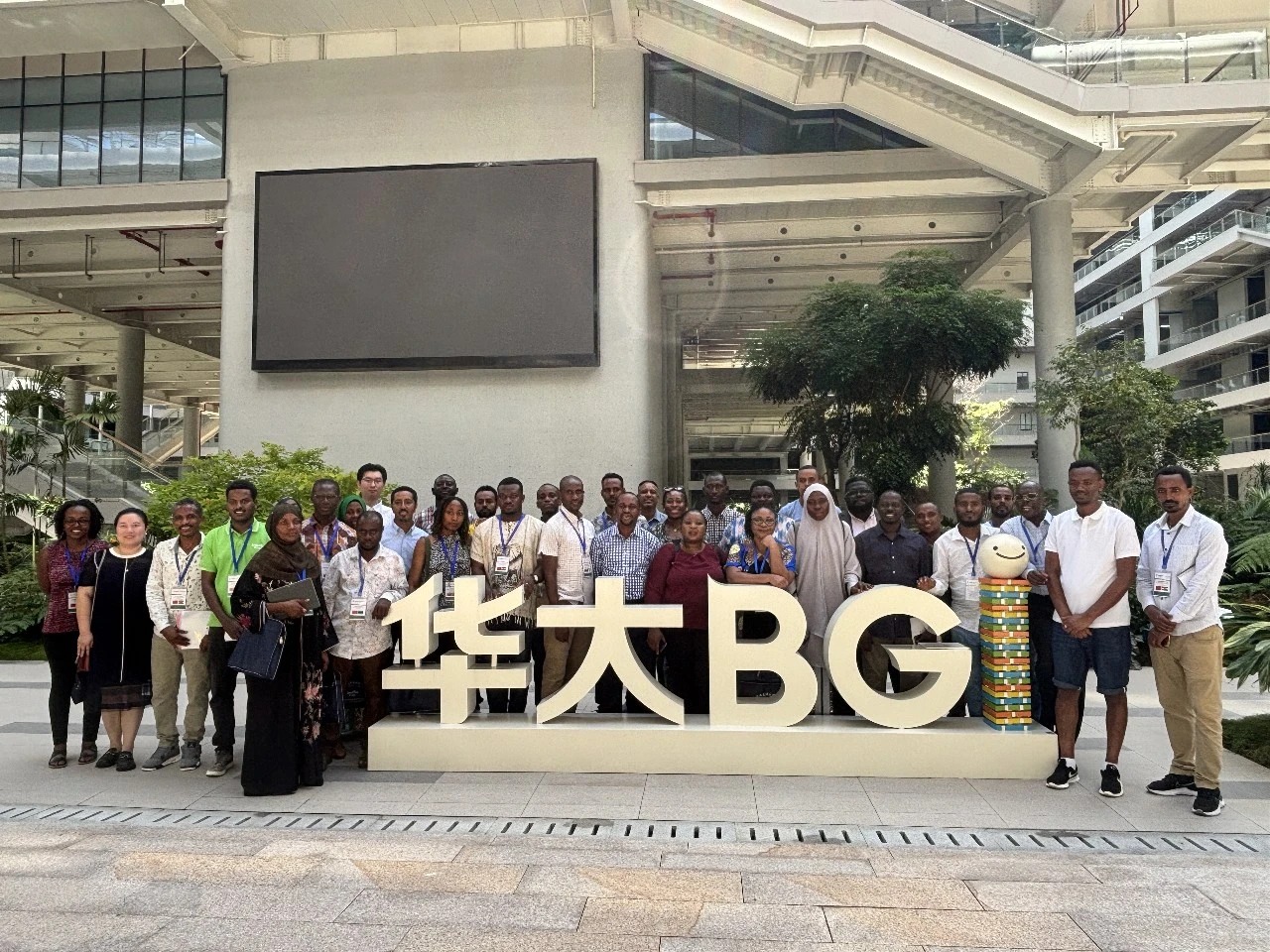
01 Integrating Genomic Technologies with Modern Agriculture
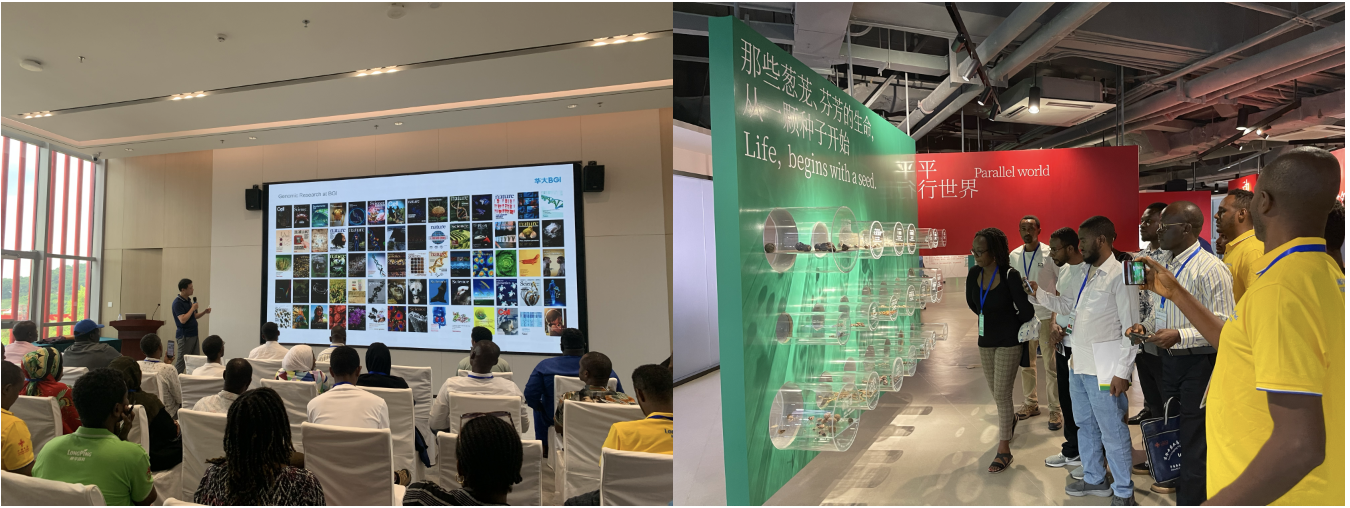
Upon entering the BGI Space-Time Center, participants gained an in-depth understanding of BGI Group from the perspectives of its business areas, mission, and future vision. They witnessed BGI’s contributions to the life sciences and its tangible achievements in public health and agricultural genomics in Africa, which have improved local healthcare standards and advanced sustainable agricultural development.
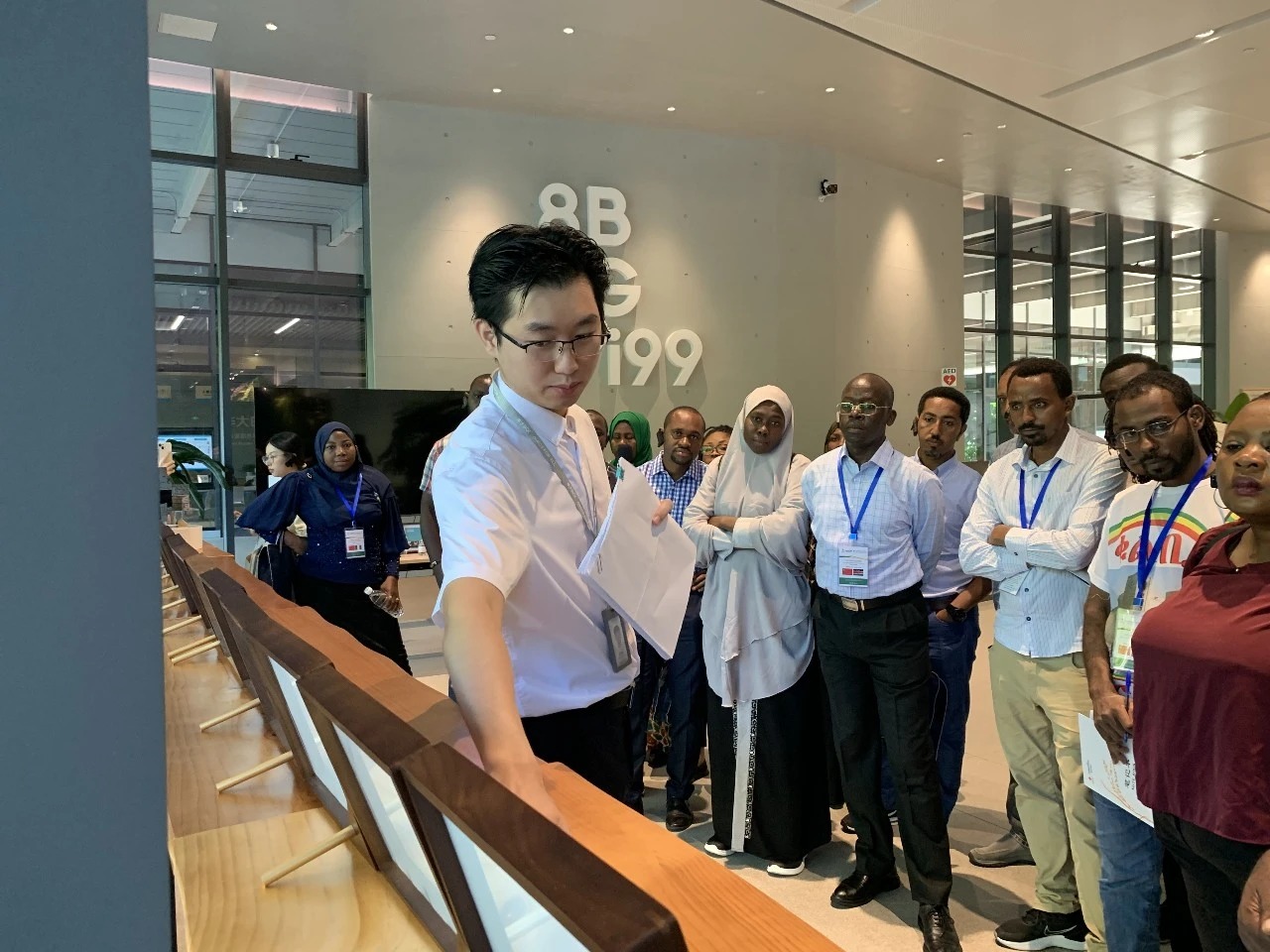
BGI Bioverse project specialist Zou Guanhua introduced the development history of BGI Group to the participants
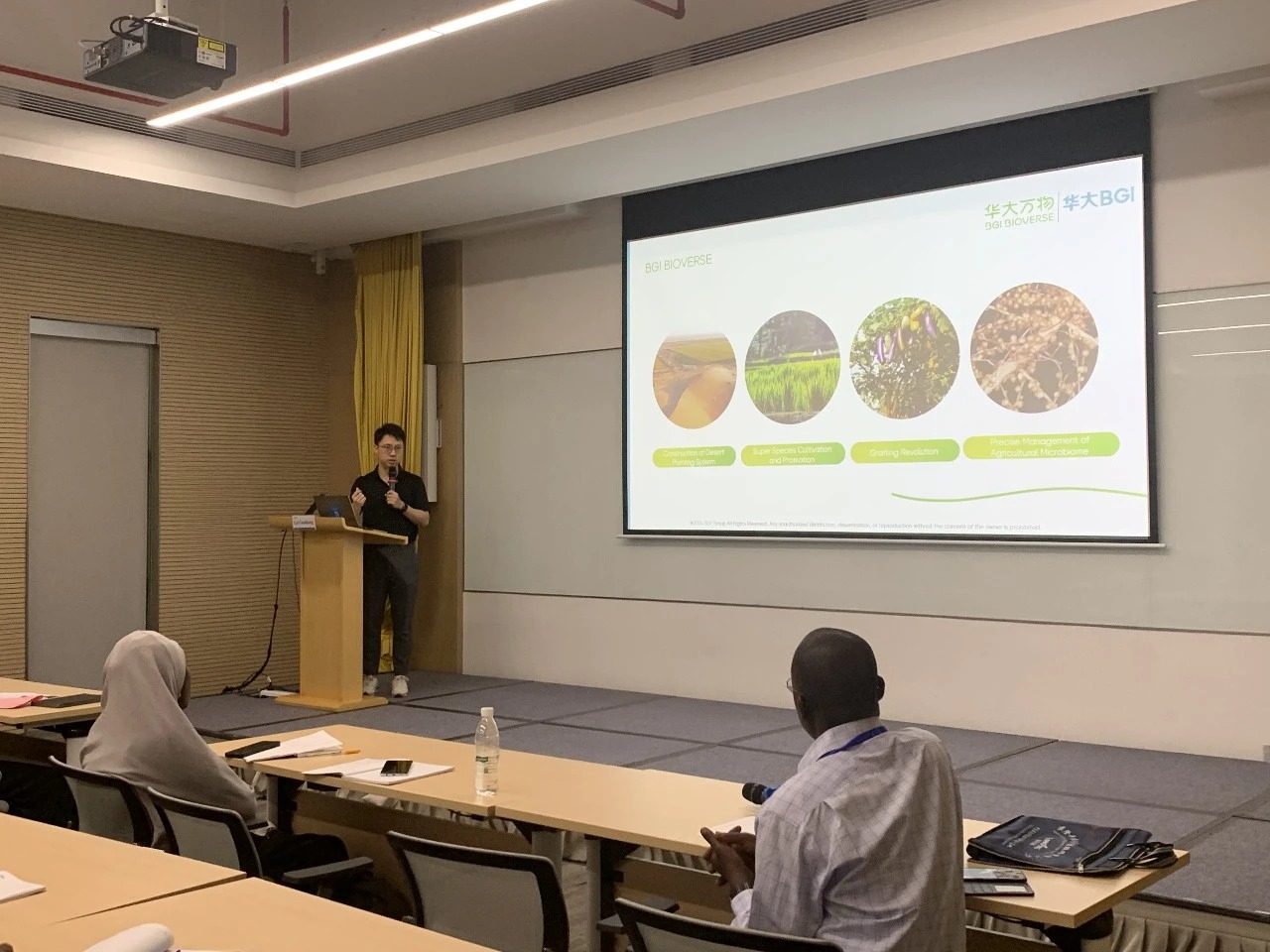
Lu Guoliang, Director of Government Affairs at BGI Group, presented BGI’s cooperation projects with Africa
Guided by the philosophy of “Harmony between Heaven, Earth, and Humanity; Coexistence of All Things,” BGI Bioverse leverages its multi-omics big data platform to rapidly cultivate super crops through innovative whole-genome design breeding and synthetic biology technologies. The promotion of perennial rice, in particular, achieves “one planting, multiple harvests,” significantly reducing production costs while maintaining stable yields, advancing green and ecological agriculture, and addressing global food security challenges.
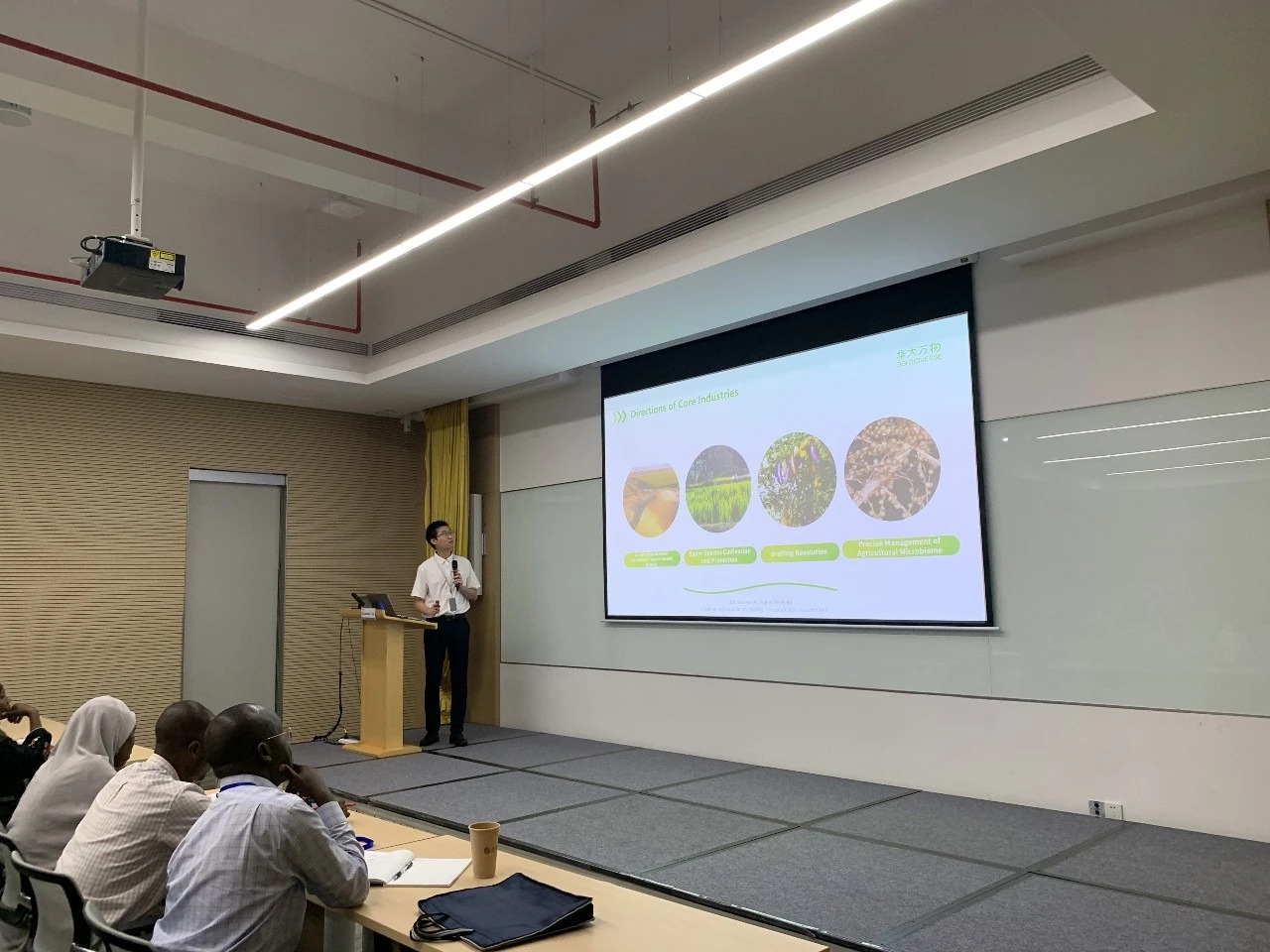
Zou Guanhua introduced BGI Bioverse and BGI’s innovative agricultural technologies
BGI is committed to applying genomic technologies to agricultural genomics research and breeding. Participants visited the Guangming Hongqiao Nature Education Base to learn about BGI’s research and technological innovations in agricultural genomics. By utilizing multi-omics platforms and stLFR sequencing technology to generate high-precision genomic data, BGI supports precision breeding. The course focused on recent progress in wheat and maize genome research and explored how these achievements can be applied to increase crop yields, offering new pathways to address climate change and crop resilience challenges.
02 Innovation and Application of Perennial Rice Technology
Perennial rice is a high-yield crop with perennial characteristics, developed through distant hybridization between perennial wild rice and annual Asian cultivated rice. During the theoretical training sessions, participants learned about the breeding process and cultivation techniques of perennial rice, with particular emphasis on its “one planting, multiple harvests” feature, which eliminates the need for repeated sowing and seedling raising, thereby significantly reducing subsequent cultivation costs.
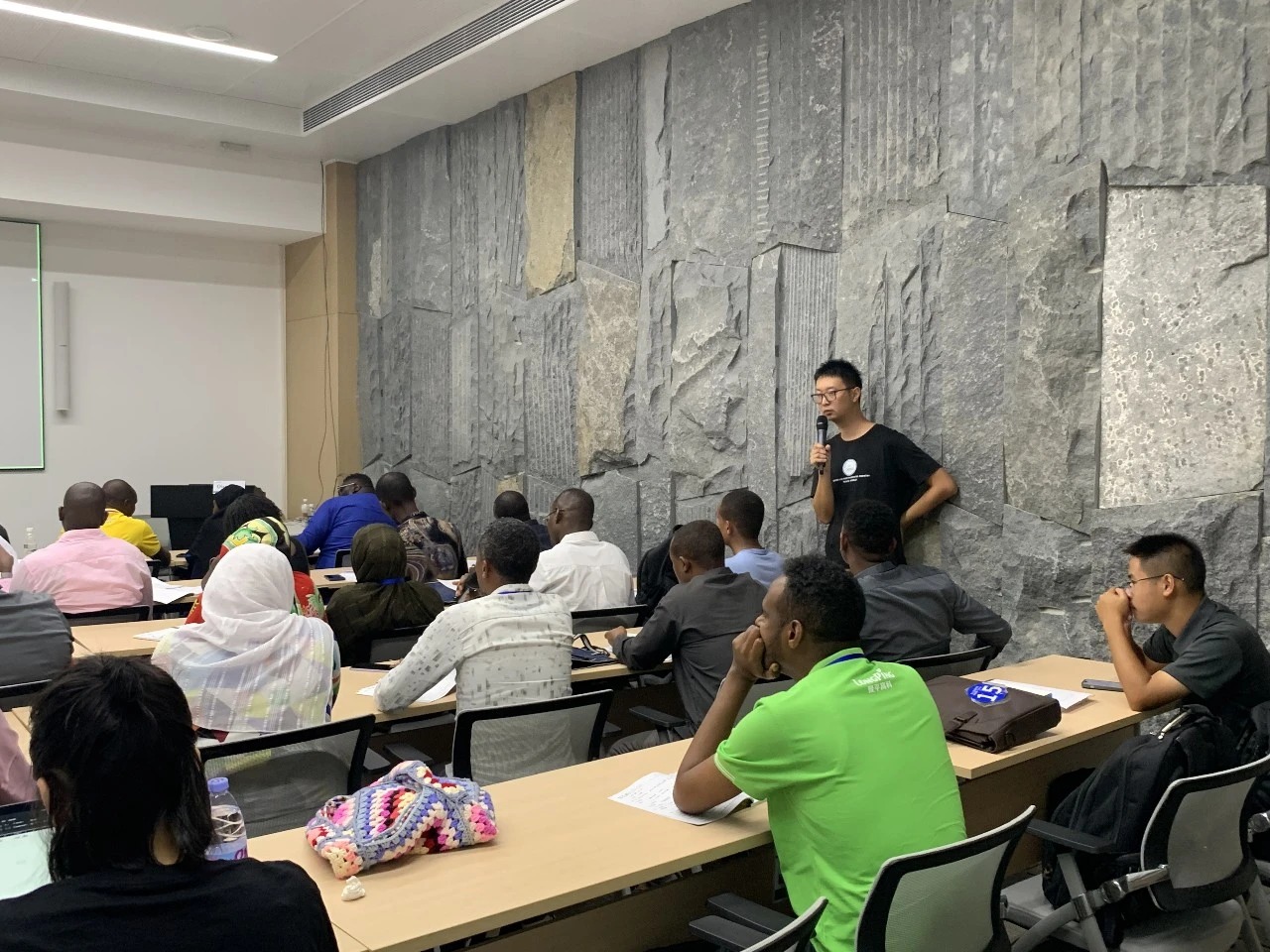
BGI Bioverse Assistant Breeding Engineer Qian Yishu introduced the characteristics of perennial rice
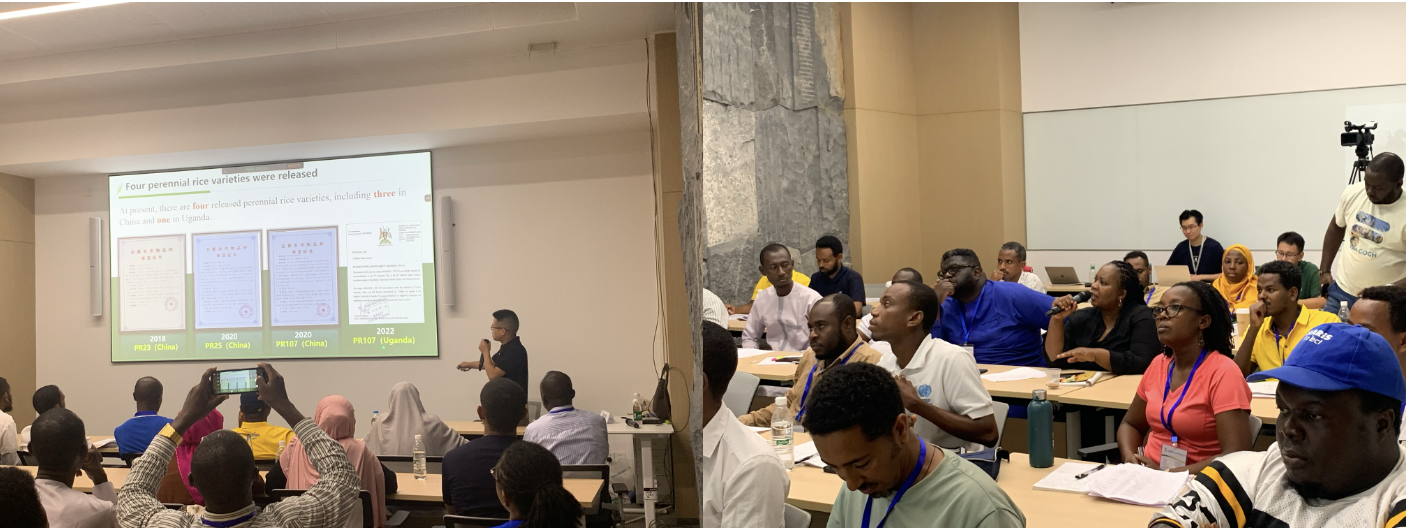
Instructors provided detailed explanations of BGI’s cultivation techniques for perennial rice breeding, shared case studies of its promotion in Africa, and discussed the challenges and latest solutions in variety development. These sessions helped participants understand how genomic technologies support the breeding of high-yield, disease-resistant rice varieties and contribute to global food security.
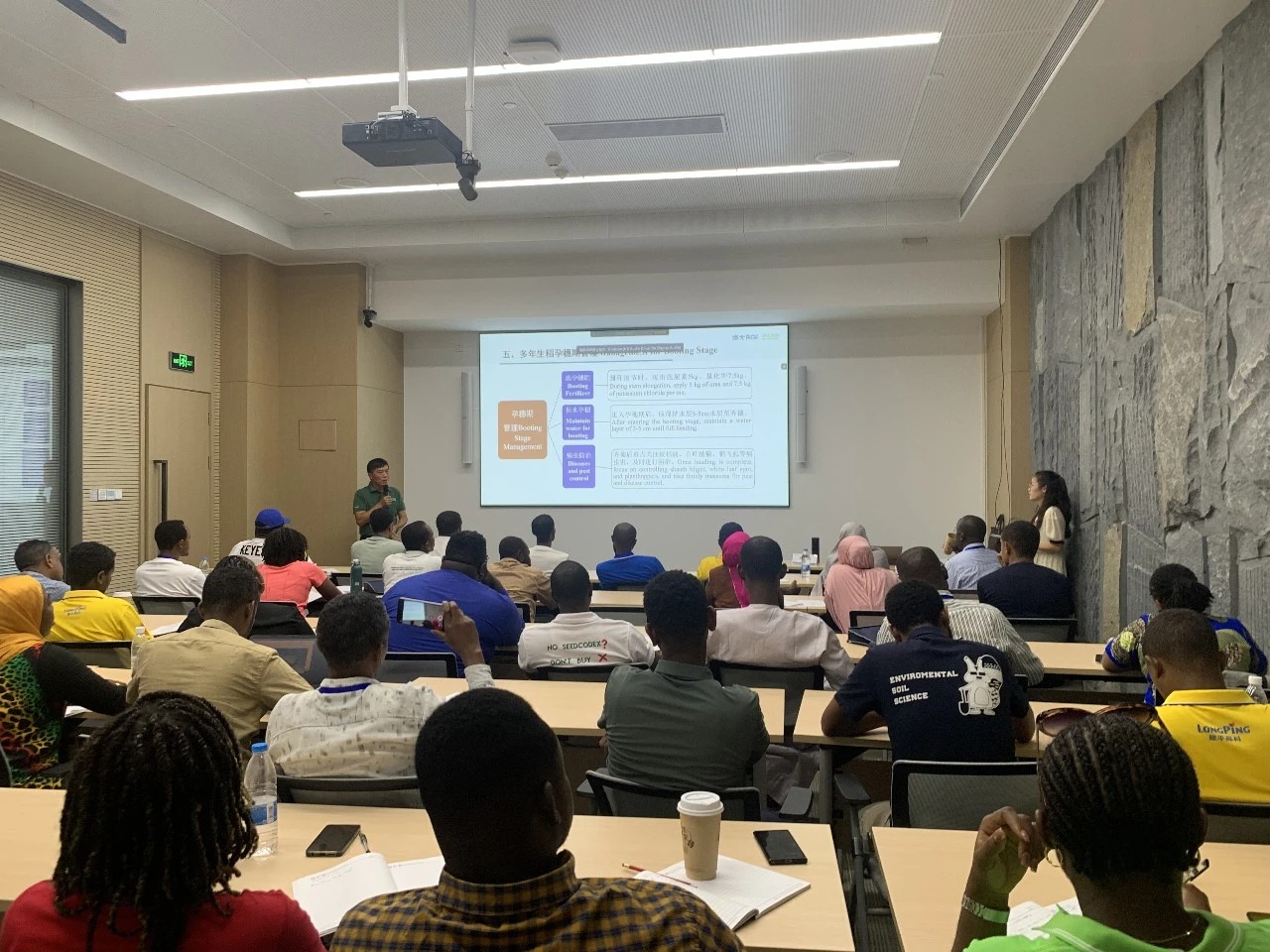
Senior Breeding Engineer Dr. Chen Qilian from BGI Bioverse explained key management points during the panicle initiation stage of perennial rice.
As an important perennial rice variety, Yunda 25 demonstrates more stable high yields and superior stress resistance compared with traditional varieties. Participants gained detailed knowledge of its cultivation and management techniques, including planting density, fertilization strategies, and pest and disease control measures. These practices not only improve yields but also significantly reduce production costs, bringing new economic benefits to agriculture and highlighting the variety’s broad application potential.
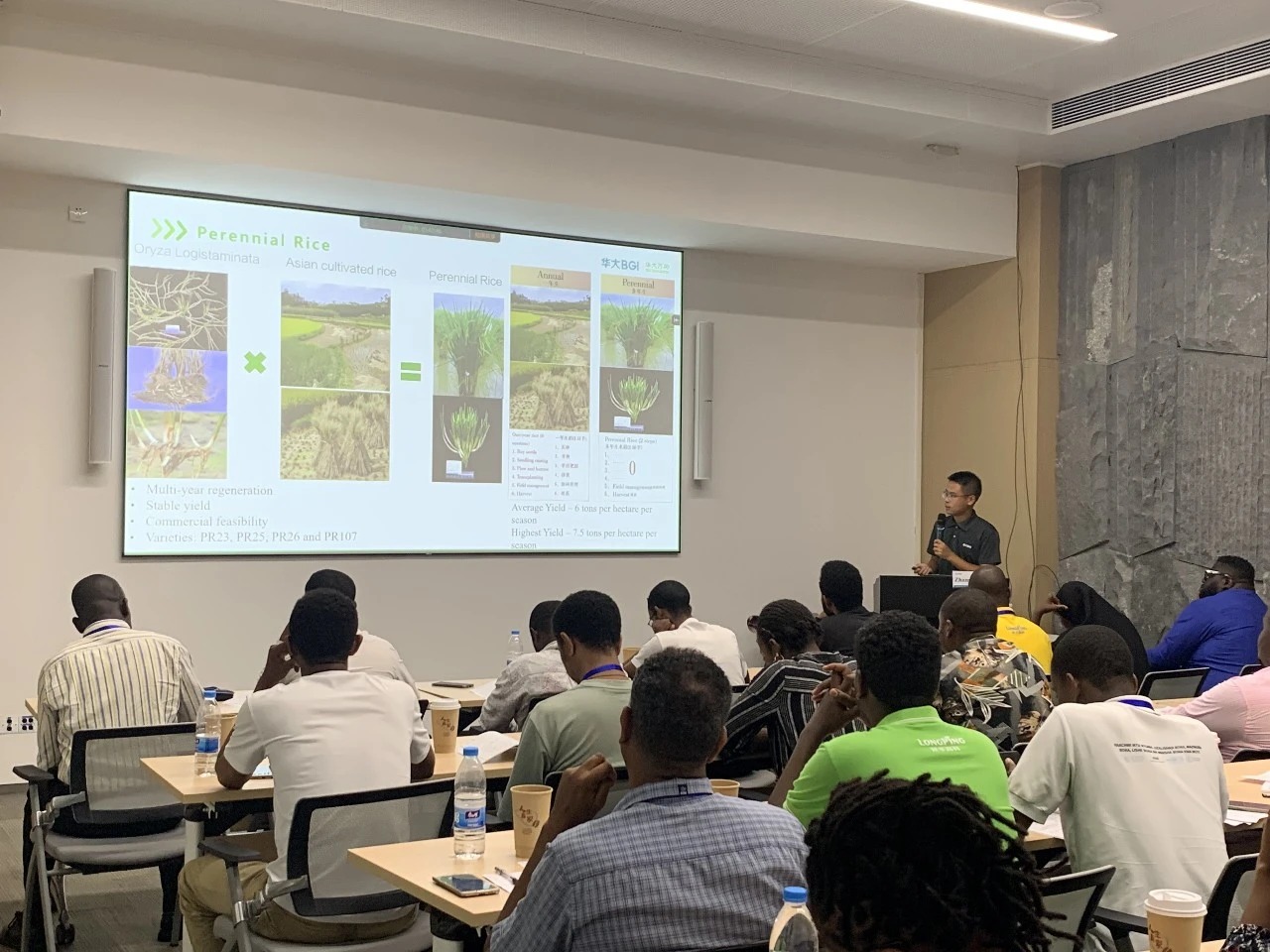
BGI Bioverse Agronomy Assistant Engineer Zhang Junrui introduced the characteristics of the Yunda 25 variety
Since its debut in 2022, perennial rice has undergone multiple trials and promotions across African countries. Participants explored the climatic and soil challenges associated with growing perennial rice in Africa and recognized that adapting cultivation techniques to local conditions is key to maximizing its advantages. Through discussions on real-world applications in Africa, participants gained a deeper understanding of regional needs and adaptability, laying the groundwork for future targeted promotion strategies.
In addition to perennial rice, participants were introduced to another super crop—the multi-fruit eggplant tree. This crop was developed over 13 years by BGI in collaboration with a Chinese vegetable eggplant research and innovation team, fundamentally transforming traditional vegetable production models. Through next-generation grafting technology, multiple annual herbaceous Solanaceae crops are grafted onto a single tree, giving it the innovative characteristics of “multiple varieties on one tree with year-round fruiting,” marking a milestone in agricultural innovation. At the BGI Bioverse agricultural base in Dapeng New District, participants took part in hands-on grafting training, further deepening their understanding of modern agriculture.

Top: Instructor introducing the characteristics of the multi-fruit eggplant tree
Bottom: Participants practicing grafting techniques
03 The Mission of Conserving and Passing on Germplasm Resources
As a critical facility for conserving and transmitting biodiversity, gene banks collect, preserve, and manage biological samples to ensure the long-term protection of valuable germplasm resources, providing essential support for future research, breeding, and ecological restoration. Participants visited the China National GeneBank (CNGB) in Shenzhen, where they learned about its development background, functional positioning, and its significance in global life sciences. Advanced sequencing platforms, high-throughput screening equipment, and biological sample preservation technologies enabled participants to fully appreciate the immense potential and importance of genetic technologies in conserving and inheriting germplasm resources.
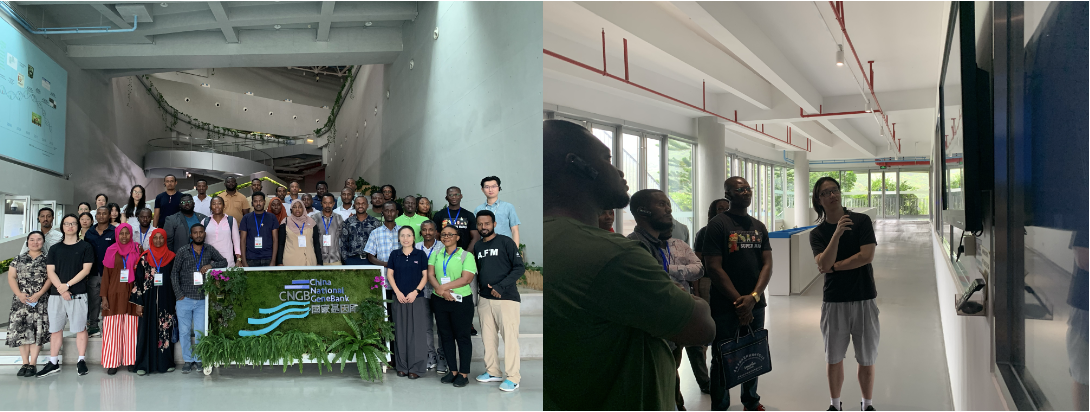
The week-long African Perennial Rice Technology Application Training Program concluded successfully. As an important component of the Belt and Road Initiative, perennial rice is dedicated to providing food security solutions for African countries. Through in-depth learning and exchanges with experts, participants strengthened China–Africa agricultural technology cooperation. This training laid a solid foundation for future international collaboration and highlighted the significant role of the Belt and Road Initiative in promoting sustainable agricultural development.
BGI will continue to build international agricultural science and technology exchange platforms and looks forward to reuniting with partners to jointly create a sustainable agricultural future.