



The vertebrate brain is the product of roughly 500 million years of evolution, yet the molecular architecture of the ancestral brain from which all vertebrate brains, including our own, descended has remained largely unresolved.
On June 18, 2026, investigators at the Kunming Institute of Zoology (Chinese Academy of Sciences), BGI-Research, and Liaoning Normal University report in Science, where the work is featured on the cover, the first comprehensive 3D spatial transcriptomic atlas of a jawless vertebrate brain, constructed from lamprey, whose core morphology has remained stable for some 360 million years. The atlas reveals that the vertebrate common ancestor already possessed a highly regionalized and molecularly sophisticated brain and uncovers strategies that later drove neuronal specialization across vertebrate lineages.
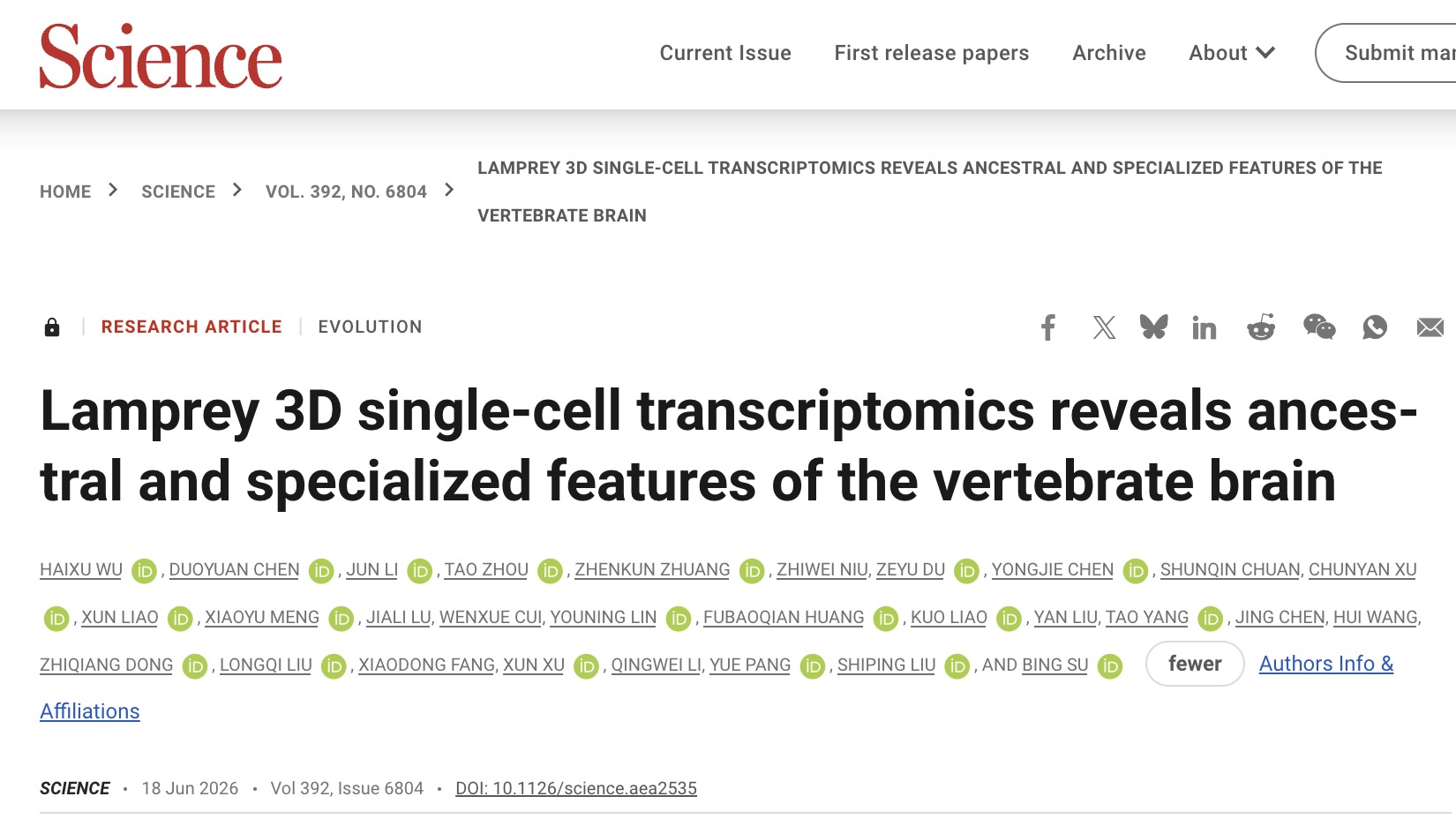
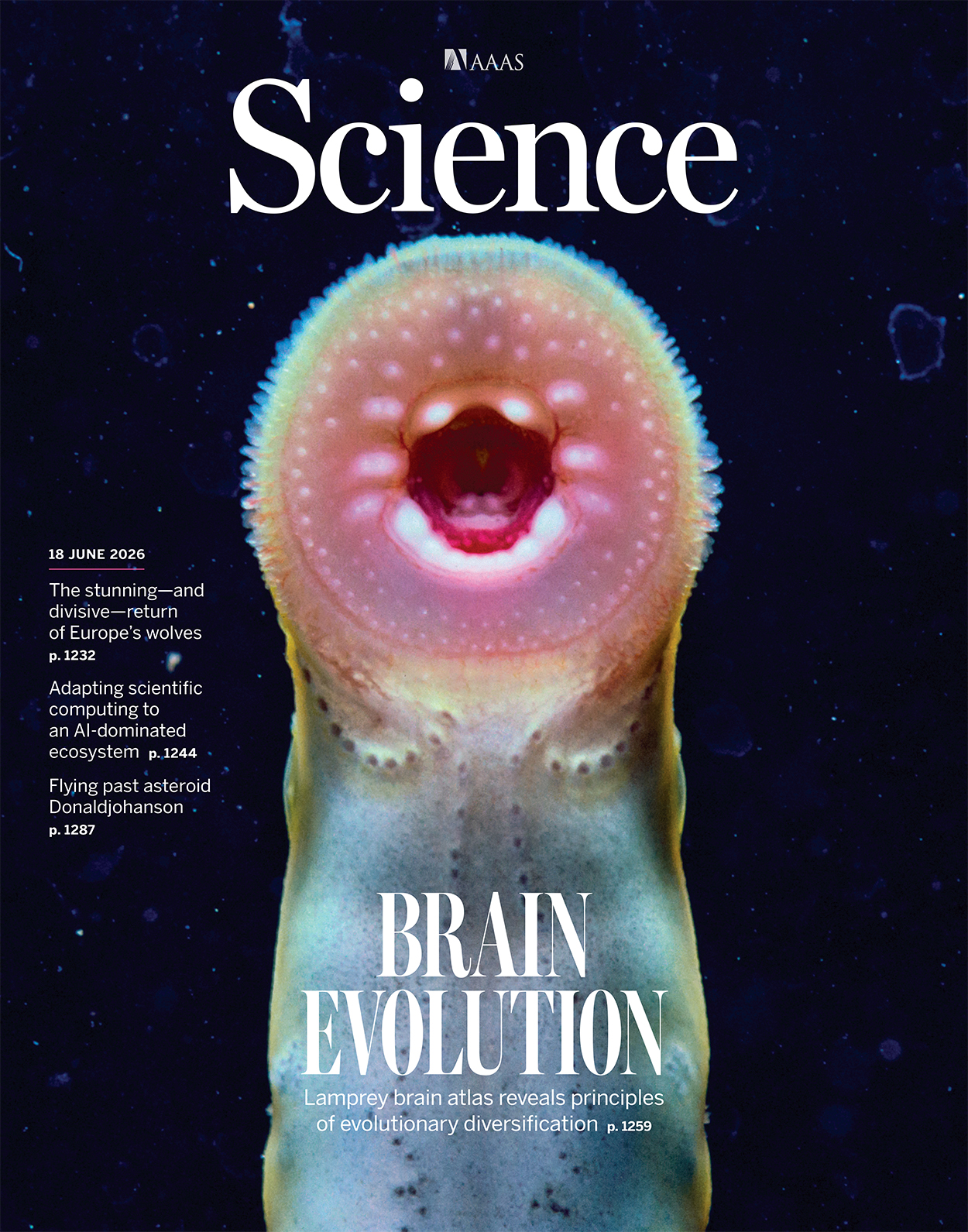
A 3D single-cell spatial atlas of the lamprey brain reveals ancestral and specialized features of the vertebrate brain. This study is featured as cover story in Science, June 18, 2026.
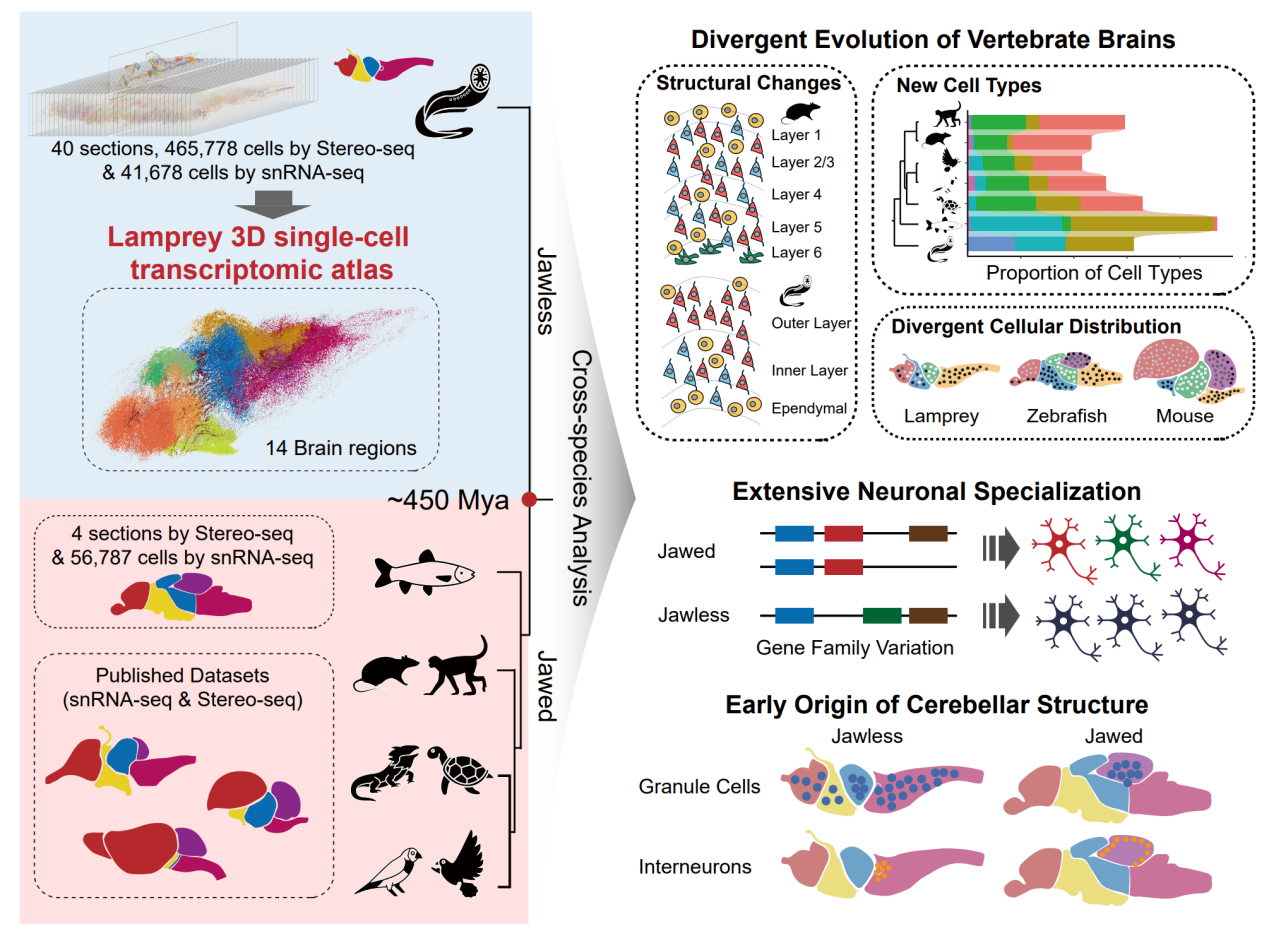
Overview of the lamprey 3D brain atlas and its three main evolutionary findings: conserved brain organization, progressive neuronal specialization, and an early origin of cerebellar structure.
Using Stereo-seq spatial transcriptomics and single-nucleus RNA sequencing, the team mapped gene expression across the entire brain of the adult Far Eastern brook lamprey (Lethenteron reissneri). Forty continuous sagittal sections yielded spatial transcriptomic data from 465,778 cells across 14 brain regions, complemented by 41,678 single-nucleus RNA profiles. Together, these datasets form a high-resolution 3D molecular atlas; an interactive visualization is publicly available at https://db.genomics.cn/stomics/lbspa/.
Systematic comparison between lamprey and mouse revealed extensive molecular conservation across major brain divisions. The olfactory bulb, thalamus, hypothalamus, and other regions showed conserved regional architecture and cell-type composition, suggesting that much of the vertebrate brain's core wiring was already in place half a billion years ago and has been preserved, likely because it underpins fundamental functions such as sensory processing, movement, and hormonal regulation.
Within this conserved framework, the study identified pronounced lineage-specific divergence, particularly in the telencephalon and mesencephalon. The lamprey pallium, for instance, shares most neuronal types with the mouse cortex but arranges them in a markedly different spatial organization, suggesting that brain diversification proceeded largely through spatial rearrangement and functional specialization of ancient cell types rather than solely through the invention of new ones.
A central finding concerns how neurons themselves evolved. By integrating single-cell data from eight vertebrate species spanning jawless fish to primates, the team discovered that lamprey brains are dominated by a class of multitasking neurons, termed anamniote-enriched neurons (AENs), that blur the boundary between excitatory and inhibitory signaling. In zebrafish these multitasking neurons remain abundant, but in reptiles and birds their frequency drops substantially, and in mammals they are scarce (5.5% in mice, 9.4% in macaques) and largely confined to the cerebellum.
Amniotes instead show a marked expansion of specialized neuronal populations with sharply segregated excitatory and inhibitory identities. The study implicates the second round of whole-genome duplication, thought to have occurred after the divergence of jawless and jawed vertebrates, as a likely driver of this shift: the duplication expanded key neuronal identity gene families, enabling spatial subfunctionalization and distinct neuronal types.
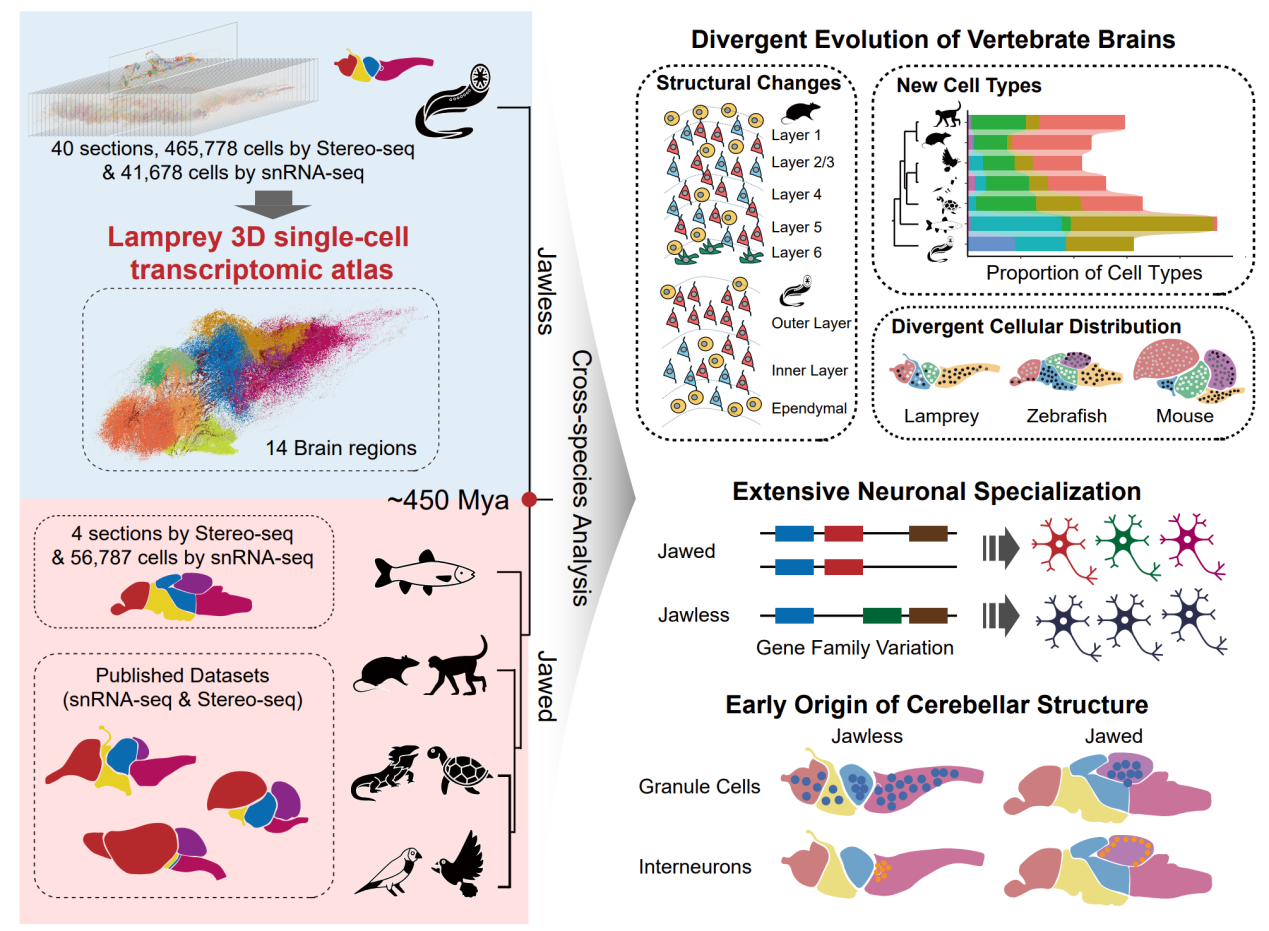
Evolutionary divergence of neuronal cell types between jawless and jawed vertebrates, showing how ancestral generalist neurons gave rise to spatially segregated, functionally specialized populations.
The study also provides new molecular evidence bearing on a long-standing debate about whether lampreys possess any form of cerebellar structure. The researchers identified a cerebellum-like region containing a cell cluster whose transcriptomic profile closely resembles zebrafish cerebellar interneurons, including key inhibitory neuron markers. This region, however, lacks the layered architecture and mature cell types characteristic of jawed vertebrate cerebella. The authors note that the lamprey cerebellum-like region may represent either an ancestral baseline state or a distinct evolutionary trajectory, fundamentally different from the laminated cerebella of jawed vertebrates.
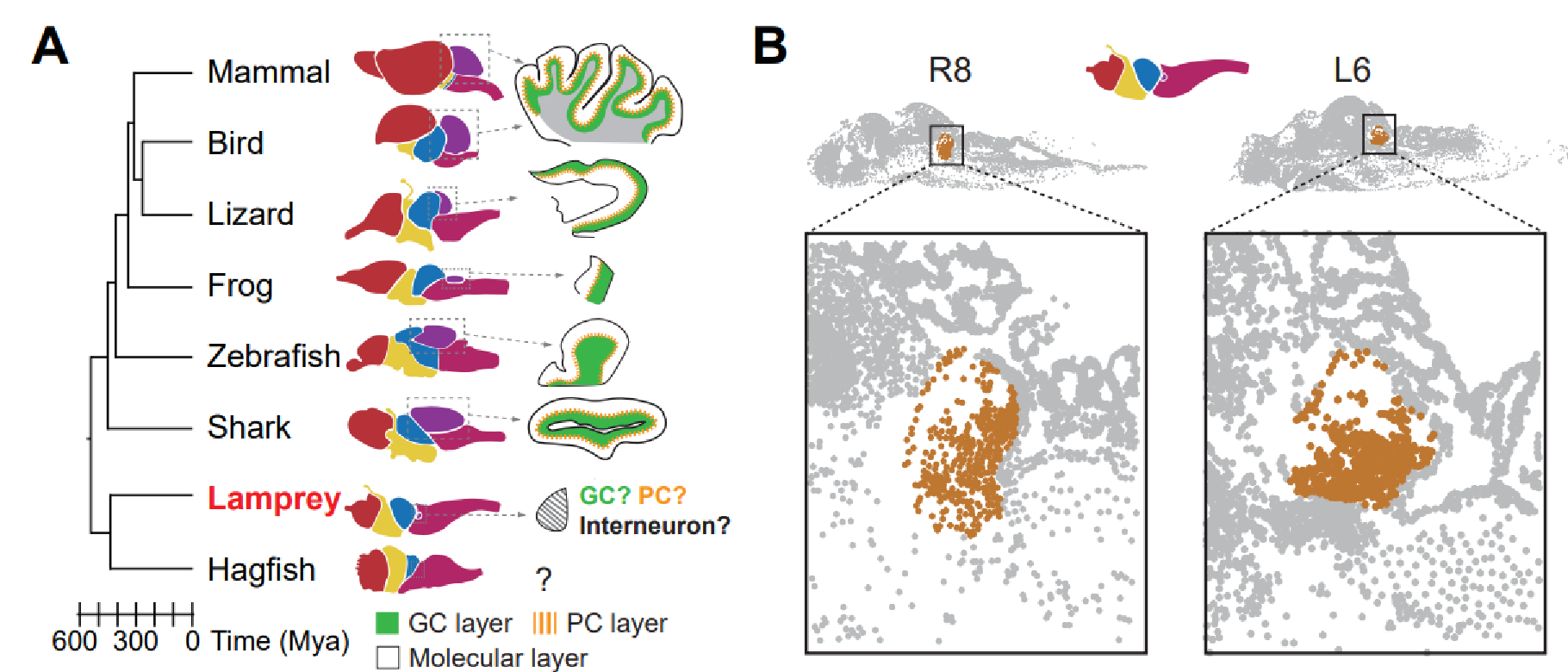
Cerebellar structure across vertebrate evolution. This study provides new molecular evidence that a cerebellum-like cellular framework (B, orange) already existed before the emergence of the layered cerebellum seen in all jawed vertebrates (A).
The atlas captures the fully mature brain; extending this approach to developmental stages and regulatory genomics could further reveal how these ancient cell types are specified and specialized. More broadly, the study offers a reverse reference for understanding the human brain: many of the specialized neural circuits found in the mammalian brain may trace their origins back to a generalist prototype that existed half a billion years ago. By reconstructing that starting point in lamprey, the researchers have charted the earliest chapter of a story that ultimately led to the most complex organ in the animal kingdom.
All experimental protocols involving live animals were approved by the Internal Review Board of Kunming Institute of Zoology, Chinese Academy of Sciences. Data are publicly accessible (accession no. CNP0007565), analysis code is available on GitHub, and the paper is available at https://doi.org/10.1126/science.aea2535.