



Each year, the International Day for Biological Diversity reminds us that biodiversity is a fundamental pillar of life on Earth. For many years, BGI Group has been actively engaged in global biodiversity research through decoding genomes of diverse species, supporting endangered species conservation, studying life in extreme environments, establishing life science databases, and fostering international scientific collaboration.
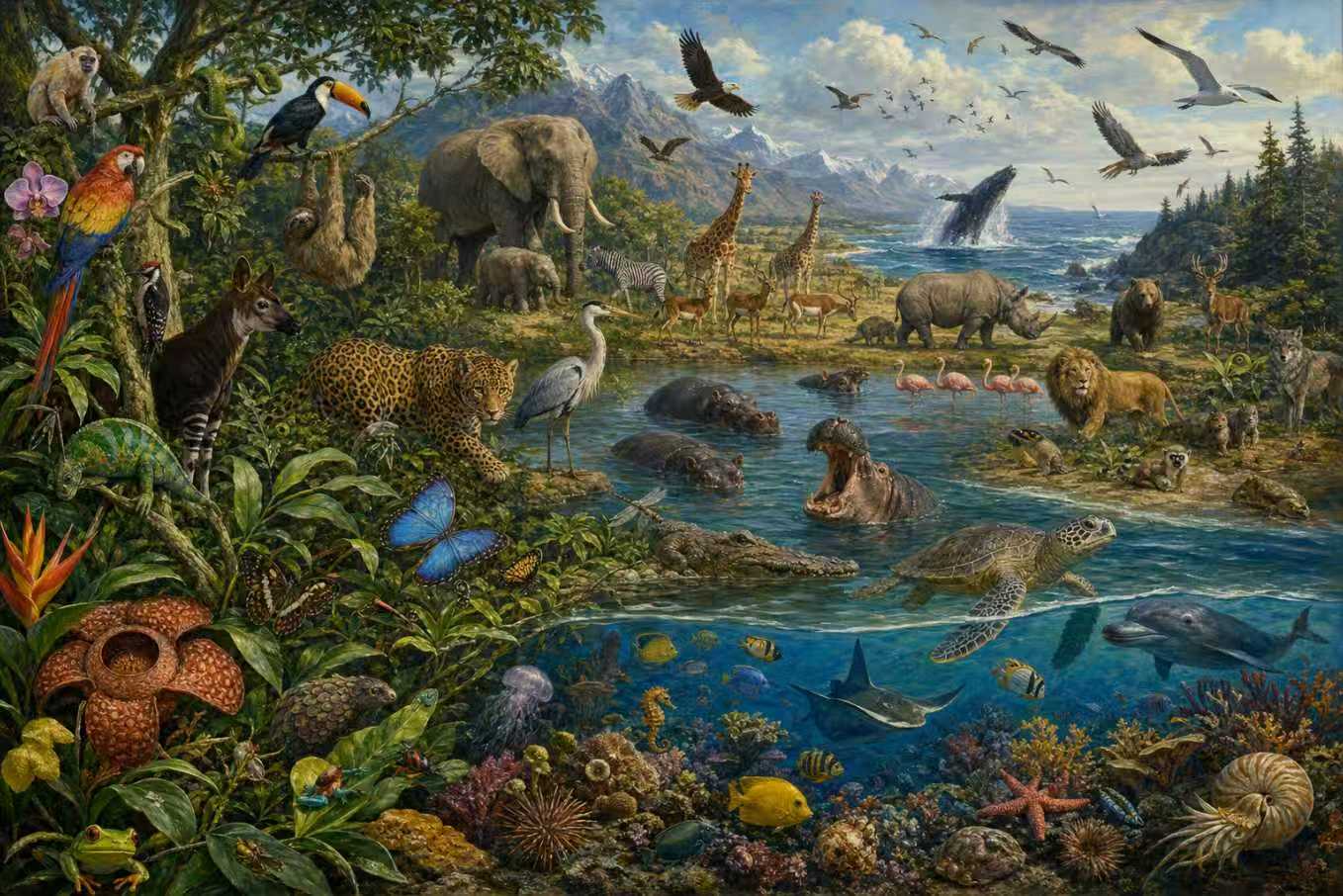 Biodiversity is essential for Earth and our life, keeping ecosystems healthy, providing food, clean air, fresh water, medicine, and maintaining the balance of nature that all living things depend on. (AI generated image.)
In a recent interview, Dr. Li Qiye, Director of the Digital Earth Research Institute & Senior Researcher at the State Key Laboratory of Genome and Multi-omics Technologies at BGI-Research, shared insights into BGI’s representative contributions to global biodiversity research, its technological strengths, international collaboration practices, and future trends in the field. He noted that genomic technologies are giving humanity a new capability: not only to understand how a particular species has adapted to its current environment, but also to help understand their history and predict their future - thereby supporting a more harmonious coexistence between humans and nature.
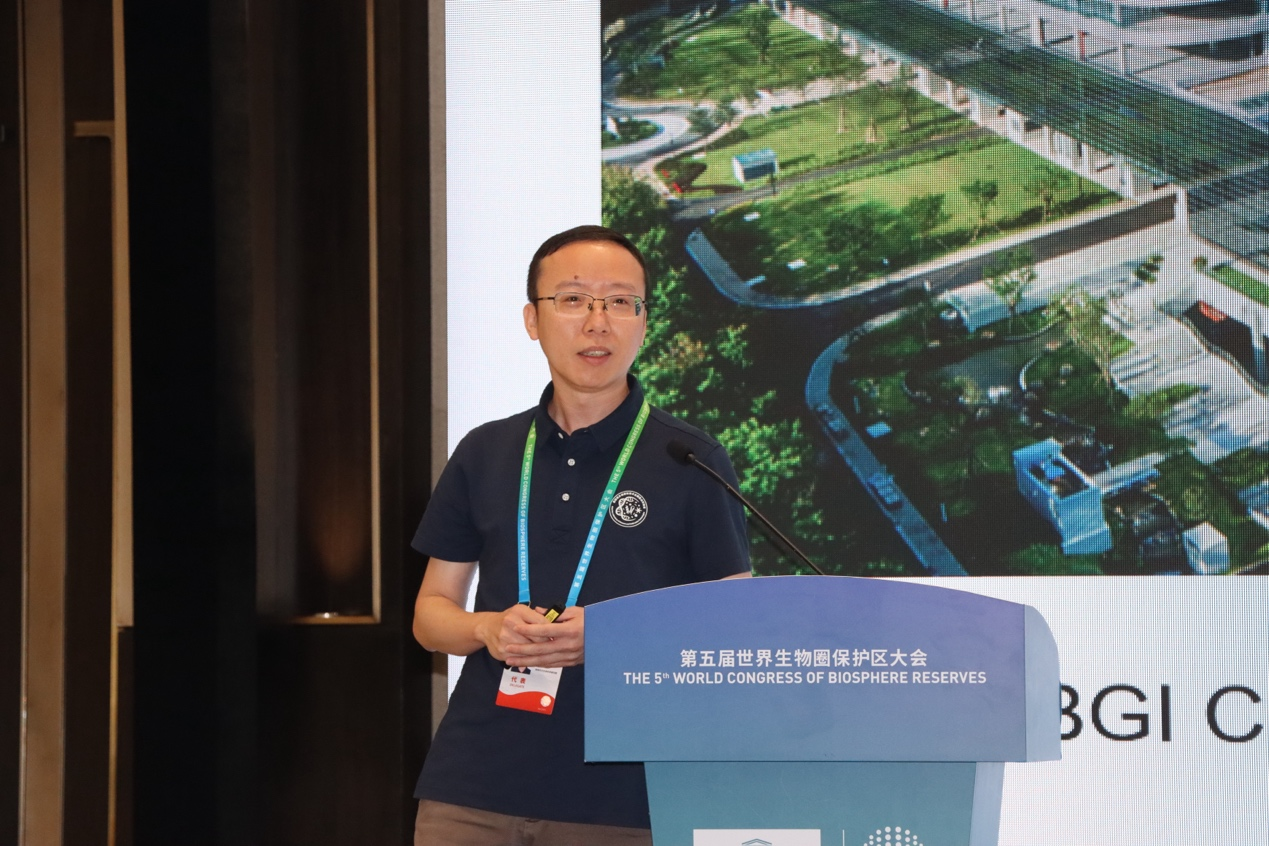 Dr. Li Qiye delivered BGI-Research’s latest research findings at the 5th World Congress of Biosphere Reserves, September 2025.
Q: As the International Day for Biological Diversity approaches, could you introduce some of BGI’s achievements in global biodiversity research?
Li Qiye: Biodiversity is fundamental to sustaining life and the functioning of ecosystems on Earth. BGI has long attached great importance to this field. Overall, BGI’s representative achievements in global biodiversity research can be summarized in three areas.
First, BGI has greatly advanced the digitalization of life on Earth. As a key participant and initiator of major international scientific programs such as the Earth BioGenome Project (EBP), the Bird 10,000 Genomes Project (B10K), the 10,000 Fish Genomes Project (Fish10K) and the 10,000 Plant Genomes Project (10KP), BGI has leveraged its self-developed sequencing technologies and platforms to decode the genomes for over 6,700 animal and plant species. These essential genomic resources have supported extensive research on species origins, adaptation, and conservation. For certain biological taxa, such as the birds, ants, fishes and bryophytes, we have contributed more than 50% of the genomes generated globally to date.
 A reconstruction of the avian family tree, based on whole genome sequences of 48 bird species from 34 orders. (Painting by Jon Fjeldså)
A remarkable example comes from avian genomics. Today, the genomes of over half of all extant bird species worldwide have been decoded with the support of BGI’s technologies. Based on these massive whole-genome data, our collaborators from different countries have revised the avian tree of life twice, and addressed many interesting questions about bird evolution, such as why birds lack teeth, how the flight feather originated, and how the penguins adapt to arctic environment.

A BGI-Research led study reveals a new phylum named Prasinodermaphyta.
In the field of plant, BGI has also contributed to important taxonomic breakthroughs through genomics. In collaboration with teams from Germany, Denmark, Belgium, and other countries, BGI conducted systematic research on a unicellular planktonic green alga living in deep-sea environments. The study determined that the species belongs to a newly identified lineage that diverged earliest within green plants and constitutes a new phylum named Prasinodermaphyta, thereby revising the recognized number of plant phyla from 14 to 15.
Second, BGI has supported the conservation of endangered species. BGI has carried out extensive genomic studies on endangered animals and plants, including the giant panda, Tibetan antelope, Amur tiger, pangolins, and cycads. These studies help scientists understand species’ genetic diversity, population history, and adaptive potential, while also providing scientific evidence for conservation management, captive breeding, population recovery, and policy formulation.
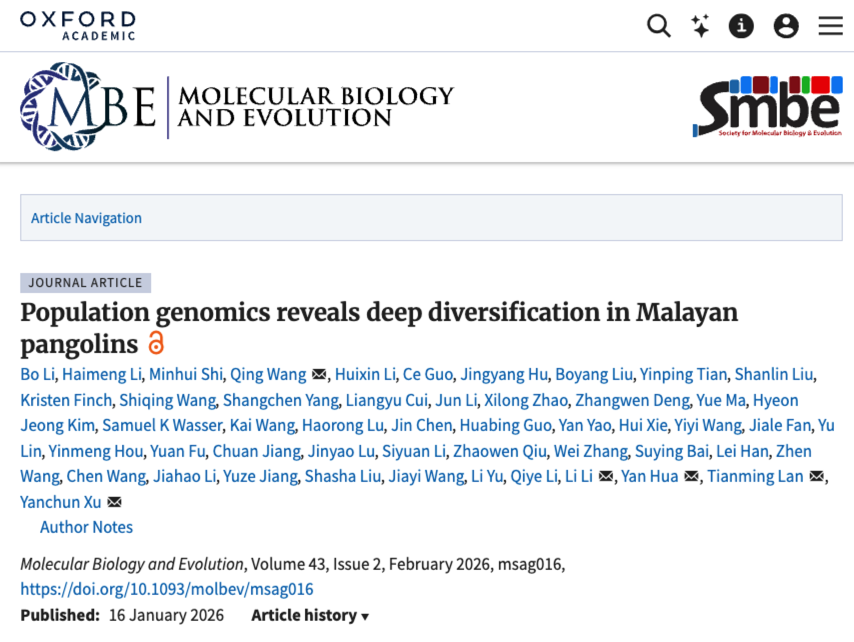
The BGI-Research participated research provides critical insight for the protection and conservation of Malayan pangolins.
One recent example that left a strong impression on me involved pangolin research. BGI recently participated in a large-scale population genomics study of pangolins, which revealed that the Malayan pangolin can be divided into at least three distinct genetic populations. This means that gene flow among these populations is relatively limited, suggesting they represent relatively independent evolutionary units. Therefore, in conservation practice, these different genetic populations should be managed as separate conservation units. At the same time, the combination of genomic and morphological evidence also helped us confirm the existence of a fifth Asian pangolin species (Manis mysteria). This highlights how genomic technology provides a new “lens” for uncovering the cryptic biodiversity in nature and supporting more scientific and refined conservation actions.
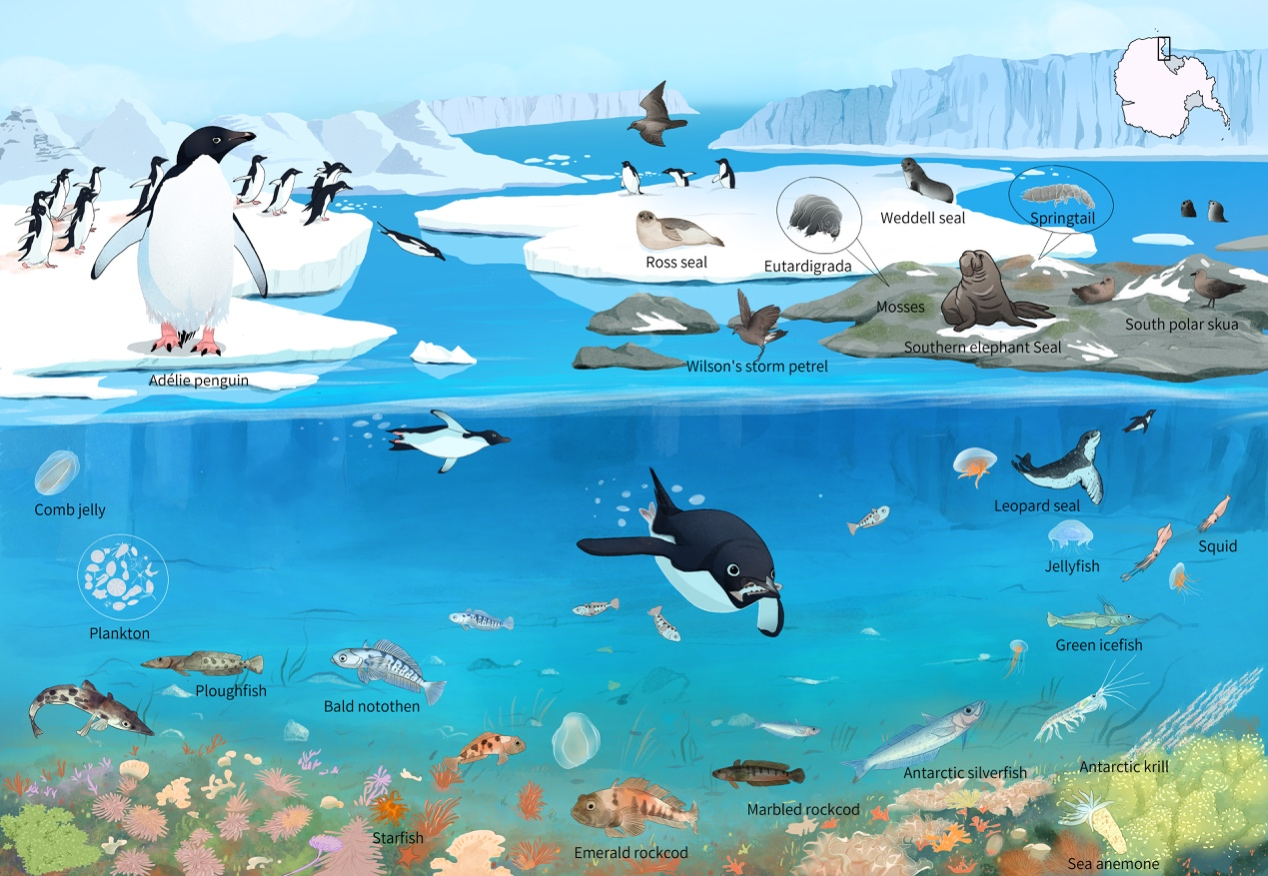 6,000 Years of Antarctic Biodiversity. (Artwork by Baijing, Copyright: Centre for Evolutionary & Organismal Biology at Zhejiang University)
Third, BGI has actively explored the mysteries of life in extreme environments. BGI has continued to focus on life in extreme environments such as polar regions, plateaus, and the deep sea, conducting extensive genomic investigations of microorganisms and macroorganisms living in these special habitats. In addition, we have recently used ancient DNA technology to reconstruct biological community changes along the coast of Antarctica’s Ross Sea over the past 6000 years. This work has helped the scientific community understand the evolution of polar ecosystems on a longer timescale.
Q: What technological advantages does BGI have?
Li Qiye: BGI’s strengths begin with its diverse, self-developed sequencing technologies and platforms, encompassing high-throughput short-read, long-read, and ultra-long-read sequencing. These technologies provide complementary capabilities to facilitate high-quality, telomere-to-telomere (T2T) complete genome assembly for different species. Besides, built on our sequencing platforms, environmental DNA (eDNA) technology also enables rapid monitoring of species composition, dynamic changes, and potential invasive species within an ecosystem.
A second advantage is BGI’s comprehensive multi-omics technologies and products. Beyond genome sequencing, we possess capabilities in profiling single-cell omics, spatiotemporal omics, transcriptomics, epigenomics, proteomics, and metabolomics. This means BGI can not only decode a one-dimensional linear genome of a species but also digitalize life across multiple dimensions.
The third advantage lies in big data analysis and artificial intelligence. BGI has powerful cloud-based bioinformatics platforms that integrate AI technologies for life science data mining. This allows us to efficiently explore massive biodiversity genomic data and accelerate the discovery of potential drugs, industrial enzymes, antimicrobial peptides, and valuable breeding genes from biodiversity.
Q: How does BGI collaborate with overseas research institutions, conservation organizations, and international programs?
Li Qiye: Many major scientific programs cannot be completed by any single country or institution alone. Therefore, collaboration is essential. One of BGI’s core principles in international collaboration can be traced back to the spirit of “Owned by All, Done by All, Shared by All” advocated by the Human Genome Project. Consequently, BGI actively promotes the global sharing of technological capabilities.
For example, in biodiversity-rich regions such as Southeast Asia and Africa, BGI has worked with local institutions to build joint centers and collaborative platforms and helps strengthen local researchers’ capacity in biodiversity genomic research and data interpretation. Ultimately, the goal is to ensure that all parties benefit from collaboration and jointly advance scientific progress.
Q: Looking ahead, what major trends do you see emerging in international biodiversity research? In which areas will BGI continue to contribute?
Li Qiye: I anticipate that several important trends, driven by the rapid advancements in omics and AI technologies, will shape the biodiversity research in the near future.
First, as the Earth BioGenome Project enters a new phase, the available of reference genomes with high-quality annotation will increase explosively in the coming years, moving from limited representative species toward a more complete tree of life on Earth. This explosion of biodiversity genomic data will revolutionize our understanding of life and shape the future of life on our planet.
Second, species digitalization will move from single-dimensional reference genome construction to multi-dimensional characterization, powered by the cutting-edge multi-omics technologies.
Third, artificial intelligence will be fully integrated into biodiversity data mining, accelerating the discovery of cryptic new species, uncovering the patterns of life’s evolution and adaptation to extreme environments, and fully unlocking the potential of biodiversity for human welfare through novel medicines, enzymes, bioactive compounds, and valuable genes.
Fourth, biodiversity conservation will become more precise, real-time, and systematic. In the future, the application of real-time long-read sequencing in ecological monitoring and genetic diversity tracking will provide more timely and accurate scientific evidence to inform nature reserve management, ecological restoration, law enforcement, and policymaking.