



Self-developed therapy from BGI Group subsidiary Hemogen Therapeutic approved for use at West China Lecheng Hospital, Sichuan University, with treatment cost reduced to RMB 1.2 million, or approximately USD 180,000
Shenzhen, June 1 — BGI Group announced that the severe thalassemia gene therapy independently developed by its subsidiary Hemogen Therapeutic has been approved for implementation at West China Lecheng Hospital of Sichuan University in the Hainan Boao Lecheng International Medical Tourism Pilot Zone. The treatment cost has been reduced to RMB 1.2 million, or approximately USD 180,000, creating a more accessible pathway for patients living with severe thalassemia.
This marks a new stage in the clinical application of BGI Group’s self-developed gene therapy. Supported by the policy and platform advantages of the Hainan Boao Lecheng International Medical Tourism Pilot Zone, the approval also opens a key pathway for the clinical translation of this innovative biomedical technology, enabling more patients to gain earlier access to advanced treatment through West China Lecheng Hospital of Sichuan University.
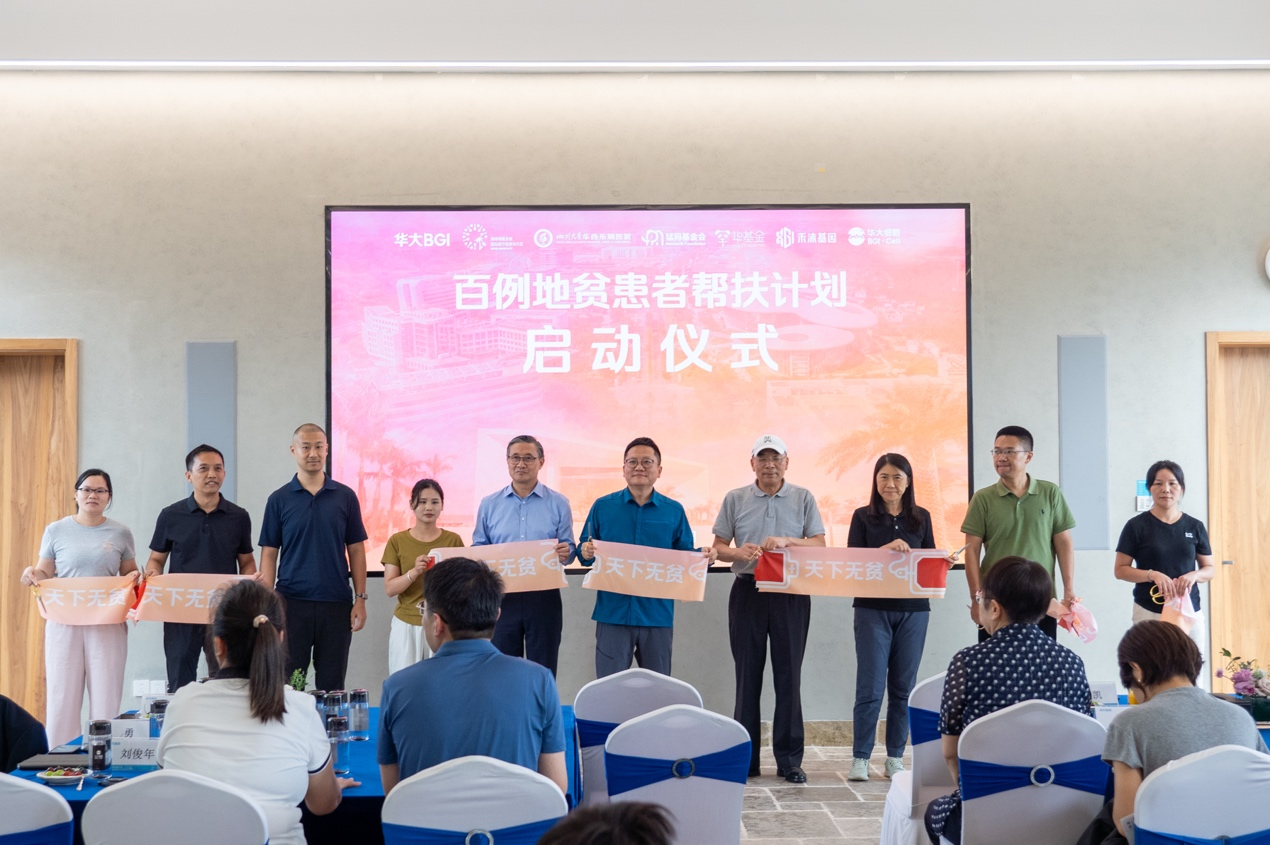 BGI Group CEO Yin Ye (middle), together with Hemogen Therapeutic and Mammoth Foundation’s thalassemia assistance public welfare special program, officially launched the “100 Thalassemia Patients Assistance Plan.”
Thalassemia is an inherited blood disorder caused by genetic defects that impair the body’s ability to produce normal hemoglobin, the protein in red blood cells responsible for carrying oxygen. Severe thalassemia can cause life-threatening anemia, growth and developmental delays, bone deformities, enlarged spleen, organ damage and other serious complications. Many patients depend on lifelong blood transfusions and iron-chelation therapy, while repeated transfusions may lead to iron overload that damages the heart, liver and endocrine system.
For many patients with severe thalassemia, bone marrow transplantation has been one of the few curative treatment options. However, access remains limited because finding a suitable donor match is extremely difficult, particularly among unrelated donors, where the probability of a successful match can be as low as one in tens of thousands or even one in a million.
Hemogen Therapeutic’s β-thalassemia gene therapy uses a lentiviral vector to introduce a functional β-globin gene into a patient’s own hematopoietic stem cells. These modified cells are then returned to the patient, helping restore the body’s ability to produce functional hemoglobin and addressing the disease at its genetic root.
Unlike donor-based transplantation, this innovative autologous transplant approach uses the patient’s own cells, eliminating the need to wait for a matched bone marrow donor. It also greatly reduces the risk of graft-versus-host disease, avoids the need for long-term immunosuppressive medication and involves relatively lower-intensity pre-treatment chemotherapy, reducing the physical burden on patients, especially children.
Clinical follow-up data show that the gene-corrected hematopoietic stem cells can survive stably in the body over the long term. Treated patients have the potential to end lifelong dependence on blood transfusions. Among patients who previously received the therapy, the longest period of transfusion independence has exceeded five years, enabling them to return to normal daily life.
The commercialization of gene therapy worldwide has long been associated with extremely high treatment costs, with some therapies priced at several million US dollars globally. Against this backdrop, BGI Group has worked to lower the cost barrier for patients. Leveraging BGI Group’s accumulated expertise in genomics and cell technologies, Hemogen Therapeutic has made breakthroughs in core patents, manufacturing processes and quality-control release systems. These advances have reduced dependence on overseas technologies and supported a major reduction in treatment costs.
Alongside the therapy’s approval, BGI Group CEO Yin Ye, together with Hemogen Therapeutic and Mammoth Foundation’s thalassemia assistance public welfare special program, officially launched the “100 Thalassemia Patients Assistance Plan.” The first phase of the program has gathered RMB 5 million, or approximately USD 740,000, in charitable funding. The assistance plan will operate through a five-party collaborative support system involving the Lecheng government, enterprises, individuals, foundations and hospitals.
BGI Group has a long track record in tackling thalassemia. BGI Genomics, a subsidiary of BGI Group, launched a thalassemia genetic testing service based on high-throughput sequencing technology in 2013, providing important support for thalassemia screening, diagnosis and intervention. To date, the service has reached more than one million people.
To support families already affected by severe thalassemia, BGI Genomics, together with the Shenzhen Media Foundation, launched the “HUA Foundation” special fund and began providing free HLA matching services. As of the end of April 2026, the program had benefited 7,990 families, helping 873 patients successfully find fully matched donors.
Since its establishment in 2022, Mammoth Foundation’s thalassemia assistance public welfare special program has helped more than 80 thalassemia patients successfully receive hematopoietic stem cell transplantation.