



In a major step toward safeguarding future food security, the STOC Plant (Plant SpatioTemporal Omics Consortium), led by international scientists, officially launched the “Wheat Spatiotemporal Atlas Project.” The announcement served as the centerpiece of the 2nd International Plant Spatiotemporal Omics Research Conference (STOC Plant 2025), held from November 27 to 30 at the Zhongguancun International Innovation Center in Beijing.
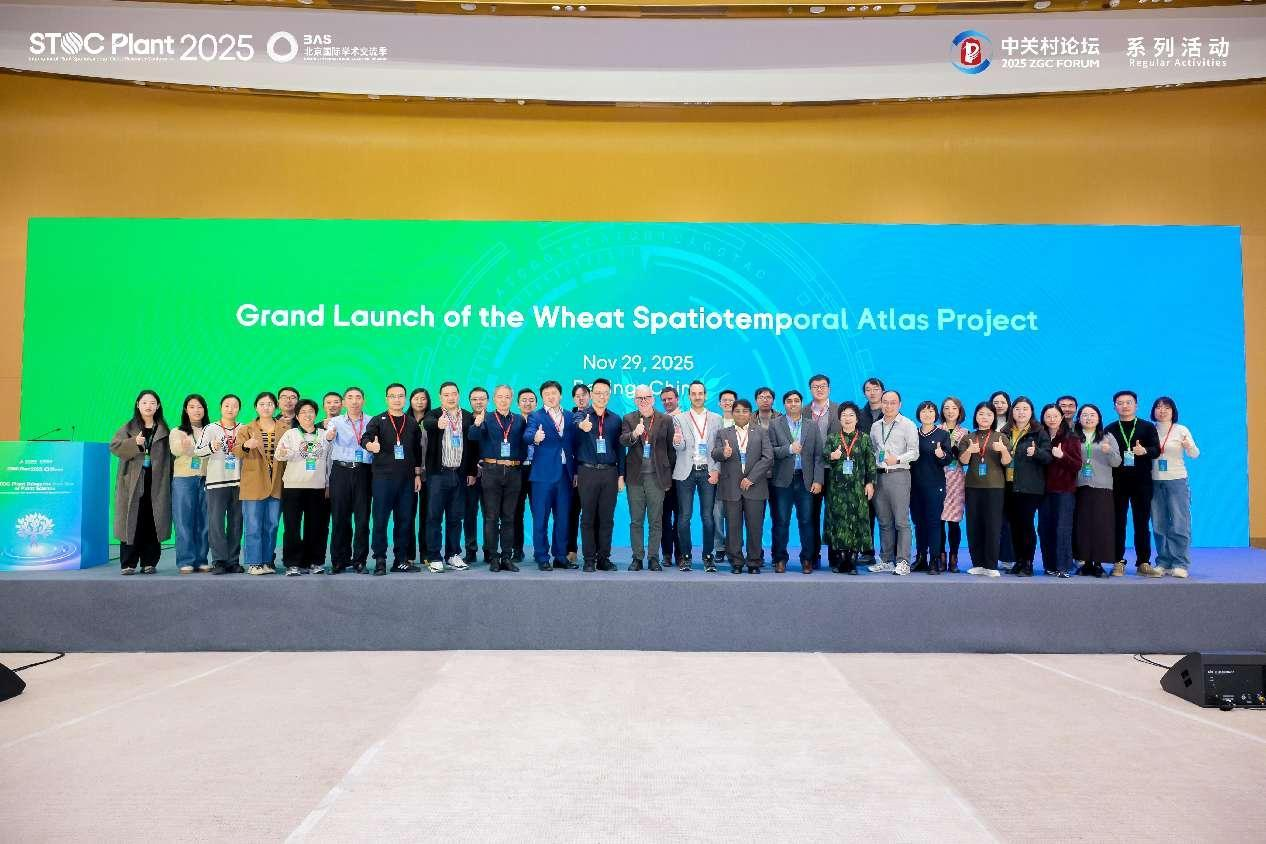 Group photo of " Wheat Spatiotemporal Atlas Project" members. (Credit: STOC Plant 2025)
STOC Plant 2025 was hosted by the STOC Plant and the State Key Laboratory of Genome and Multi-omics Technologies and organized by BGI-Research, Southern University of Science and Technology, and GigaScience Press. The conference gathered over 60 leading experts from 13 countries and regions, alongside more than 400 participants. Discussions centered on the integration of plant spatiotemporal omics, AI, and big data to drive innovation in agricultural research.
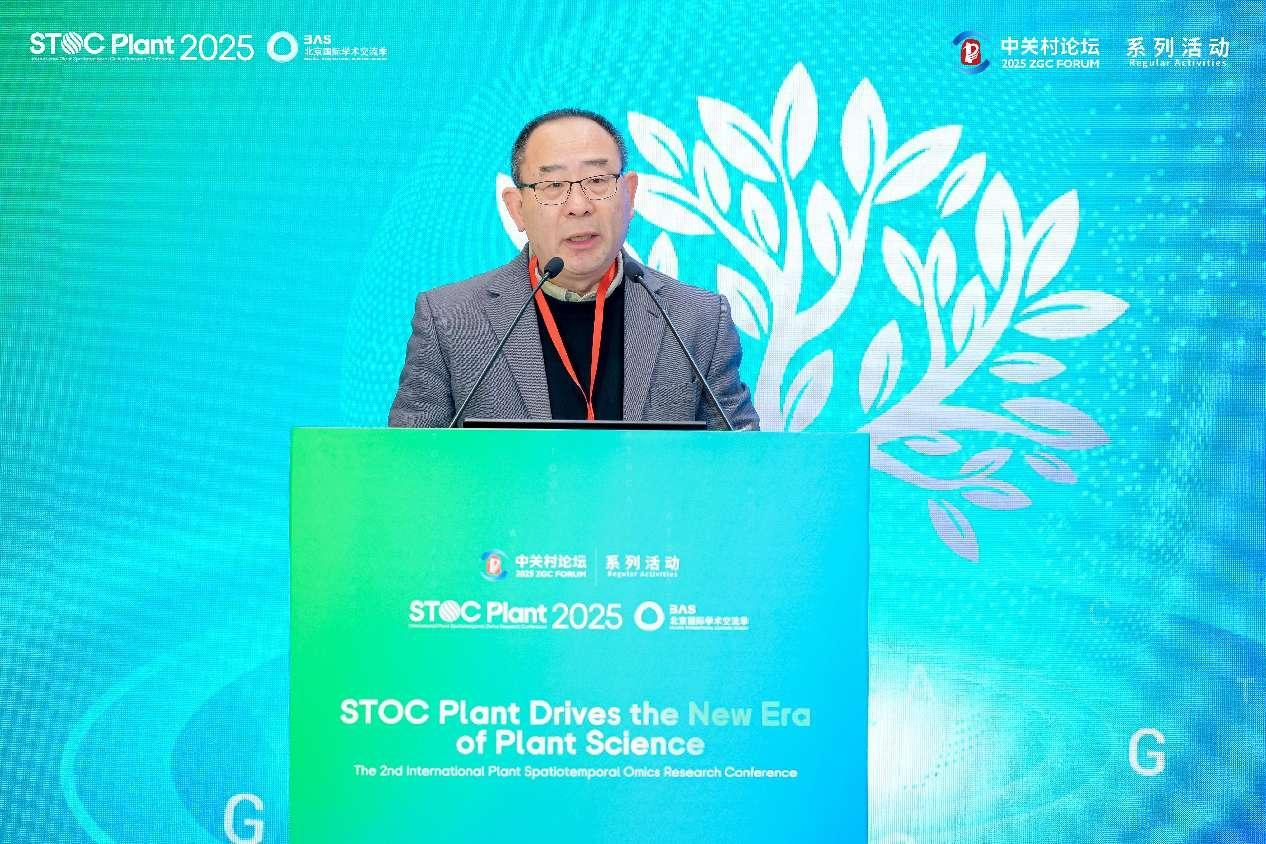 Academician Weicai Yang delivers the opening remarks. (Credit: STOC Plant 2025)
In his opening remarks, Conference Chairman and Academician of the Chinese Academy of Sciences (CAS) Weicai Yang welcomed the international attendees and highlighted the consortium's progress in establishing community standards for open science and data sharing. He pointed to the launch of the “Wheat Spatiotemporal Atlas Project” as a critical milestone, underscoring that the integration of multi-omics and AI will be essential for bolstering global food supplies. Yang concluded by calling for deepened international collaboration to drive long-term innovation in the field.
A “Roadmap” for the Future of Wheat
Wheat is a cornerstone of global nutrition, but its yield stability faces growing pressure from climate change and breeding bottlenecks. To address this urgency, the STOC Plant unveiled its first flagship project: the “Wheat Spatiotemporal Atlas Project.”
Led by researchers from multiple countries, including China, Australia, and Germany, the project aims to construct the world’s open-access, whole-life-cycle single-cell atlas of wheat. By precisely mapping cell differentiation, gene expression, and metabolic activities from seed germination to harvest, the atlas will serve as a “roadmap” for precision breeding. Ultimately, these data will lay the foundation for developing “tailored” wheat varieties with enhanced resilience and flavor.
The project was officially inaugurated by ten leading experts, including Professor Rajeev Varshney, Fellow of the Royal Society and Adjunct Professor at Murdoch University; Professor Robert Henry, Fellow of the Queensland Alliance for Agriculture and Food Innovation and Emeritus Professor at the University of Queensland; Zhong-Hua Chen, Professor of Faculty of Sciences, Engineering and Technology at University of Adelaide; and Dr. Xun Xu, Chief Researcher of BGI Group and Director of State Key Laboratory of Genome and Multi-omics Technologies.
STOC Plant: From Inception to Global Impact in One Year
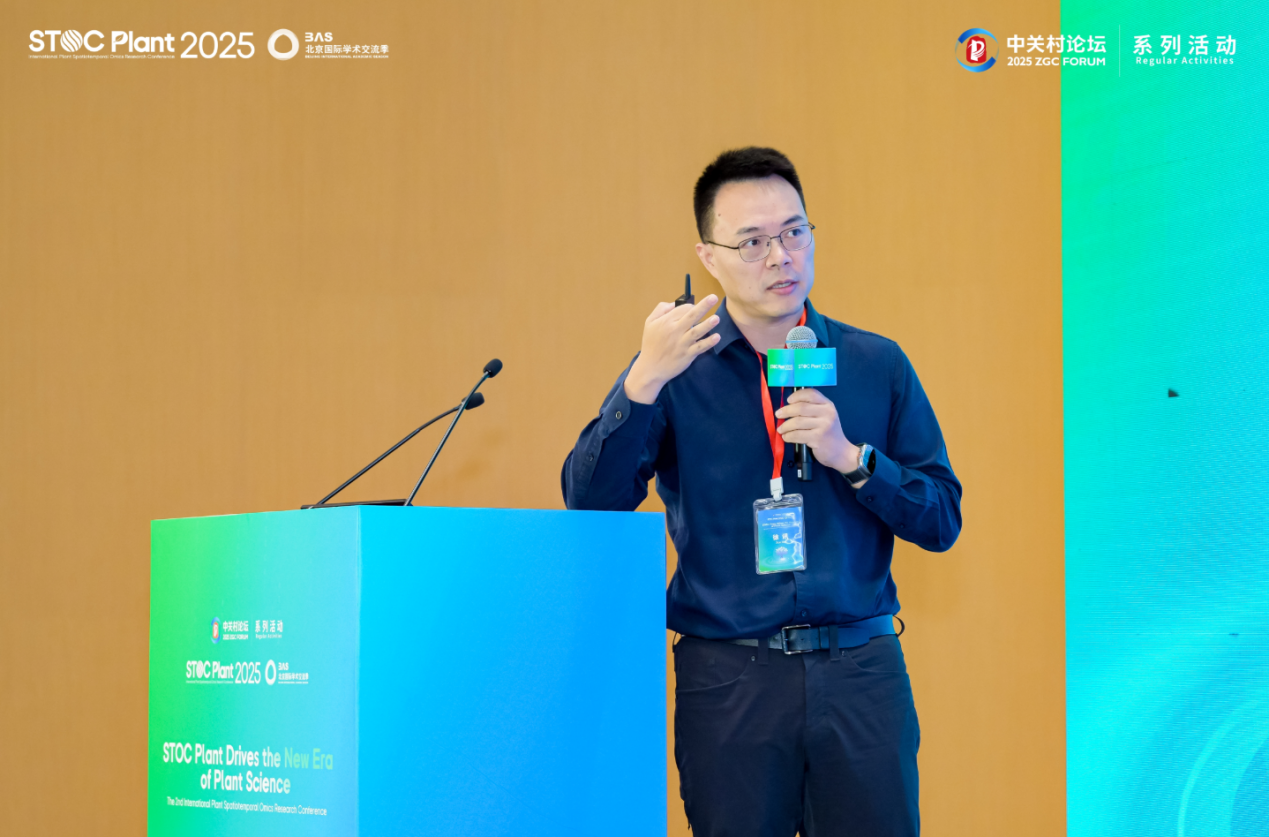 Dr. Xun Xu introduces the STOC Plant's progress. (Credit: STOC Plant 2025)
At the conference, Dr. Xun Xu highlighted the consortium's progress over the past year. Leveraging the STOmics platform, members have already published key results on the cellular architecture of rice, soybean, and Arabidopsis.
Moving forward, Dr. Xu emphasized that the alliance remains committed to “Open Collaboration, Sharing of Data, Empowering Research, Active Interaction.” The consortium plans to build a standardized multi-omics platform and generate comprehensive atlases for additional staple crops, including maize and potato. These efforts aim to create large-scale “virtual plant cell models,” providing the data foundation needed for precision breeding and ecosystem protection.
Since its establishment in Shenzhen in June last year, the STOC Plant consortium has expanded rapidly, growing from an initial group of 12 to the current 19 member countries.
Showcasing Global Advances in Spatiotemporal Omics and Plant Resilience
Themed “STOC Plant Drives the New Era of Plant Science,” this year’s conference brought together more than 60 leading experts from 13 countries and regions. Through plenary talks, thematic sessions, and focused discussions, speakers showcased cutting-edge applications of spatiotemporal omics, single-cell omics, genomics, and related technologies. Topics ranged from single-cell resolution gene expression atlases and AI-powered big data analysis to precise mapping of metabolite dynamics in time and space, highlighting the field’s significant trend toward technological convergence and interdisciplinary collaboration.
In the keynote segment, Professor Rajeev Varshney discussed translational genomics for climate-resilient and sustainable agriculture. Professor Zhixi Tian, Principal Scientist of the Soybean Research Program, Yazhouwan National Laboratory, presented research on gene selection during the global spread and improvement of soybean. Professor Robert Henry explored how spatial omics can contribute to global food security.
Professor Manuel Spannagl, deputy group leader of Helmholtz Munich’s Plant Genome and Systems Biology, presented his team’s pan-omics research in wheat. Professor Jing-Ke Weng of Northeastern University in the United States discussed integrated omics approaches to plant metabolism in the era of artificial intelligence. Professor Jian-Min Zhou, Principal Scientist of the Crop Disease Resistance Mechanisms and Technology Team at the Yazhouwan National Laboratory, presented on the alkalinization-mediated cell-cell communication in plant immunity.
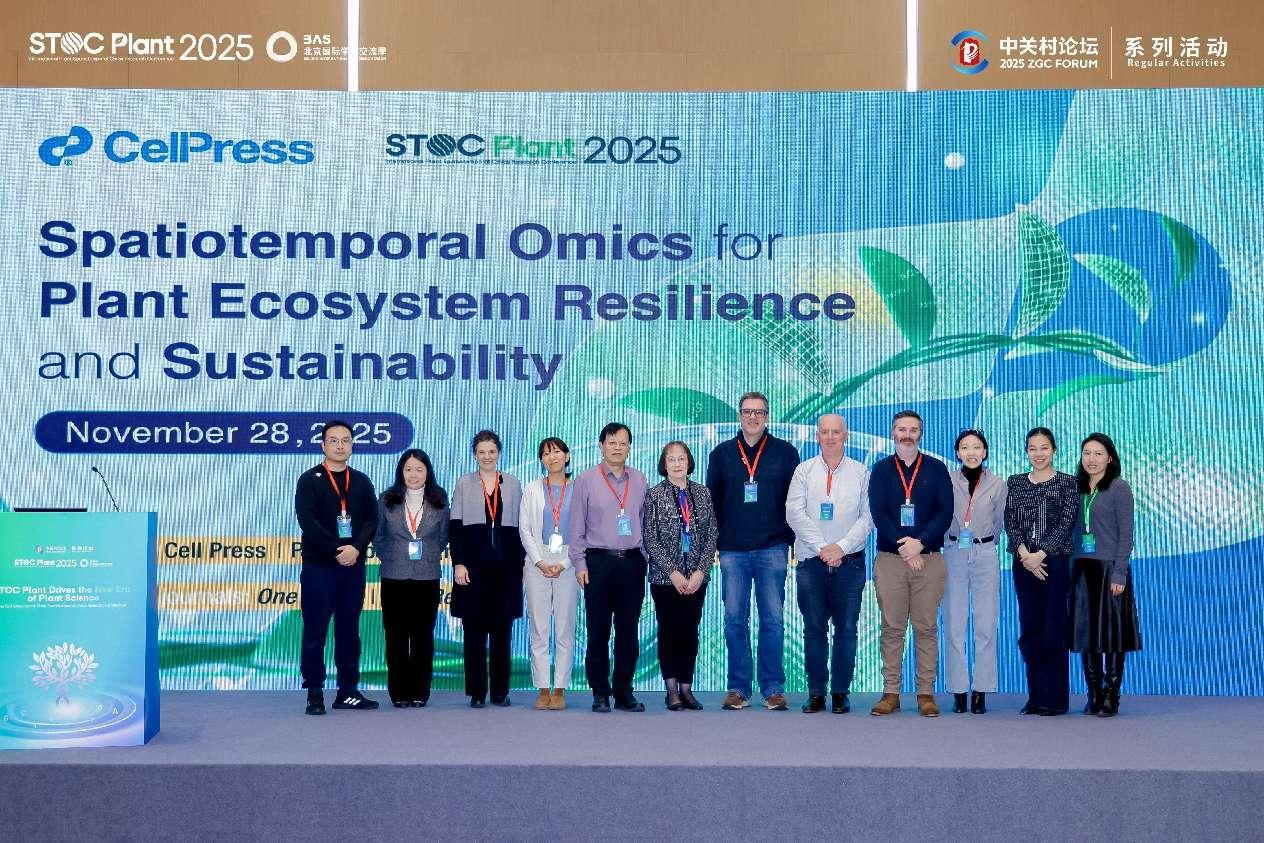 The symposium features a special joint seminar organized with Cell Press. (Credit: STOC Plant 2025)
To further foster interdisciplinary dialogue, the symposium also featured a special joint seminar organized with Cell Press. Editors from leading Cell Press journals, including One Earth and Cell Reports, joined experts from across the field to explore how plants adapt to climate change and environmental stress, and how spatiotemporal omics can be applied to ecological restoration and sustainable agriculture. Academician of CAS Yongguan Zhu, the Director General of the Institute of Urban Environment, CAS, shared cutting-edge insights into the “soil-plant continuum microbiome.”
The conference also featured multiple parallel sessions co-organized with international research institutions. These dedicated workshops covered cutting-edge topics such as "Single-cell multi-omics toward understanding plant functions and phenotypes", "Spatial omics for wheat and beyond", and "The full stack of Stereo-seq: from technology to discovery." These workshops provided attendees with a multifaceted and in-depth platform for academic exchange and collaboration.
The successful convening of STOC Plant 2025 not only showcased the latest research and technological breakthroughs in global plant spatiotemporal omics but also, through the launch of the Wheat Spatiotemporal Atlas Project and deepened international collaboration, established an open and shared platform for plant scientists worldwide. As plant spatiotemporal atlas projects advance systematically and the integration of multi-omics with AI deepens, these efforts are poised to empower smart agriculture breeding and ecological conservation.
The STOC Plant consortium remains open for membership applications (Website: www.sto-consortium.org; Email: stoc-plant@sto-consortium.org).
The Wheat Spatiotemporal Atlas Project welcomes participation from global research teams.