



Two global scientific collaboration projects co-initiated by BGI Group – the Human Genome Project II (HGP2), and the African Microbiome Consortium for Infectious Diseases (AMC-ID) - were recently selected for endorsement by the United Nations Educational, Scientific and Cultural Organization (UNESCO) as part of its International Decade of Sciences for Sustainable Development (IDSSD), 2024-2033.
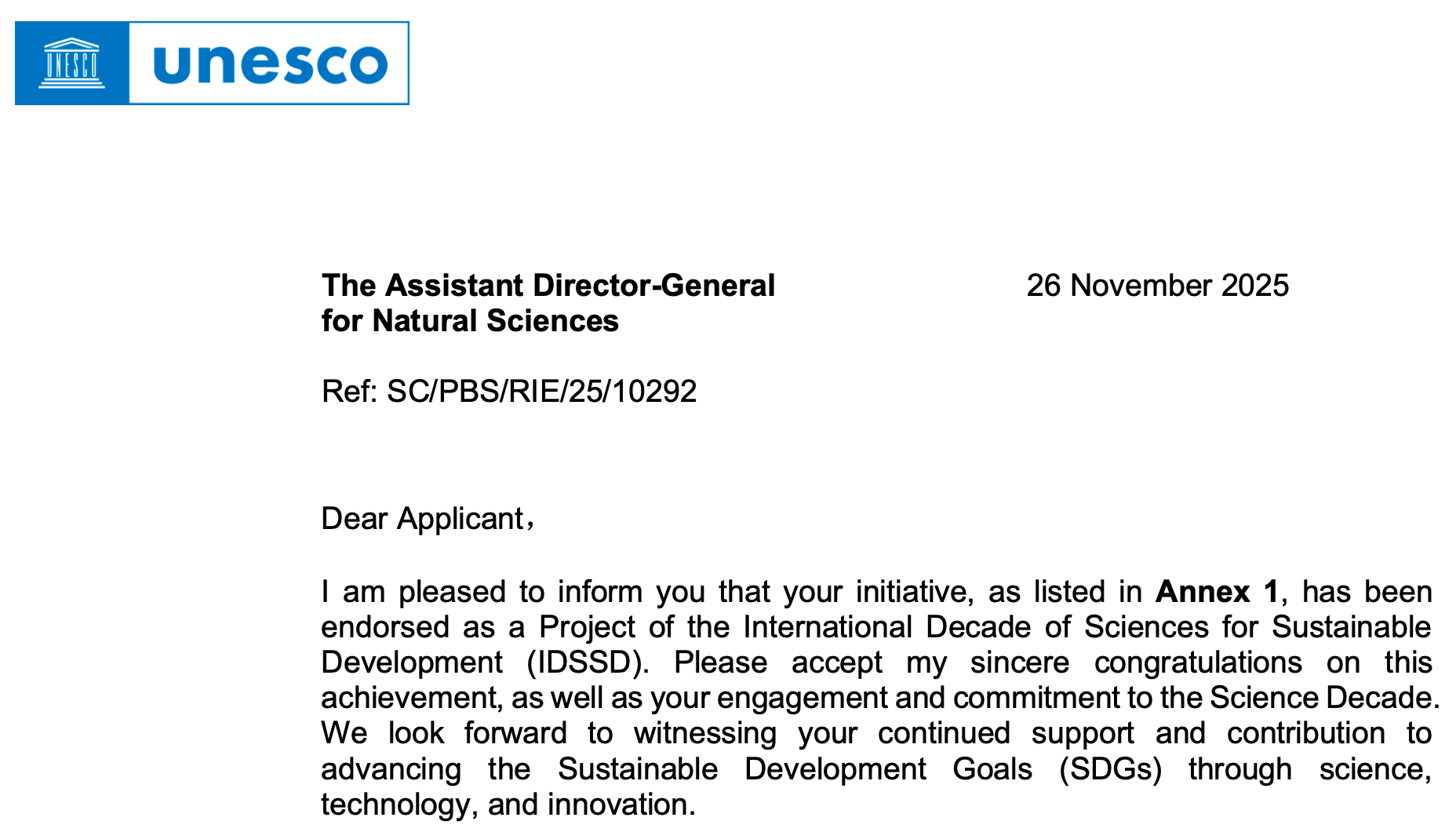 Selection letter from UNESCO
To date, more than 70 initiatives have been endorsed by UNESCO on behalf of the United Nations following a rigorous review and selection process. As UNESCO notes on its website dedicated to IDSSD: “This Decade offers a unique opportunity for humanity to fully harness the power of science in advancing sustainable development and securing a safe and prosperous future for everyone.”
Human Genome Project II (HGP2)
HGP2, initiated by BGI Group, aims to build on the outcomes of the original Human Genome Project and empower all of humanity to read and use the knowledge of their genomes to lead healthier and longer lives, making precision medicine a true health tool for everyone.
Scientists from 14 countries published an editorial article in the internationally renowned academic journal Cell Research on the mission of HGP2, establishing goals around data generation, precision intervention and clinical translation. The submission, selected as part of IDSSD, received signed support from scientists in over 60 countries around the world.
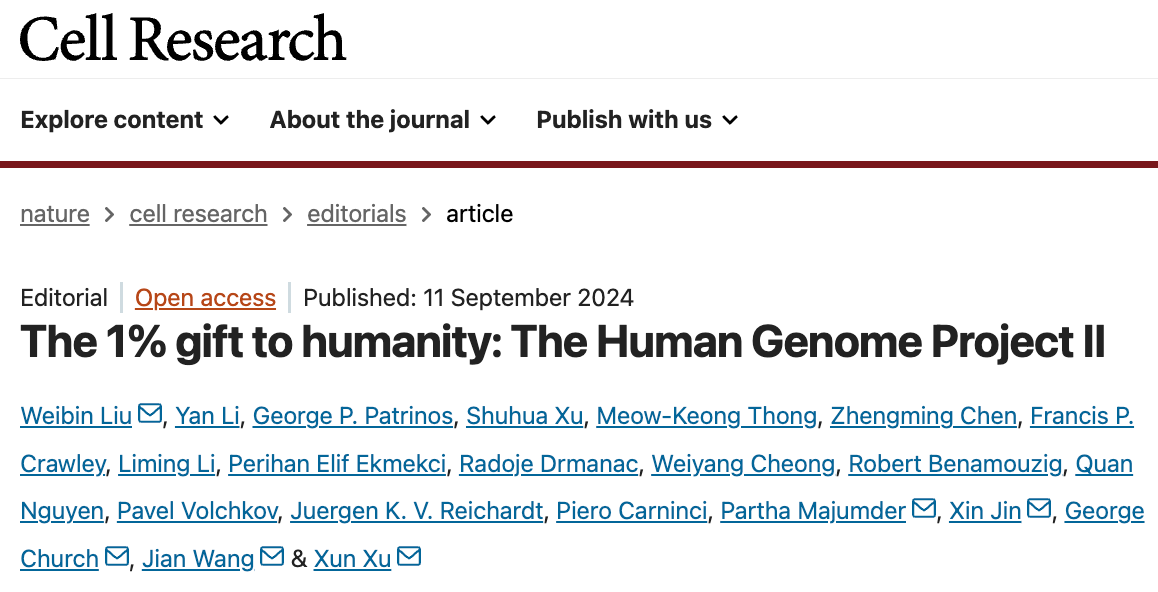 Scientists from 14 countries published an article in the internationally renowned academic journal Cell Research on the mission of HGP2.
HGP2 emphasizes making precision medicine a true health tool for all humanity. The project has received recognition from the United Nations for its contributions to advancing health and well-being, strengthening innovative infrastructure, and reducing inequality in access to genomics science and technology.
Dr. Liu Weibin, Vice President of BGI Group and co-initiator of the HGP2, stated: "The vision of HGP2 is to transform precision medicine from a luxury into a public good. We hope that everyone, regardless of where they are born, can equally enjoy the health benefits brought by genetic technology."
African Microbiome Consortium for Infectious Diseases (AMC-ID)
AMC-ID, led by BGI Group and covering multiple African countries, innovatively uses microbiomics as a starting point to build a proactive, precise, and sustainable infectious disease prevention and control system in Africa.
In the face of high-burden infectious diseases such as malaria, HIV/AIDS, and tuberculosis, as well as the complex challenges posed by emerging pathogens, AMC-ID is grounded in the "One Health" approach.
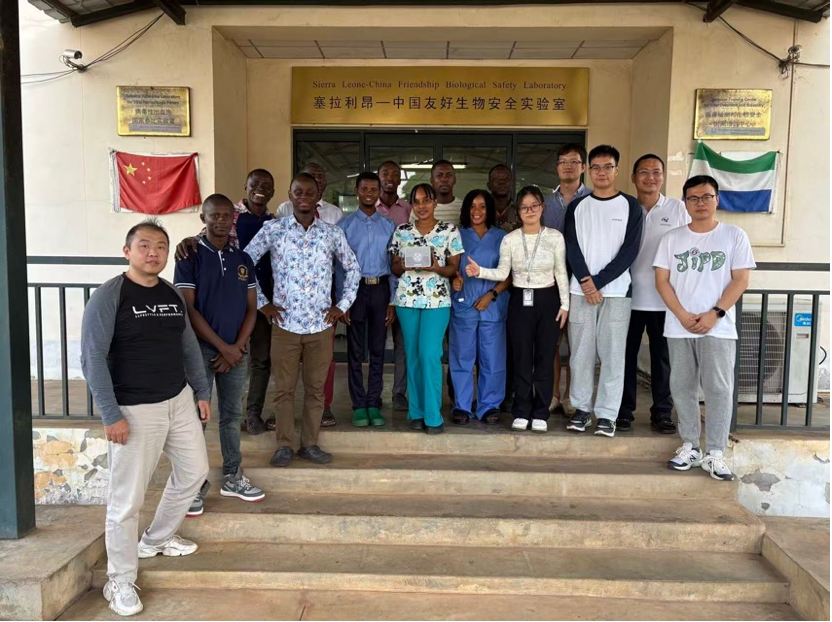
Group photo of the Sierra Leone malaria genomic surveillance team
AMC-ID was established as part of the national foreign-aid training program sponsored by China’s Ministry of Commerce and co-organized by BGI College – the Training Course on Laboratory Technology of Disease Control for African English-Speaking Countries. The formal establishment of the consortium at the concluding ceremony marked a deepening of China–Africa collaboration in infectious disease research, prevention and control, and genomics.
 Group photo at the Concluding Ceremony of the Training Course on Laboratory Technology of Disease Control for African English-Speaking Countries
AMC-ID will focus on enhancing Africa's capabilities in early pathogen detection, warning, and intervention, while building sustainable, localized technology platforms, talent pipelines, and data infrastructure. By establishing a data-sharing platform compliant with FAIR principles (findability, accessibility, interoperability, reusability), the AMC-ID will also foster an Africa-led research ecosystem, injecting new momentum into global health governance.
As the project progresses, Africa is expected to achieve breakthroughs in pathogen detection, research capabilities, and laboratory system development, laying a foundation for vaccine development, innovation in diagnostic tools, and microbiome-based intervention strategies.
Dr. Deng Ziqing, Director of the Beijing Branch of BGI-Research and co-initiator of the project, stated, “AMC-ID aims to promote the application of cutting-edge omics technologies in the field of pathogen infection, strengthen local capacity building in Africa, and help infectious disease prevention and control move from ‘passive response’ to ‘proactive defense,’ putting into practice the concept of a globally unified health community.”
Building a healthier, fairer, and more sustainable world.
The simultaneous endorsement of HGP2 and AMC-ID is not only a testament to the international recognition of these two scientific initiatives, but also a vivid embodiment of the global consensus on "science for development."
Whether by promoting genomic science to benefit everyone, or by reshaping Africa's infectious disease prevention and control system through microbiome technologies, both projects share a vision of tangible and accessible health improvements, bringing cutting-edge technology from the laboratory into public health scenarios and turning innovation into a shared public good globally.
By bringing together research institutions, public health systems, and international organizations worldwide, and by promoting transnational collaboration through data sharing and standard-setting, the projects are making scientific research more open, transparent, and inclusive, while fostering a global scientific community that transcends disciplines and cultures.
Dr. Xiao Minfeng, Executive Dean of BGI College, stated, “BGI looks forward to deeply integrating the open science practices of HGP2 and AMC-ID into the capacity building of countries participating in the Belt and Road Initiative, cultivating local sustainable genomics capabilities while improving public health. The global science and education integration projects promoted by BGI with the support of UNESCO is the ideal platform to realize this vision.”
Over the next decade, these two projects will expand with global partners to leverage technological innovation, open collaboration, and ethical governance, enabling humanity to face disease threats and future uncertainties with greater resilience, and to collectively safeguard a world that is healthier, fairer, and more sustainable.