



In April 2026, a rice field in Sarawak, Malaysia - an APEC member economy - came to life more than 2,000 km away, where dozens of local farmers transplanted BGI Bioverse’s perennial rice seedlings, offering an on-the-ground example of cross-border collaboration ahead of the APEC Economic Leaders’ Meeting in Shenzhen in November.
 Perennial rice seedlings transplanted in Sarawak, Malaysia, April 2026.
The pilot comes as Malaysia faces persistent rice‑supply challenges. According to a World Bank's report, Malaysia's rice self-sufficiency has been constrained by limited land area, climate change, and population growth. Data from the United Nations Food and Agriculture Organization (FAO) Global Information and Early Warning System (GIEWS) further confirms this challenge: domestic rice production accounts for approximately 25% of the nation's total cereal consumption, with the remaining 75% dependent on imports.
To address these systemic challenges, the Malaysian government launched the National Food Security Policy Action Plan 2021-2025, which explicitly identifies enhanced rice self-sufficiency as a core strategic objective.
Rice is now grown in over 100 countries, and its global diversity is substantial. For example, the number of distinct varieties of the rice species Oryza sativa is estimated at more than 100,000. Against this backdrop, the Sarawak state government evaluated multiple advanced cultivation models and varieties. However, the trials showed mixed results: some varieties yielded well but were incompatible with local soil or water; others resisted disease but required intensive labor; and some were economically promising but too costly to scale.
Finally, authorities identified perennial rice, a variety that yields multiple harvests from one planting, as a promising solution. Jointly developed by BGI Group and Yunnan University, perennial rice is the world’s only commercially available perennial grain crop. Professor Hu Fengyi from Yunnan University is the key researcher. Since late 1990s, Professor Hu has pioneered research into perennial rice, developing innovative hybridization techniques that combine long-grain wild rice with cultivated Asian varieties to create multi-harvest crop strains.
The innovation has achieved significant international recognition. The technology was named as one of the Top Ten Breakthroughs of 2022 by Science and included in the List of the Outcomes of the Implementation of the Follow-up Actions of the Beijing Summit of the Forum on China-Africa Cooperation in 2025.
To explore this opportunity further, delegates from Sarawak’s rice industry visited Yunnan University and BGI Group in 2025. In Sarawak’s tropical, high-rainfall conditions, perennial rice can reduce annual replanting, lower labor needs, and cut input costs. These advantages led to the signing of a Memorandum of Understanding among the three parties: Yunnan University will lead research and pilot trials; BGI Bioverse, a subsidiary of BGI Group, will oversee breeding and commercialization; and the State of Sarawak will provide field sites.
 Sarawak business delegates meet with Yunnan University researchers, April 2025.
 Memorandum of Understanding on perennial rice collaboration signed, June 2025.
Between March and April 2026, field evaluation team from Yunnan University and BGI Bioverse conducted two field missions to Sarawak, overseeing critical stages of perennial rice cultivation - from nursery preparation to transplantation - and providing hands-on technical support to local agricultural personnel.
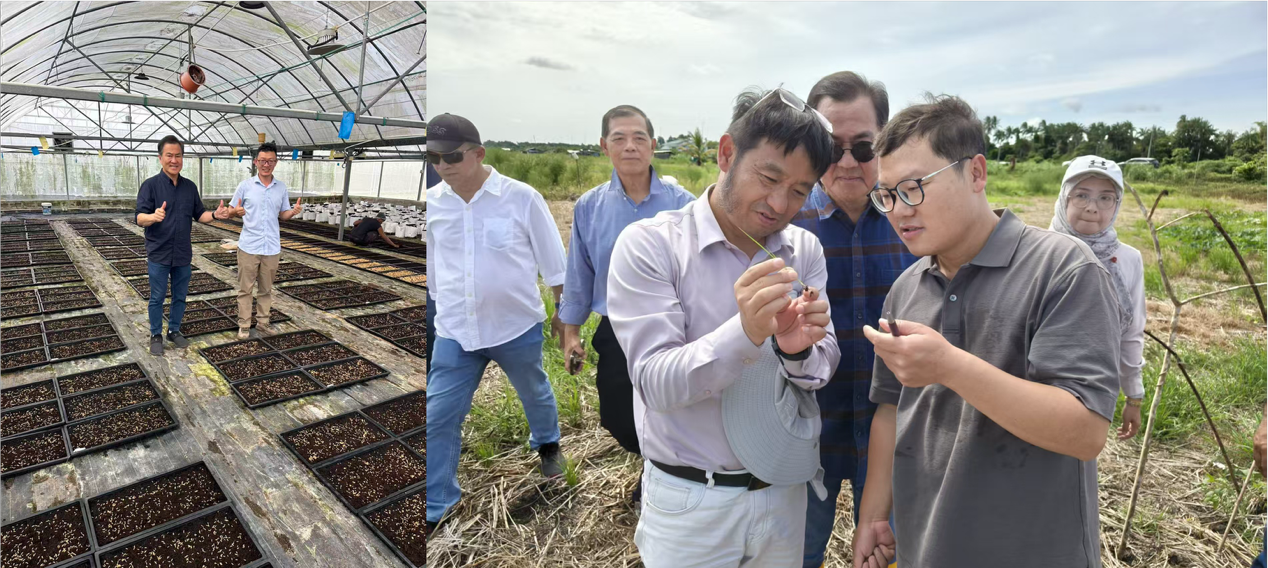 BGI Bioverse and Yunnan University teams provide on-site guidance to local staff in Sarawak between March and April 2026.
The Sarawak pilot addresses multiple strategic objectives. For Malaysia, the initiative offers a potential pathway to enhance its rice self-sufficiency and strengthen national food security. Initial field observations have shown encouraging results. According to local media report, Sarawak Premier Abang Johari expressed confidence in the pilot and praised this international collaboration.
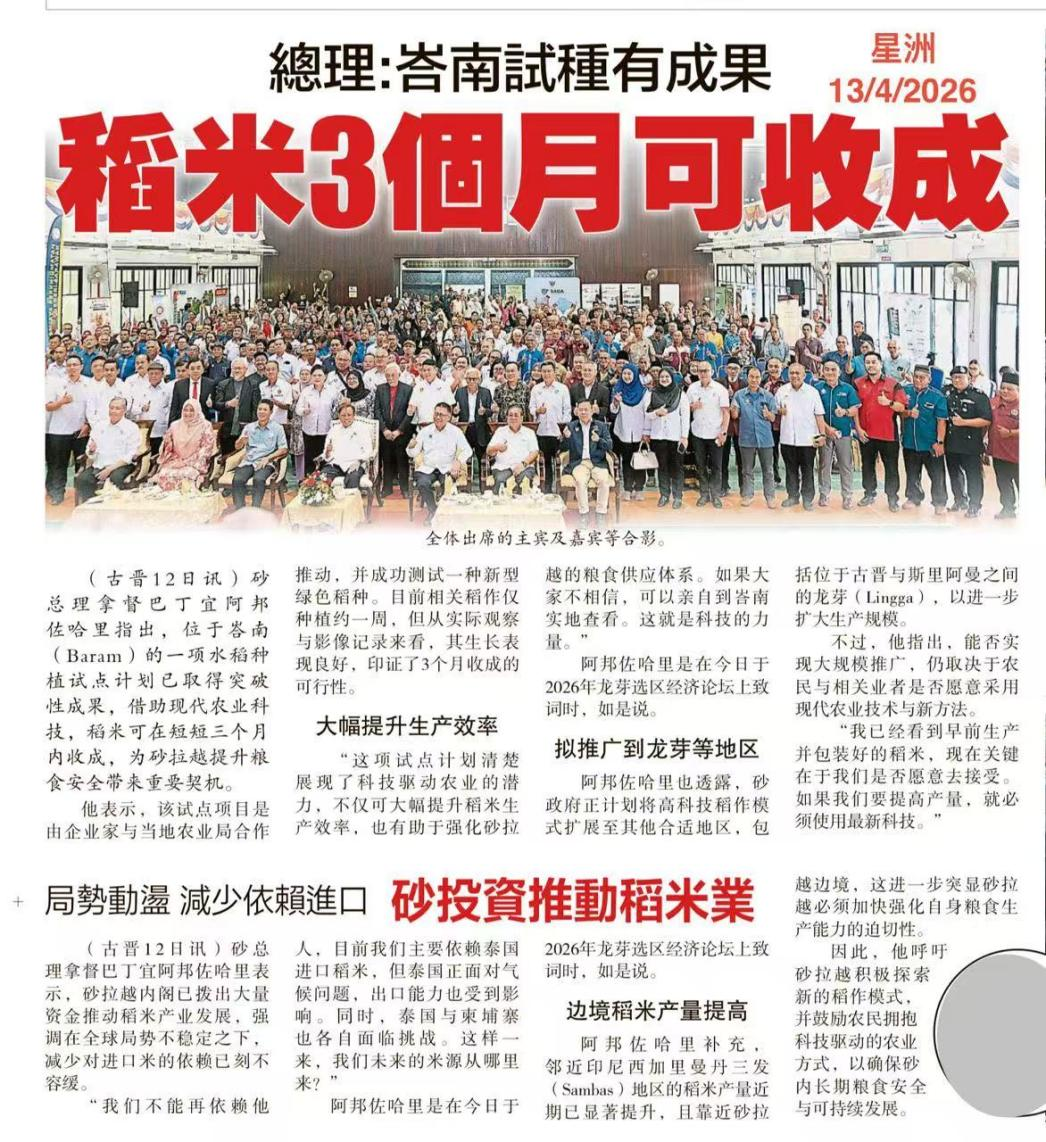 Malaysia local newspaper reports on the initial field test results of perennial rice.
As of 2026, perennial rice has been trialed at demonstration sites across more than 10 countries and 130 regions, covering over 100,000 mu (approximately 6,666.67 hectares). Sarawak’ s second seasonal harvest is expected in late 2026, ahead of the APEC Leaders’ Meeting in Shenzhen in November.
As APEC member economies place increasing emphasis on food security, resilient supply chains, and sustainable agricultural development, the growing number of perennial rice trials across APEC members economies reflects rising regional interest in practical farming solutions. Through its collaboration with Yunnan University and local partners, BGI Group is contributing to this momentum by supporting the development and application of perennial rice as an innovative pathway toward more sustainable and resilient agriculture across the Asia-Pacific.