



On May 10 in Kuala Lumpur, a historic chapter in rare disease care across the Asia-Pacific began to unfold. Clinical experts, researchers, and public health representatives from 10 countries across the region officially launched the HGP2 Rare Disease Alliance of the Asia-Pacific Region (HGP2 RaDiAnce-APAC). The alliance is designed to strengthen regional collaboration in rare disease diagnosis, genomic research, capacity building, and public health response, while addressing persistent gaps in diagnostic capacity, unequal access to precision medicine, and fragmented standards and experience-sharing across the Asia-Pacific.
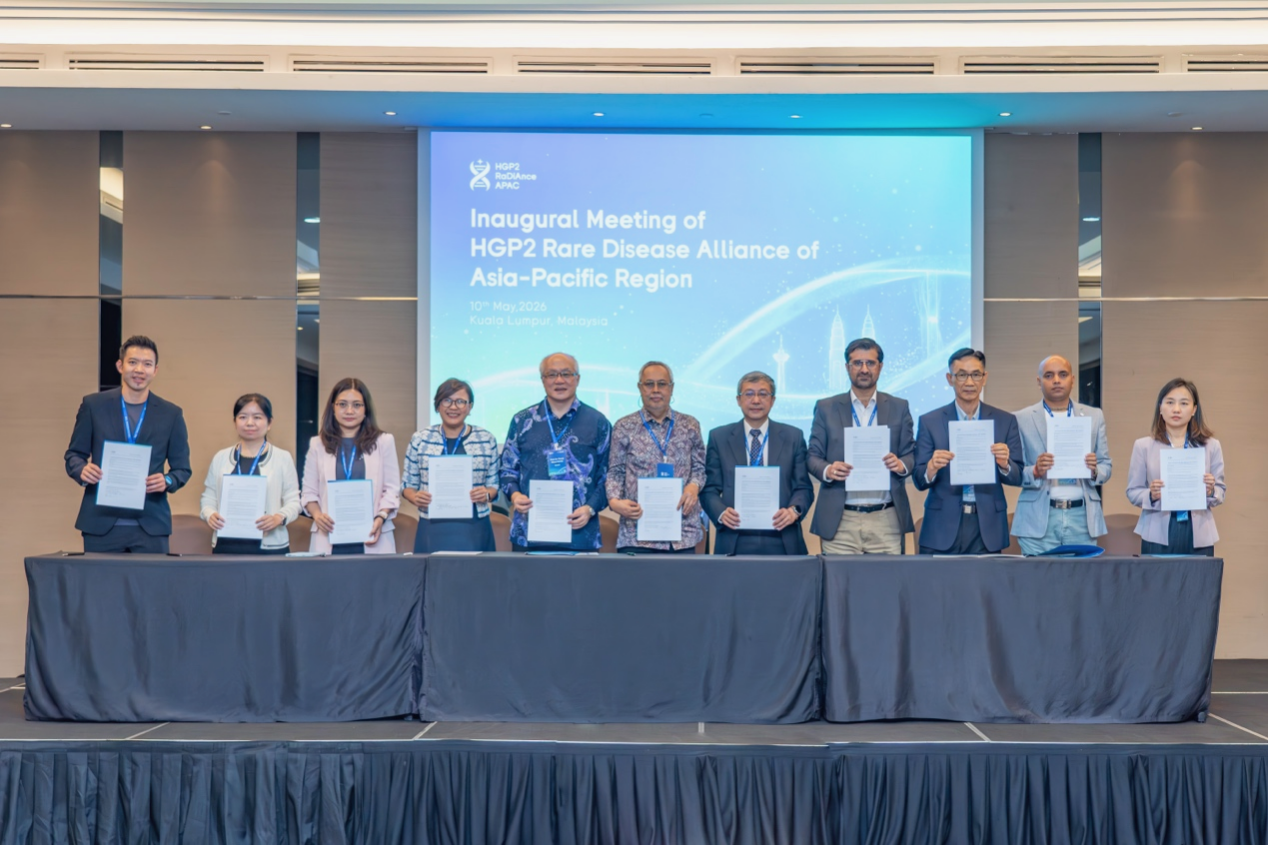 The HGP2 Rare Disease Alliance of the Asia-Pacific Region (HGP2 RaDiAnce-APAC) was officially launched in Kuala Lumpur, Malaysia, on May 10, 2026. (Credit: HGP2 RaDiAnce-APAC)
The establishment of this alliance reflects growing concern over a global challenge of rare diseases. A 2024 report from New Zealand’s Ministry of Health estimates that 258 million people across APAC countries including Australia, China, Japan and South Korea are affected by rare disorders, around half of them children. The World Health Organization also reports that, for millions of people worldwide, receiving a rare disease diagnosis can take more than five years, and many never receive a timely or adequate diagnosis.
Addressing rare diseases requires coordinated efforts across sectors worldwide. BGI Group is one of the organizations contributing to this effort.
Turning ALS Research into Hope
At BGI Group, rare disease research spans multiple fronts, with amyotrophic lateral sclerosis (ALS) serving as a major area of focus.
ALS, also known as Lou Gehrig’s disease, is a devastating neurological disorder that progressively robs patients of their ability to move, speak, swallow, and eventually breathe, while leaving their consciousness fully intact.
BGI Group’s work on ALS highlights how advanced genomic and multi-omics technologies can help unravel the disease’s complexity. Through its family-based whole-genome sequencing program, BGI reported analyzing 665 samples and found that whole-genome sequencing achieved a positive detection rate 33.3% higher than that of standard whole-exome sequencing. It also identified disease-associated mutations in some patients who had previously tested negative.
Broader research by BGI Group further suggests that ALS is not a single disease, but a spectrum of related disorders. Its spatial multi-omics studies have identified novel repair-type muscle cell nuclei surrounded by inflammation and fibrosis, as well as abnormal IL-17B expression, pointing to possible mechanisms of muscle atrophy and potential therapeutic targets now being explored in preclinical studies and drug development. BGI’s long-read sequencing technology has also been used to conduct more in-depth structural variation analysis of the genomes of ALS patients.
 Mr. Cai Lei, Founder and CEO of the Gradually Healing Mutual Aid Home Platform (third from left), and Dr. Yin Ye, CEO of BGI Group (third from right), unveil the joint laboratory in June 2023.
A particularly notable part of this effort has been BGI Group’s collaboration with Mr. Cai Lei, the former JD.com executive, ALS patient, and advocate. In 2023, Mr. Cai Lei partnered with BGI Group CEO Dr. Yin Ye to launch a free nationwide genetic testing and whole-genome sequencing initiative for ALS patients and their families, helping expand data collection and patient participation. That partnership deepened in June 2024 with the establishment of the Cai Lei & BGI ALS Multi-omics Research Joint Laboratory, aimed at accelerating the discovery of genetic causes, disease mechanisms, and ultimately more precise treatment strategies for ALS.
In March 2026, the ALS Multi-omics Joint Research Center was established in Shenzhen, co-initiated by Guangzhou Baiyun District People’s Hospital, BGI-Research, and the Mammoth Foundation. The center aims to bridge the gap between laboratory discovery and patient care. An ALS Knowledge Agent has also been released.
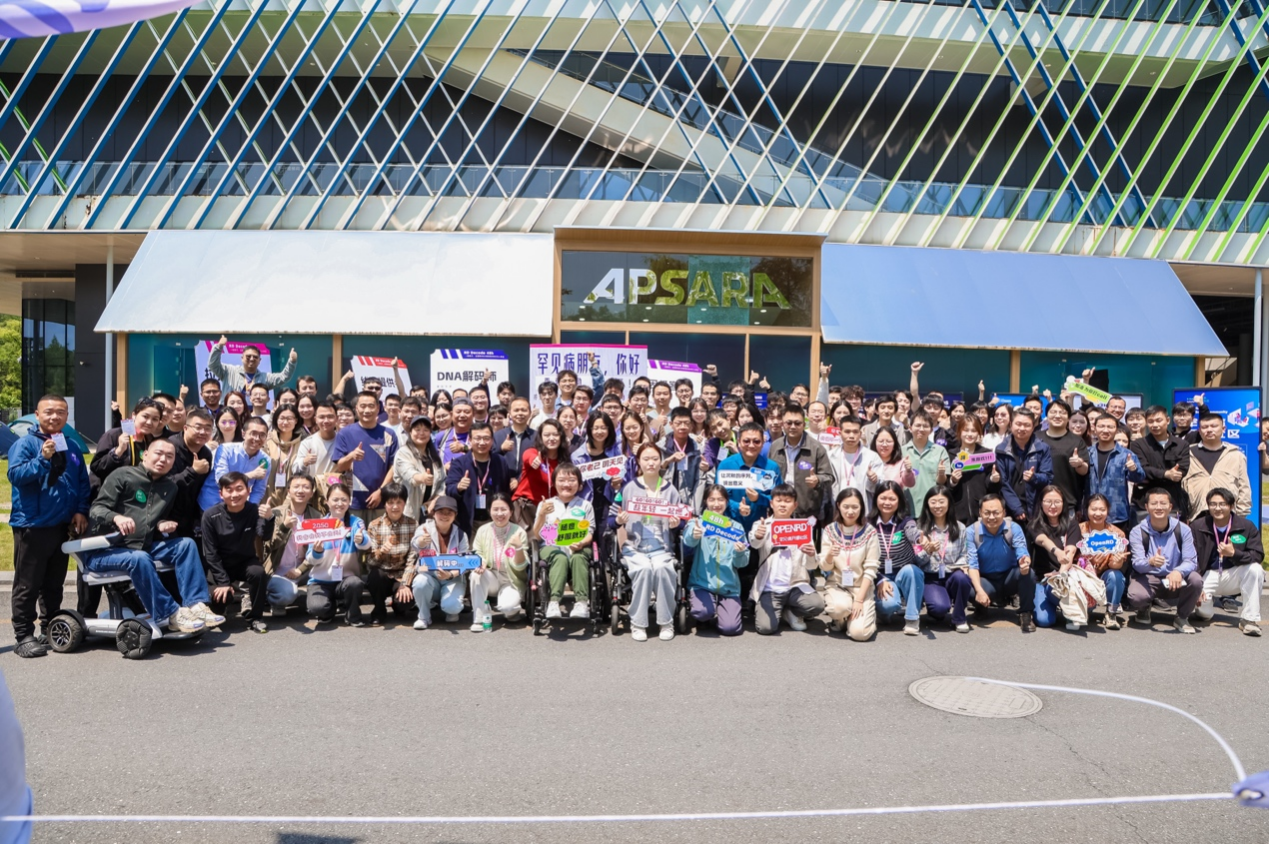 Participants in the 48-Hour AI Rare Disease Hackathon in April 2026.
Another example is the 48-hour rare disease genomics hackathon held in April. Co-organized by BGI Genomics and ALS community partners, the event brought together clinicians, patients, data scientists, and developers to collaborate on 16 real-world undiagnosed cases. Using genomic data and AI tools, the teams worked to identify possible disease-causing variants, improve interpretation, and create open-source tools for future diagnosis and research. The winning team studied a family with multiple pregnancies affected by severe multisystem fetal abnormalities, built a unifying hypothesis for the disease mechanism, and used AI-based functional simulation to prioritize uncertain variants, ultimately identifying high-risk candidate pathogenic variants in all three assigned cases.
Breaking the Silence on Thalassaemia
BGI Group’s commitment to rare disease communities also extends to thalassaemia, a hereditary blood disorder that remains widely underdiagnosed and continues to place a heavy burden on families and healthcare systems, particularly in low- and middle-income countries.
To improve early detection, BGI Group applies high-throughput sequencing technology in thalassaemia screening. Compared with conventional methods, which often require repeated blood tests and may miss rare mutations, this approach offers broader detection coverage, higher sensitivity, and greater accuracy. Through BGI Genomics’ medical laboratory, BGI combines high-throughput sequencing with Gap-PCR in its thalassaemia-seq solution to help identify carrier status, assess reproductive risks for couples, and support timely diagnosis and intervention for infants.
BGI has also worked to improve treatment access for patients with severe thalassaemia. Hemogen Therapeutics, a subsidiary of BGI Group, developed Hemo-cel (HGI-001 Injection), a gene therapy designed to restore normal haemoglobin production by delivering a functional β-globin gene into a patient’s own hematopoietic stem cells. In January 2026, Hemogen completed the first overseas localized production of Hemo-cel in collaboration with Chulalongkorn University in Thailand, marking progress toward making advanced therapy more accessible in Southeast Asia.
Alongside innovation in screening and treatment, BGI supports patients through public welfare programs. As a co-founder of the Hua Foundation, BGI has provided free HLA matching for families affected by severe thalassaemia since 2017. By February 2026, 7,930 families had benefited, with 862 patients successfully finding fully matched donors.
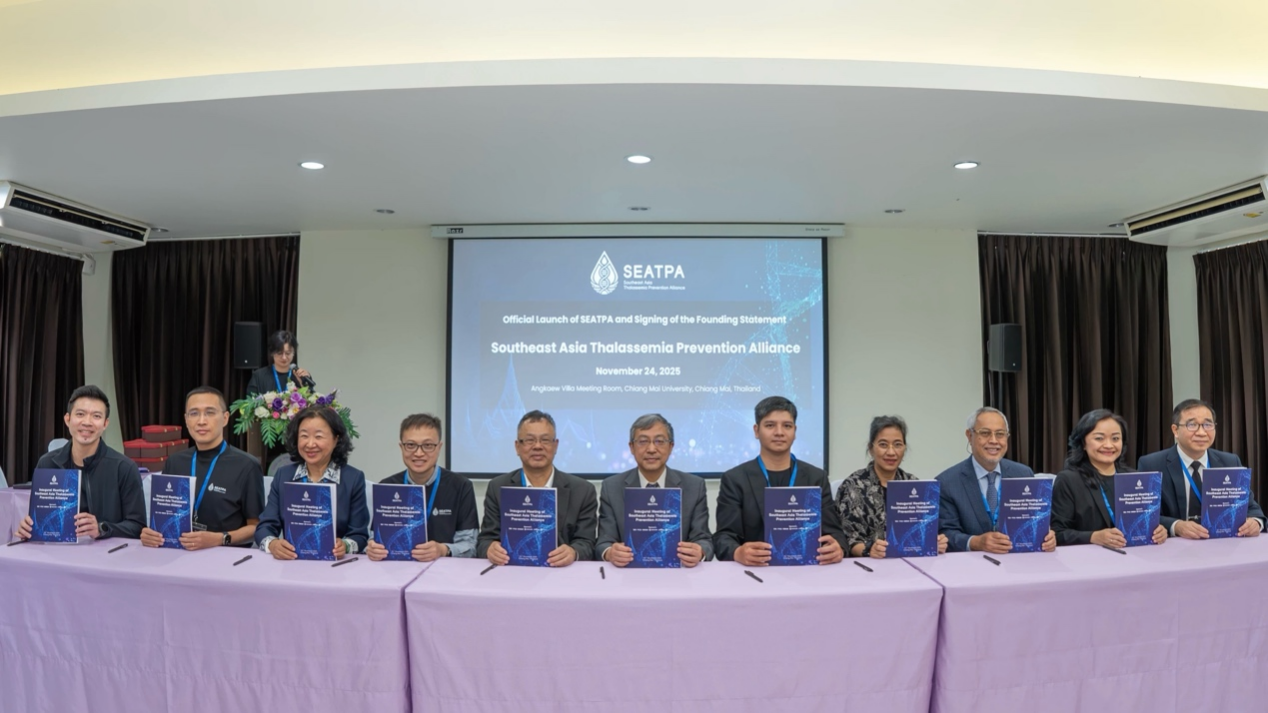 Official launch of SEATPA in Chiang Mai, Thailand, on November 24, 2025.
A key part of BGI Group’s regional efforts is the Southeast Asia Thalassaemia Prevention Alliance (SEATPA), which was officially launched in Chiang Mai, Thailand, on November 24, 2025. As a cross-border public health collaboration, SEATPA brings together countries, experts, and communities to strengthen thalassaemia prevention and control across Southeast Asia. By fostering multidisciplinary cooperation and regional experience-sharing, the alliance aims to reduce disease incidence, improve patients’ quality of life, and ease the long-term social and economic burden on families and healthcare systems.
From genetic research to prevention, and from technological innovation to cross-sector collaboration, BGI Group’s multifaceted approach reflects a fundamental commitment: equitable access to rare disease care is not a luxury reserved for the privileged, but a right that should reach every patient in every corner of the world. By uniting regional strengths and sharing resources across borders, BGI Group and its partners are working together to redefine what is possible in global rare disease care.