



The Third International Plant Spatiotemporal Omics Research Conference, STOC Plant 2026, was held in Perth, Australia, from September 13 to 16. As a key contributor to the conference and a long-term driver of plant spatiotemporal omics, BGI Group played a central role in advancing international dialogue on crop multi-omics, data integration, artificial intelligence, and breeding applications.
In collaboration with BGI Group, MGI Tech, Adelaide University, and GigaScience, the conference was jointly organized by Murdoch University, the State Key Laboratory of Genome and Multi-omics Technologies, and the Plant Spatiotemporal Omics Consortium, STOC Plant, with BGI-Research, Molecular Plant, and Plant Communications serving as co-organizers.
Under the theme “From Atlas to Action: Empowering Crop Improvement with Plant Multi-Omics,” the event brought together more than 200 participants from 10 countries across plant science, genomics, artificial intelligence, and related fields.
The conference highlighted how plant spatiotemporal multi-omics can move beyond atlas construction toward trait discovery, predictive modeling, and practical breeding. It also marked the launch of the Barley Spatial Omics Consortium and continued collaboration within the Wheat Spatial Omics Consortium (WSOC), both of which provide important platforms for international resource sharing and crop research.
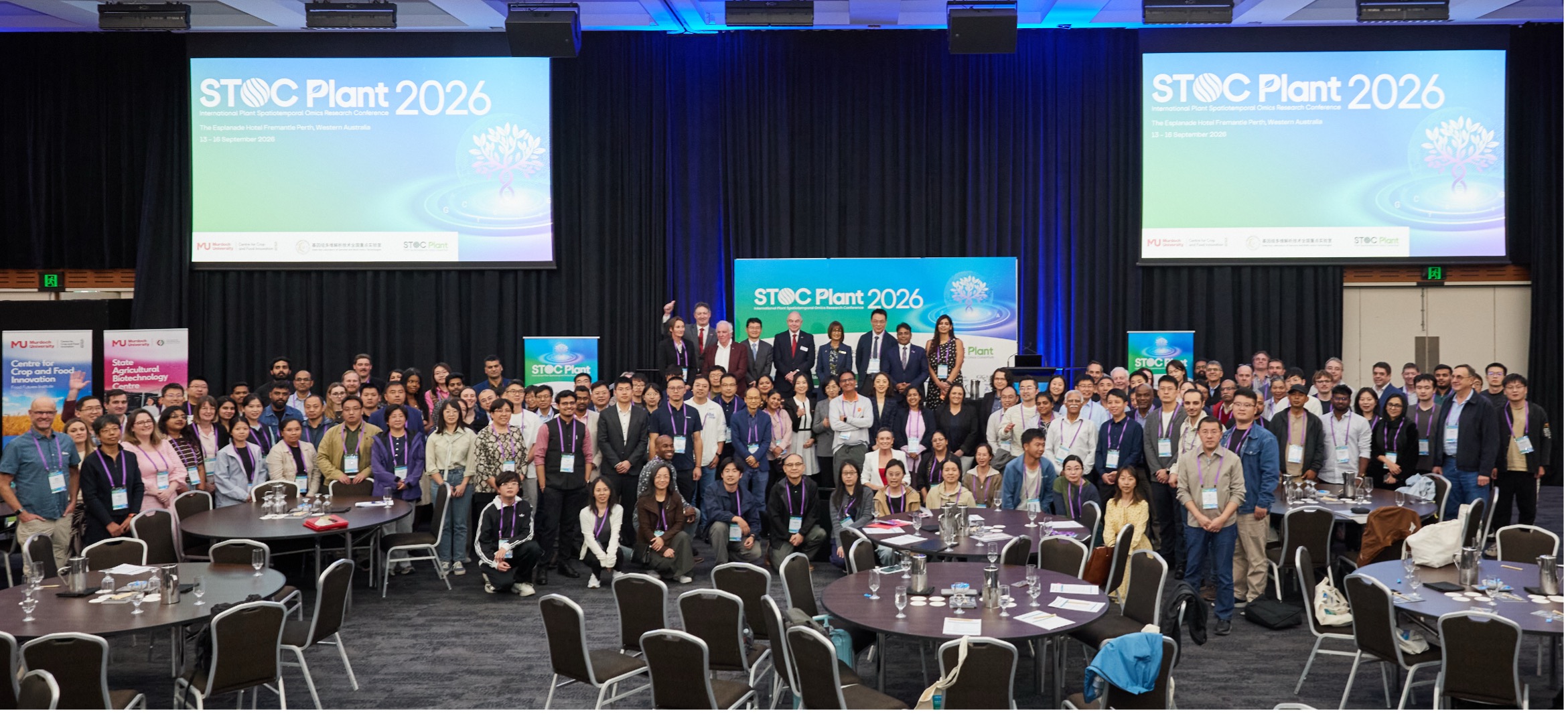
STOC Plant 2026 Group Photo.
Supporting the Global Translation of Omics Technologies into Agriculture
 Professor Rajeev Varshney chairs the conference.
In the opening session on September 13, Professor Rajeev Varshney FAA FRS, Executive Chairman of STOC Plant 2026 and Director of the Centre for Crop and Food Innovation and the WA State Agricultural Biotechnology Centre at Murdoch University, emphasized the importance of making advanced omics technologies more affordable and accessible to laboratories, breeders, and growers.
Professor Weicai Yang, Chairman of STOC Plant and an Academician of the Chinese Academy of Sciences, delivered a video address on the conference theme. He noted that multi-omics, imaging, and AI are enabling high-resolution atlases of plant development and environmental responses. The next step, he said, is to identify cell states and regulatory mechanisms relevant to crop traits and assess their value through genetics, phenotyping, and breeding research.
Professor Andrew Deeks, Vice Chancellor and President of Murdoch University; Western Australian parliamentarian Dr. Parwinder Kaur; and Professor Peter Eastwood, Deputy Vice Chancellor for Research and Innovation at Murdoch University, addressed agricultural challenges under climate change, interdisciplinary innovation, food security and research translation. Professor Eastwood also highlighted progress in international wheat spatial omics collaboration.
Dr. Jessica Hyles, Senior Manager, Genetic Technologies at the Grains Research and Development Corporation (GRDC); Dr. Kaara Klepper, Executive Director, Broadacre Systems at the Western Australian Department of Primary Industries and Regional Development (DPIRD); and Wang Ling, Minister Counsellor from the Chinese Embassy in Australia, discussed research investment, agricultural production and international cooperation. Their remarks highlighted data standards and sharing, links between cellular mechanisms and field performance, and agricultural research collaboration between China and Australia.
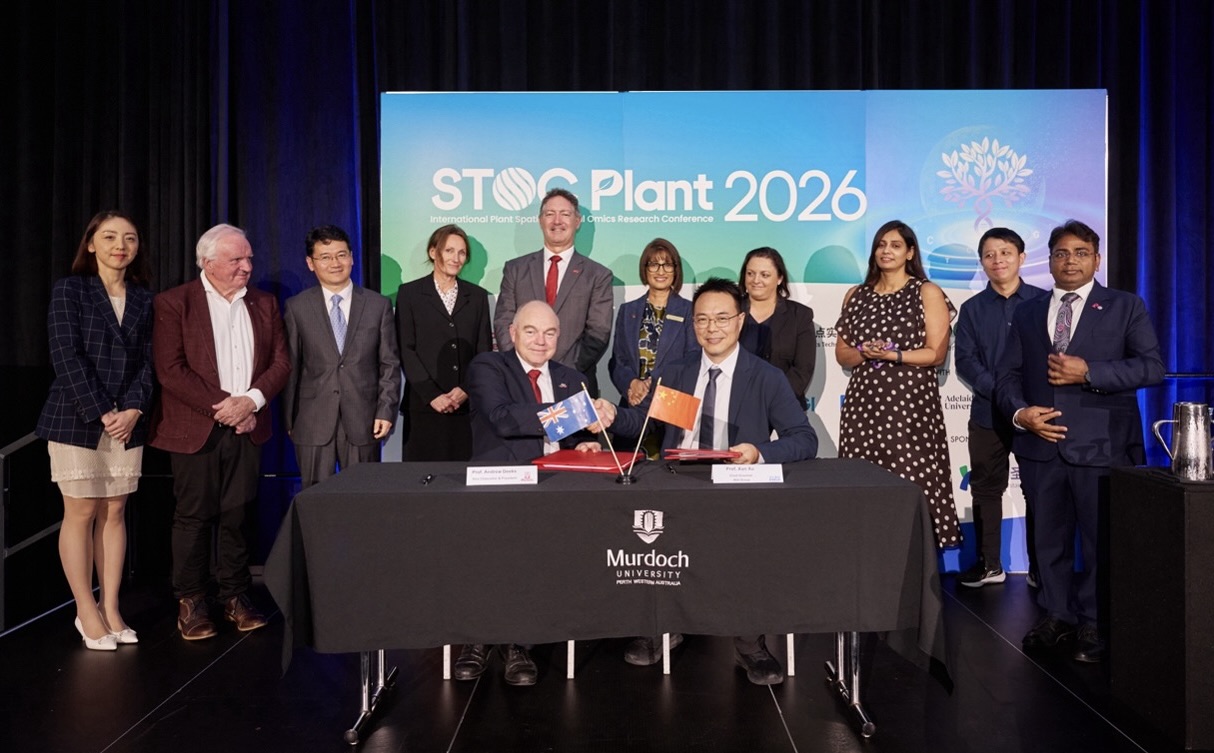 Signing of the Memorandum of Understanding.
A key milestone of the conference was the signing of a memorandum of understanding between BGI Group and Murdoch University. Professor Xun Xu, Chief Researcher of BGI Group and Director of the State Key Laboratory of Genome and Multi-omics Technologies, and Professor Andrew Deeks, signed the memorandum to strengthen cooperation in research, researcher exchanges, and platform development.
Advancing the Path from Plant Atlases to Trait Discovery and Breeding
Four keynote lectures explored plant functional genomics, spatiotemporal multi-omics, AI, predictive models, and crop improvement.
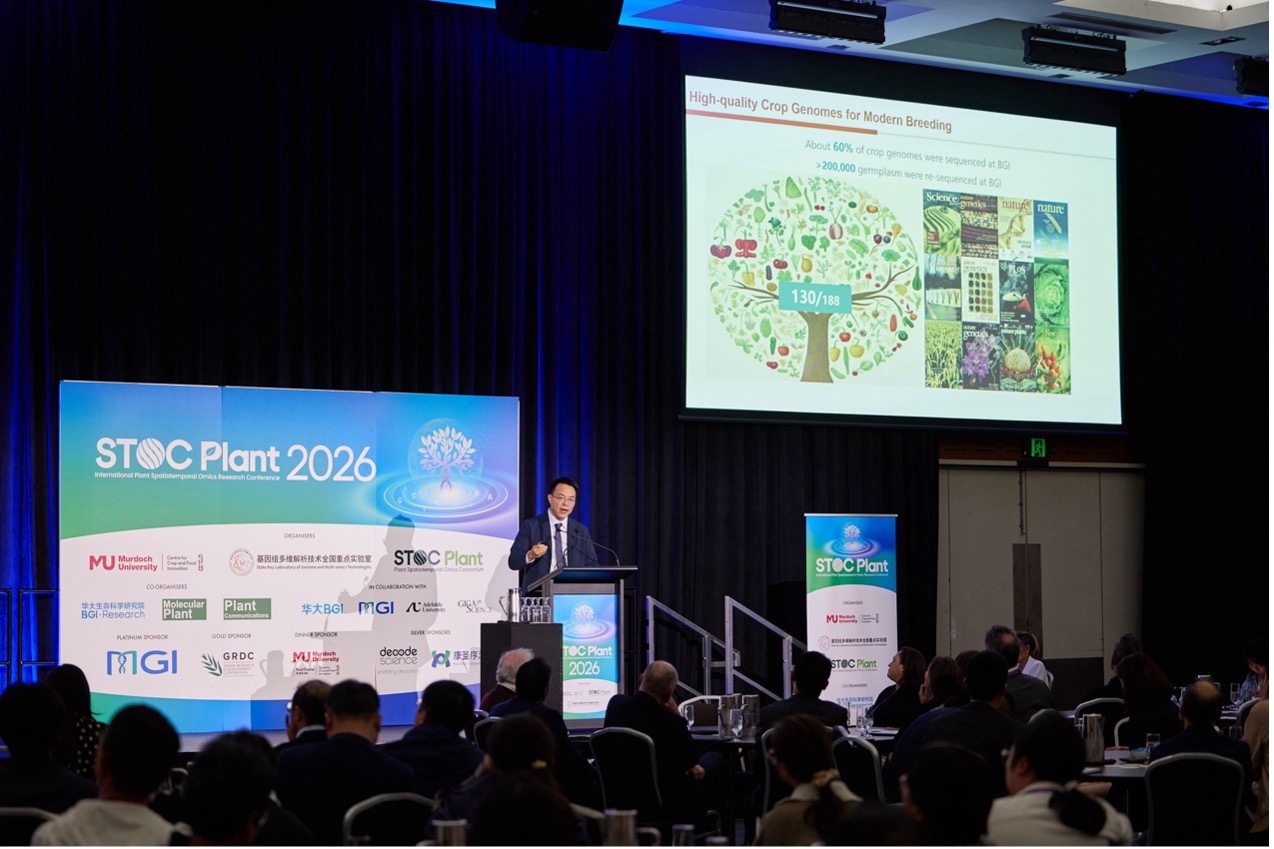 Professor Xun Xu delivers a keynote address.
Professor Xun Xu outlined how plant spatiotemporal multi-omics can progress from mapping cell states to understanding biological mechanisms and predicting traits. Drawing on rice life-cycle atlases, spatial interactions in Medicago root nodules, and crop foundation models, he emphasized the importance of standardized multimodal data, modeling, and experimental validation.
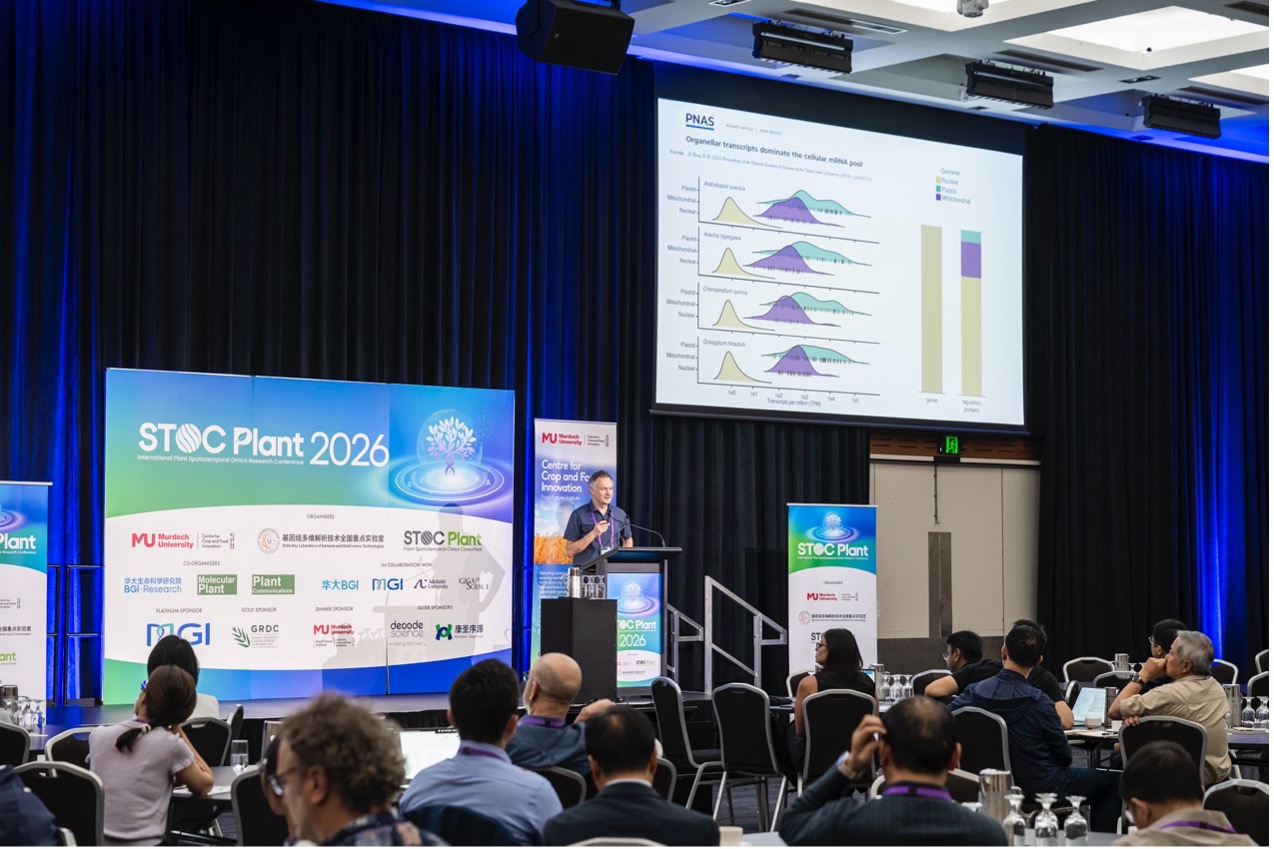 Professor Ian Small delivers a keynote address.
Professor Ian Small of the University of Western Australia examined interactions among the nuclear, chloroplast, and mitochondrial genomes. His presentation covered organellar gene expression, chloroplast engineering, and cytoplasmic male sterility in wheat, with implications for trait analysis, hybrid breeding, and crop improvement.
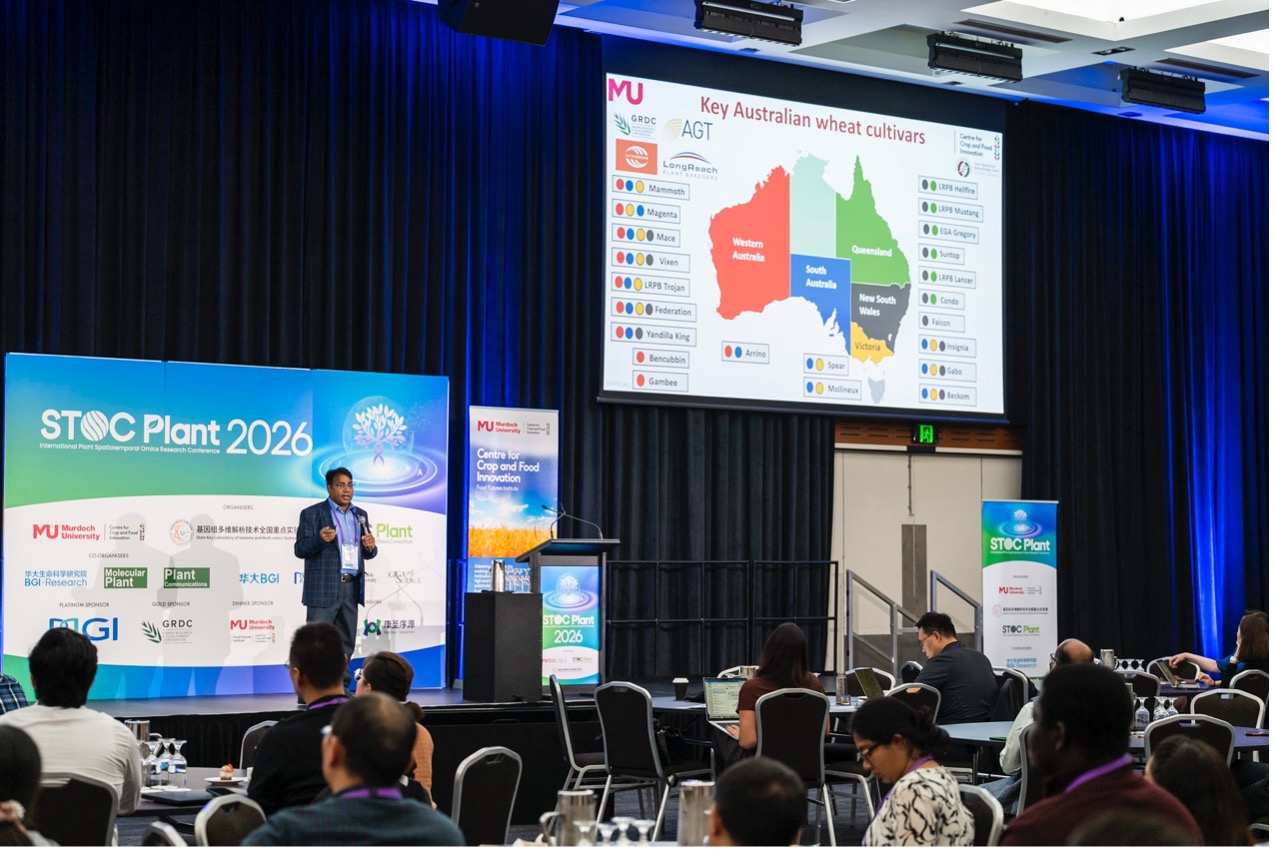 Professor Rajeev Varshney delivers a keynote address.
Professor Rajeev Varshney discussed crop genetic diversity and environmental adaptation. He described how high-quality genomes, pangenomes, population sequencing, and functional validation can identify genes associated with important traits, and stressed the need to connect gene discovery with multi-environment testing, breeding programs, and industry needs.
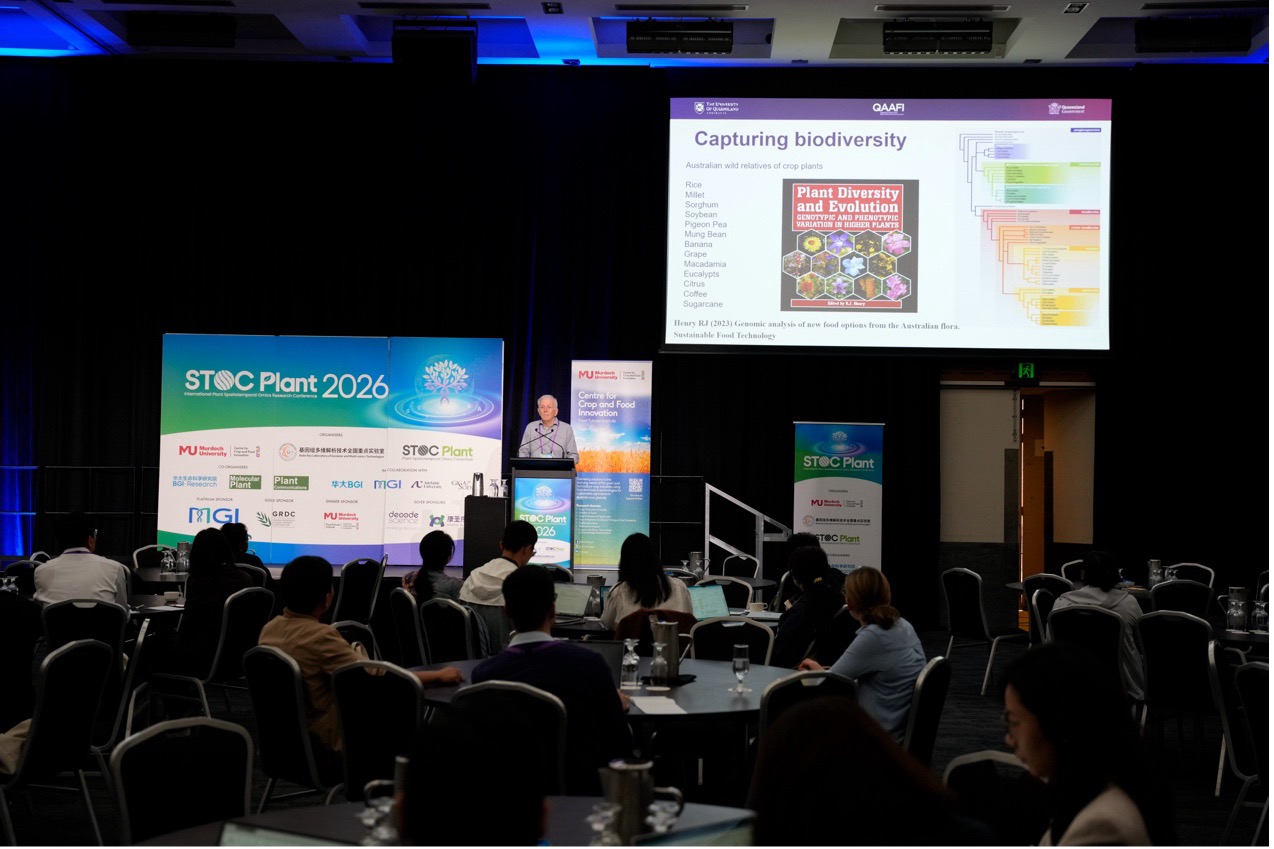 Professor Robert Henry delivers a keynote address.
Professor Robert Henry of the University of Queensland addressed spatial food omics and grain and fruit quality. He described how spatial transcriptomics combined with long-read sequencing can resolve gene expression across wheat seed tissues. Examples involving milling yield and carbon recycling illustrated how spatial information can inform studies of quality and stress responses, with potential applications in fruit quality, sugarcane biomass use, and breeding.
Launching the Barley Spatial Omics Consortium
The Barley Spatial Omics Consortium was formally launched on September 15 at STOC Plant 2026. It is the second crop-focused consortium initiated through STOC Plant, following the WSOC.
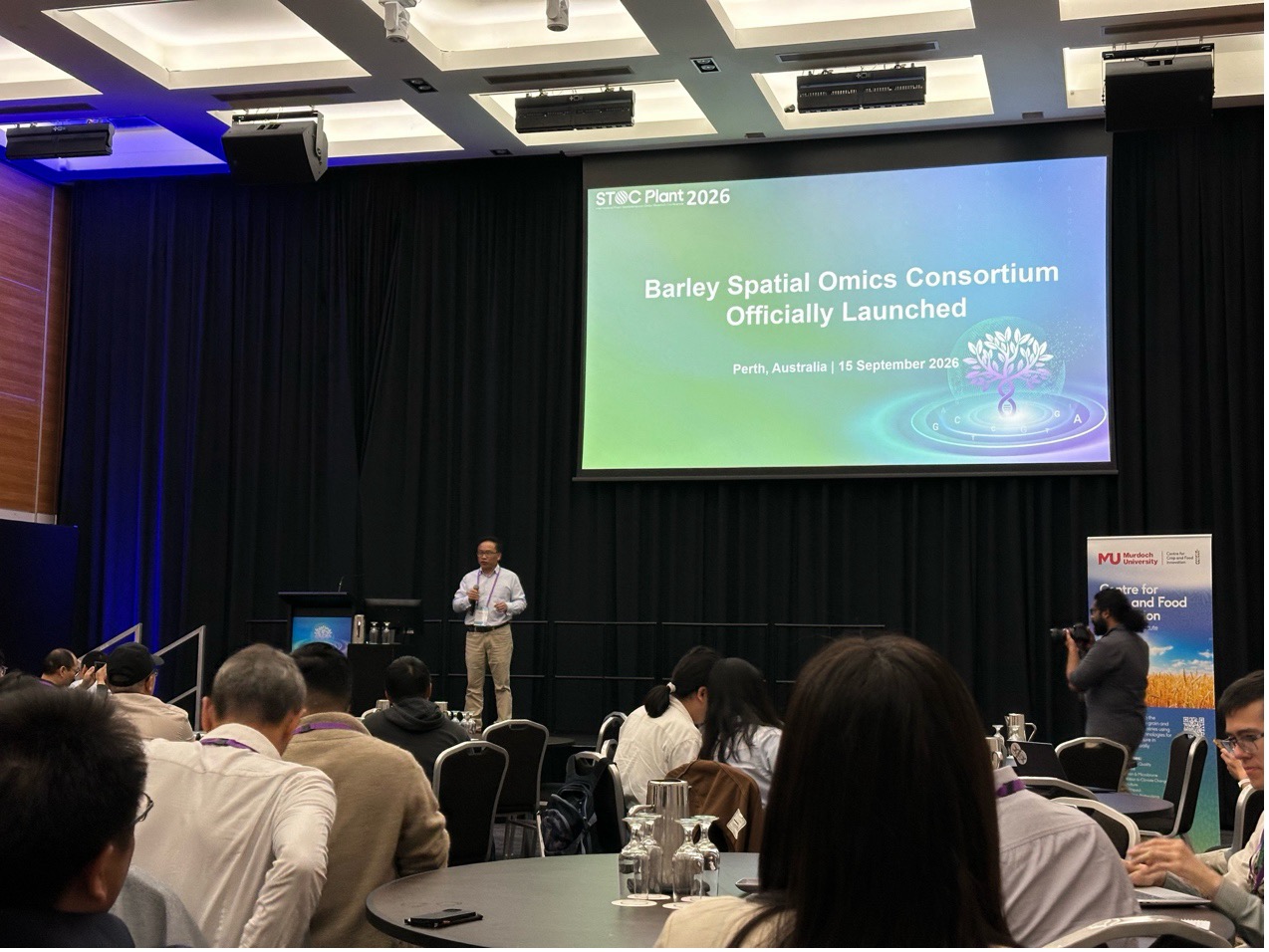 Barley Spatial Omics Consortium launch ceremony.
Jointly initiated by Professor Chengdao Li, Professor Xun Xu, and other researchers, the consortium remains open to the international barley research community. It will build on existing genomic and pangenome resources, connecting expertise in genetics, spatiotemporal omics, functional genomics, breeding, and data science.
At the launch, Professor Chengdao Li of Murdoch University, Fellow of the Australian Academy of Technological Sciences and Engineering, and one of the consortium’s principal initiators, introduced the consortium’s vision. He reflected on longstanding international collaboration in barley genomics and pangenomes, noting that advances in single-cell, spatial, and multi-omics technologies offer new opportunities to investigate complex traits and support breeding and industry.
The launch ceremony brought together representatives from Murdoch University, the State Key Laboratory of Genome and Multi-omics Technologies, the University of Queensland, the University of Tasmania, Helmholtz Munich, Adelaide University, Zhejiang University, Yazhouwan National Laboratory, and the Western Australian Department of Primary Industries and Regional Development.
The consortium will support research on barley development, agronomic traits, and environmental adaptation, as well as the sharing of biological materials, methods, data standards, and analytical tools. Its research priorities include the cellular and molecular basis of yield, grain and malting quality, and stress adaptation, with a view to applications in breeding, production, and processing.
The Wheat Spatial Omics Consortium Enters Its Next Phase
During STOC Plant 2026, members of the WSOC, held a closed-door meeting to discuss the transition from spatiotemporal atlas construction to trait discovery, predictive modeling, and breeding applications. Discussions addressed shared experimental protocols, cross-institutional data access, AI-ready data standards, and wheat pangenome research.
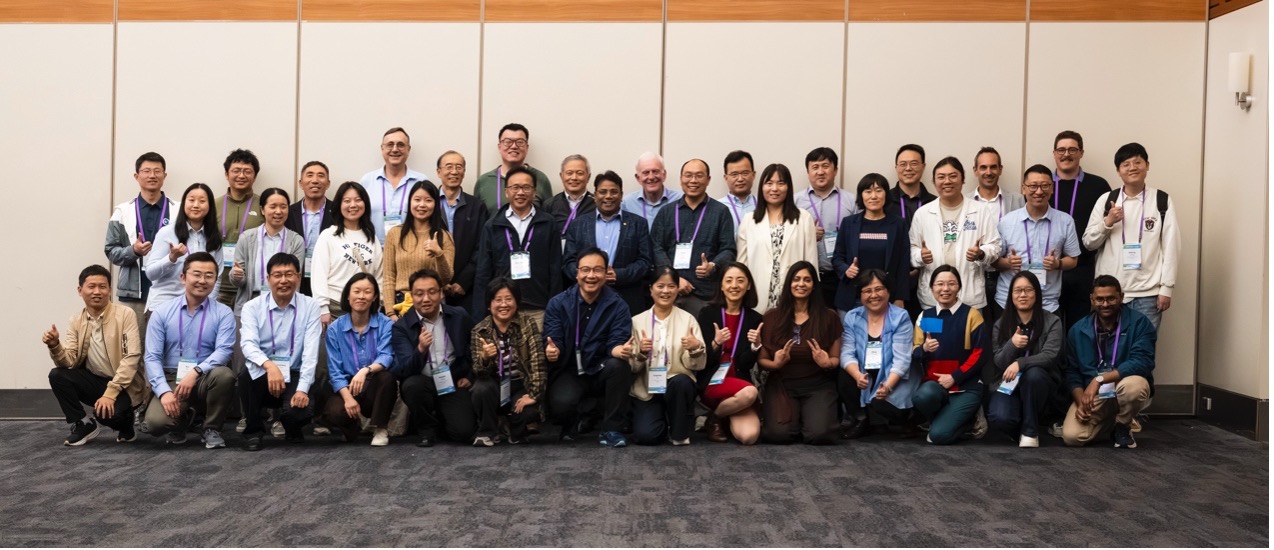 WSOC closed-door meeting.
The WSOC was launched at STOC Plant 2025 and brings together 80 researchers from 30 institutions across nine countries. The consortium has eight working groups covering vegetative and spike development, seed quality, drought and heat responses, wheat–microbe interactions, genome editing efficiency, and data standardization.
Building Shared Platforms for Crop Multi-Omics
Panel discussions and four parallel workshops on legumes and soybean, other cereals, wheat, and horticultural crops covered genomics, pangenomics, single-cell and spatial omics, structural variation, plant–microbe interactions, predictive breeding, and multi-environment validation.
In the “Omics Technologies for Plant Biology” panel, participants highlighted the need for data standardization, open sharing, and reuse across platforms. They noted that AI can support data integration and predictive modeling but requires biological interpretation and field validation to connect cellular mechanisms with genetic backgrounds, environmental conditions, and agronomic traits.
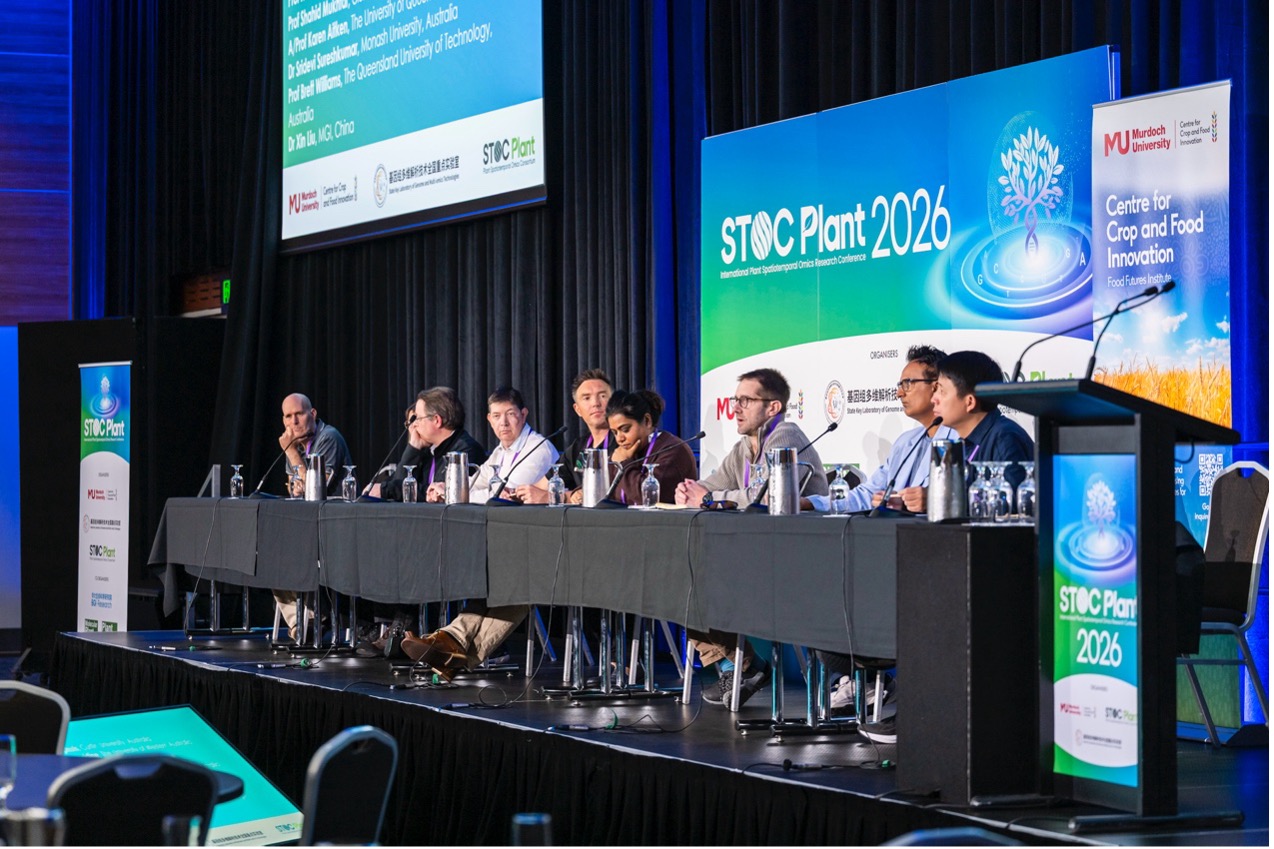 Panel Discussion.
The “Omics Technologies for Plant Breeding” panel drew on examples from apple, horticultural crops, common bean, and canola. Participants emphasized that the value of omics should ultimately be measured through better breeding decisions, shorter breeding cycles, and greater genetic gain. Prediction accuracy alone does not guarantee breeding outcomes; cross selection, affordable screening tools, and sustained field validation also matter. Cost, data access, and cross-disciplinary skills remain barriers to adoption, while single-cell and spatial omics currently contribute primarily to understanding mechanisms, identifying candidate genes, and developing molecular markers.
STOC Plant 2026 demonstrated that crop spatiotemporal multi-omics is moving rapidly from resource construction toward trait discovery, predictive modeling, and breeding applications. The barley and wheat consortia provide frameworks for sharing data, materials, and technical expertise, supporting the progression of crop spatiotemporal multi-omics from resource development to trait discovery and breeding applications.
Looking ahead, BGI Group will continue working with international partners to develop open data resources, advanced omics technologies, AI-enabled models, and collaborative research platforms that support crop improvement, food security, and sustainable agriculture.