



Metabolic dysfunction–associated steatotic liver disease (MASLD) affects approximately 30% of the global population and can progress to fibrosis and liver cancer. With limited pharmaceutical options targeting its underlying biology, researchers have increasingly explored the gut–liver axis.
In a multi-institutional collaboration involving Qingdao University, the State Key Laboratory of Genome and Multi-omics Technologies at BGI-Research, the Yellow Sea Fisheries Research Institute, and the University of Copenhagen, scientists have identified a novel mechanism linking the prebiotic stachyose to improved liver metabolism. The study, published in Advanced Science, reveals how stachyose selectively enriches a commensal bacterium that functions as a vitamin B1 generator, initiating a metabolic cascade that reduces liver fat accumulation.
The study “The Gut Commensal Butyricimonas Virosa Modulates Gut Microbiota-Dependent Thiamine Metabolism and Attenuates Mouse Steatotic Liver Disease” was published in Advanced Science.
The research team focused on stachyose (STA), a natural tetrasaccharide in certain vegetables, to understand how it influences the gut microbiota. In high-fat-diet mice, STA supplementation significantly reduced weight gain and liver lipid accumulation without altering food intake. Metagenomic profiling revealed that STA selectively increased the abundance of Butyricimonas virosa rather than broadly reshaping the gut community. To validate this bacterium's role, the team administered B. virosa AM16-14 directly to mice on a high-fat diet. This targeted intervention improved insulin sensitivity, reduced hepatic steatosis, and alleviated inflammatory infiltration, establishing B. virosa as a key effector in mitigating metabolic dysfunction.
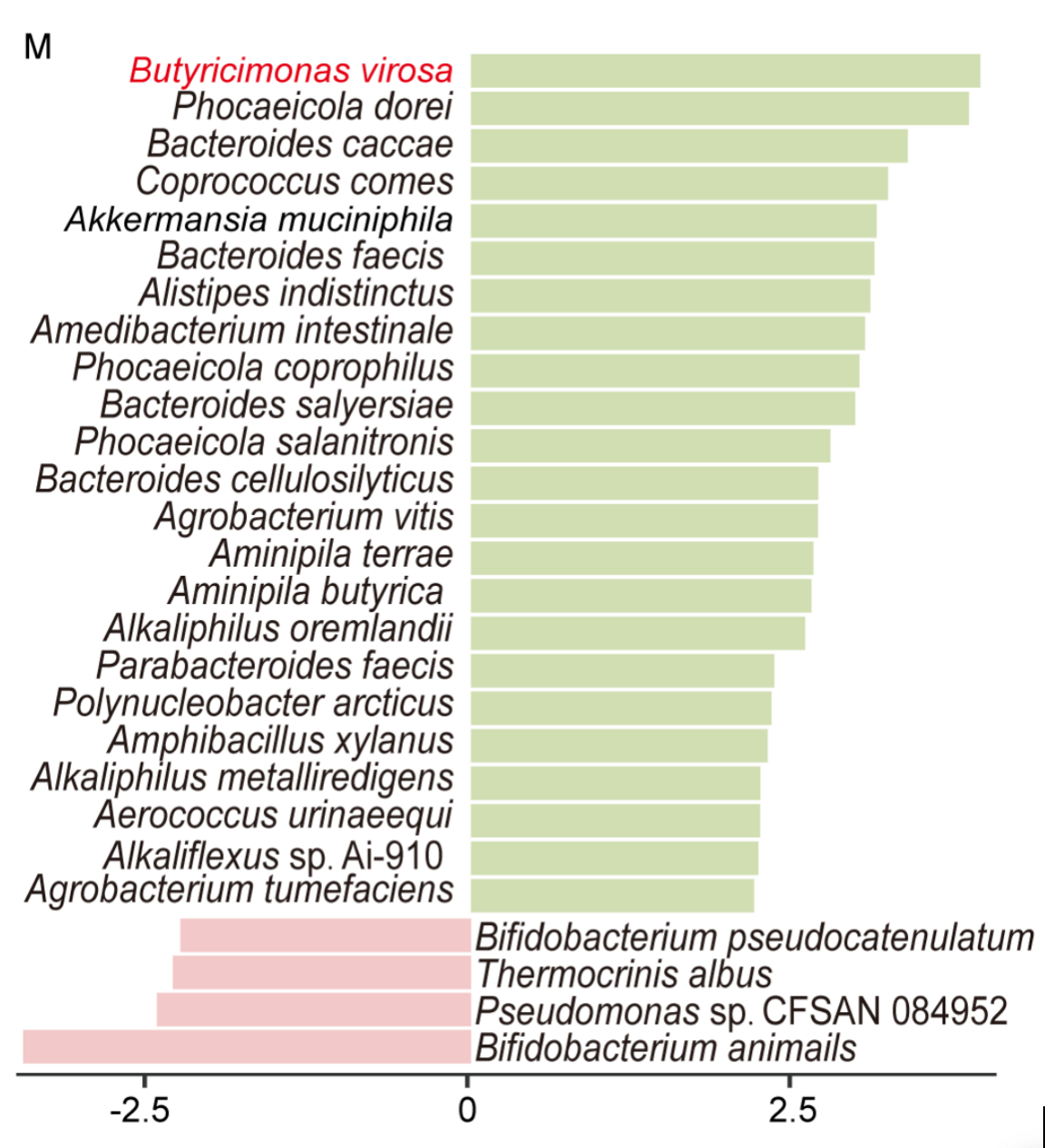 Identifying the Key Microbial Strain. LEfSe analysis reveals that stachyose supplementation selectively enriches gut bacteria, with Butyricimonas virosa showing the most significant increase.
To decode how a gut bacterium communicates with the liver, the investigators integrated metagenomics with metabolomics. They discovered that B. virosa possesses a complete biosynthetic pathway for thiamine (Vitamin B1), synthesizing thiamine monophosphate (TMP) from environmental precursors. These bacterial metabolites cross the intestinal barrier and enter the liver through the portal vein, establishing the gut microbiota as an endogenous source of thiamine intermediates that actively regulate hepatic lipid metabolism.
Once these metabolites reach the liver, gut-derived TMP is converted to thiamine pyrophosphate (TPP), which activates the branched-chain -keto acid dehydrogenase (BCKDHA) complex. In fatty liver disease, BCKDHA activity is typically suppressed; bacteria-derived TPP facilitates BCKDHA dephosphorylation, restoring its activity. This accelerates branched-chain amino acid degradation and upregulates lipid catabolism genes such as Acox1, reversing the fatty liver phenotype.
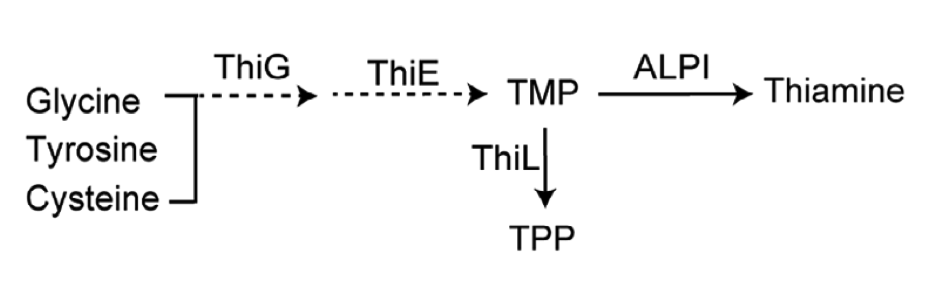
Mapping the Microbial Vitamin Factory. Schematic showing how B. virosa uses amino acid precursors (Glycine, Tyrosine, Cysteine) to synthesize TMP via enzymes (ThiG, ThiE), establishing a gut-to-liver vitamin supply line.
The robustness of this gut–liver axis was validated under nutritional stress and in human cohorts. B. virosa supplementation compensated for hepatic TPP deficiency even in thiamine-deficient mice. Analysis of the Chinese 4D-SZ cohort (3,550 fecal metagenomes) revealed an inverse correlation between B. virosa abundance and obesity. Clinical serum analysis showed thiamine levels inversely correlated with MASLD severity. These associations suggest that thiamine-synthesizing bacteria and genes like ThiG and ThiE may serve as biomarkers for disease progression.

Restoring Metabolic Enzyme Activity. Immunofluorescence of phosphorylated BCKDHA (p-BCKDHA, red) shows reduced phosphorylation after B. virosa treatment, indicating enzyme re-activation and enhanced BCAA breakdown.
This work reveals a gut-liver metabolic axis, where stachyose enrichment of B. virosa drives microbial vitamin B1 synthesis that ultimately supports liver health. The findings suggest that interventions combining specific prebiotics like stachyose with functional strains, or targeted approaches to restore gut thiamine biosynthesis, could offer non-invasive strategies for managing metabolic diseases. Ethics approval for this study is obtained.
The study can be accessed here: https://doi.org/10.1002/advs.202517596