



Investigators at BGI-Research, Southern University of Science and Technology, and collaborating institutions report in Advanced Science that structural variants, stretches of human DNA that are deleted, inserted, copied or flipped, are tied to the microbes living in the gut and to a range of blood traits, and carry genetic information that single-letter studies can miss. In a Chinese cohort, the team charted 138,859 of these variants, then combined genetic association analyses, Mendelian randomization and bacterial culture experiments to investigate potential links among host structural variants, gut microbes and blood metabolic traits.
The study “Structural Variants in the Human Genome Associated With Gut Microbiome and Blood Metabolic Traits With Potential Causal Links” was published in Advanced Science.
The gut microbiome differs strikingly from one person to the next. Diet and lifestyle account for part of that variation, and inherited DNA for another. Yet most genetic studies of the microbiome have read the genome one letter at a time, through single nucleotide polymorphisms, or SNPs. If the genome is an instruction book, SNPs are single-letter spelling differences, whereas structural variants generally involve changes to DNA segments of 50 base pairs or more—including segments that are deleted, inserted, duplicated or rearranged. That leaves an open question: how are these larger edits connected to the microbes we carry and the chemistry of our blood? Few cohorts could answer it, because few hold deep genomes, stool metagenomes and blood measurements from the same people.
The 4D-SZ cohort provided high-depth whole-genome sequencing, blood metabolic measurements and, for a subset of participants, matched stool metagenomic data. The team sequenced the genomes of 2,002 participants to an average depth of about 42x, meaning each position was read roughly 42 times. After quality control, 1,839 genomes yielded 138,859 high-confidence structural variants. Under the study's matching criteria, 44.3 percent had no match in five public resources. Most of these were insertions, a class that existing catalogues capture poorly, so the resource adds detail exactly where references are thinnest.
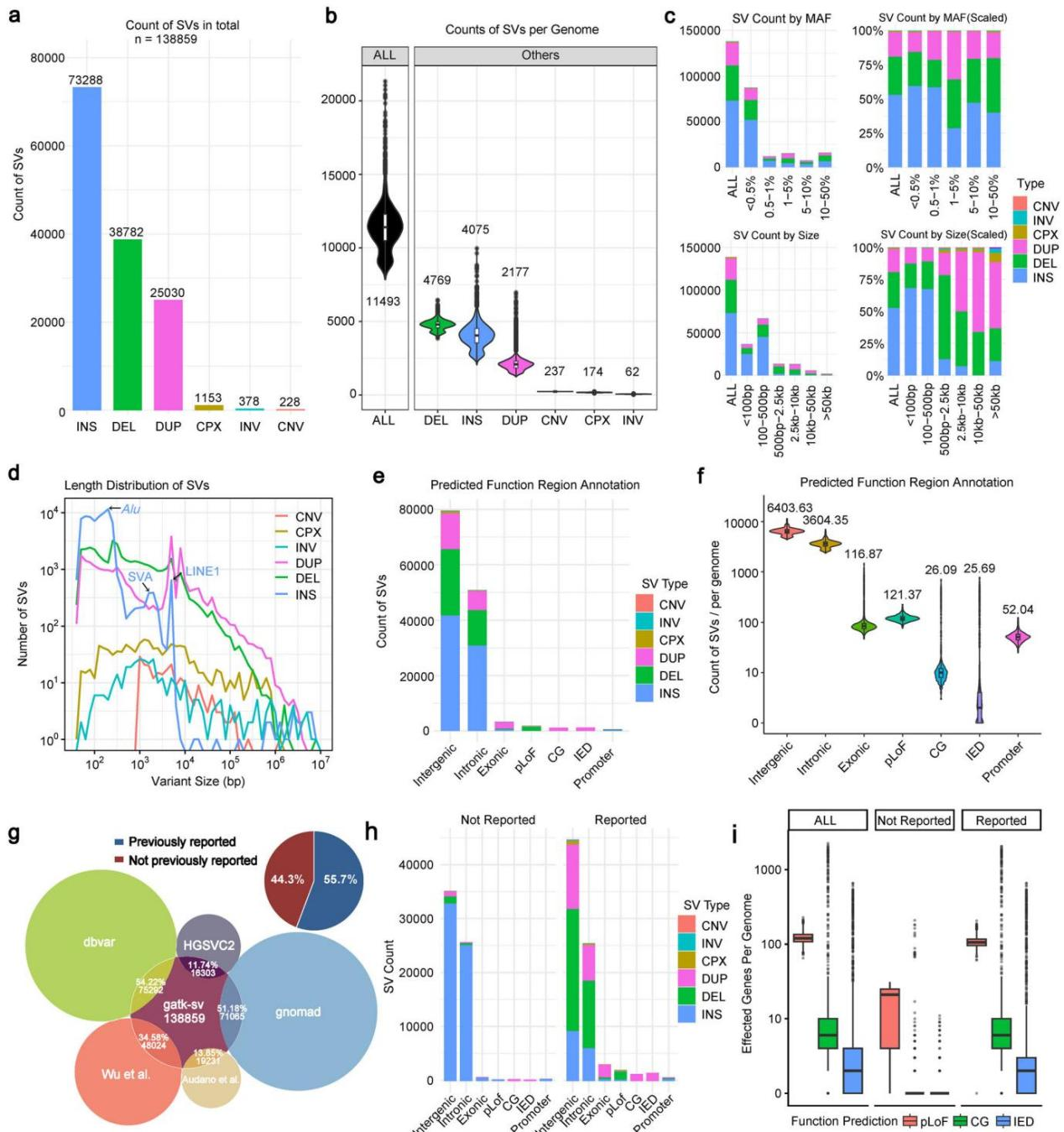
A catalogue of 138,859 structural variants from 1,839 Chinese genomes, many of them unmatched in public resources, gives researchers a population-matched reference for studying gut microbes and blood traits.
Scanning common variants against hundreds of gut microbial features and blood traits, the researchers identified 30 SVs associated with microbial features and 48 significant SV–blood-trait associations involving 33 distinct SVs. The strongest microbial signal was a deletion of approximately 6.5 kilobases within an intron of TENT2, seen only in East Asian populations in the 1000 Genomes reference data. Carriers had a higher relative abundance of Coprobacillus sp. 29_1. In blood, the standout was the approximately 19.3-kilobase Southeast Asian deletion spanning the alpha-globin genes HBA1, HBA2, HBM and HBQ1, a known variant associated with alpha-thalassemia. It was associated with nine traits, most strongly with lower mean corpuscular volume, a measure of red blood cell size. The study also ties it to trace elements: carriers had higher zinc and copper and lower iron, magnesium and manganese.
Some structural variants simply echo what nearby SNPs already capture; the TENT2 deletion was in strong linkage disequilibrium with a neighboring SNP. Others hold their ground. After the team accounted for neighboring SNP signals, six of the 30 microbial associations still reached genome-wide significance, among them variants linked to Roseburia intestinalis, a butyrate producer, and Parabacteroides distasonis. Most blood-trait variants without a tagging SNP also remained significantly associated. Across the microbial community as a whole, the associated variants explained a modest share of person-to-person variation beyond the prioritized SNPs. Studies that read only single letters therefore leave part of the inherited picture unread.
Association alone cannot say what influences what. To explore direction, the researchers used structural variants as genetic anchors in Mendelian randomization, which uses inherited variants to ask whether one trait may influence another. The analysis singled out possible directional links between gut microbes and blood traits, including one connecting Clostridium ramosum with higher serum uric acid and hyperuricemia. The team then put three predicted metabolite-to-microbe relationships to the test in strains from an in-house collection of more than 20,000 human gut isolates. The experiments showed growth responses consistent with the directions of the three selected MR-supported associations: vitamin K1 inhibited the growth of Coprococcus comes, hydroxyproline inhibited Veillonella parvula, and cysteine promoted Fusobacterium mortiferum. Under the same conditions, vitamin K2 did not significantly reduce growth, an indication that different forms of one vitamin may draw different responses from the same bacterium.
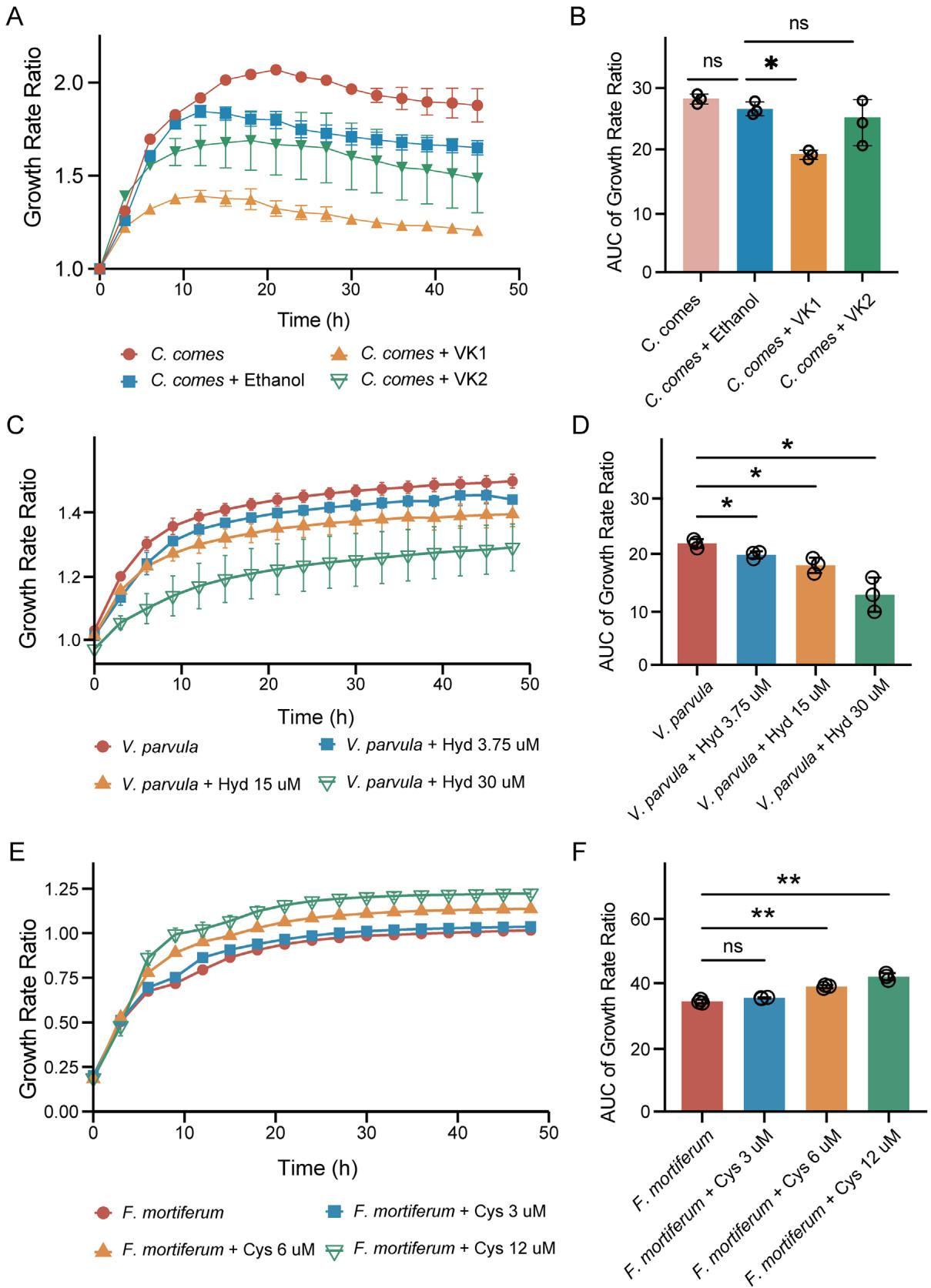
Culture experiments show vitamin K1 and hydroxyproline slowing and cysteine boosting the growth of selected gut bacteria, as the genetic analysis predicted, turning statistical leads into testable biology.
The work establishes structural variation as an underexplored genetic layer in the relationship between people and their microbes. Long-read sequencing, independent cohorts from diverse populations and deeper functional experiments can test which signals hold and how they act. Reading the genome's longer passages alongside its single letters promises a fuller account of why each of us carries a distinct microbial community, and of how that community connects to the chemistry of our blood.
The study received ethical approval, and all participants gave written informed consent.
This research can be accessed at https://advanced.onlinelibrary.wiley.com/doi/10.1002/advs.78201.