



A 48-hour rare disease genomics hackathon jointly organized by the Khub Rare Disease Open-Source Community, BGI Genomics, Zhejiang Lab, Zhijiang Development Foundation, Shanghai Tianrang Intelligent Technology, the Hope for Rare Foundation, Chance Foundation and Datawhale, was held during the 2050 Conference in Hangzhou from April 24 to 26.
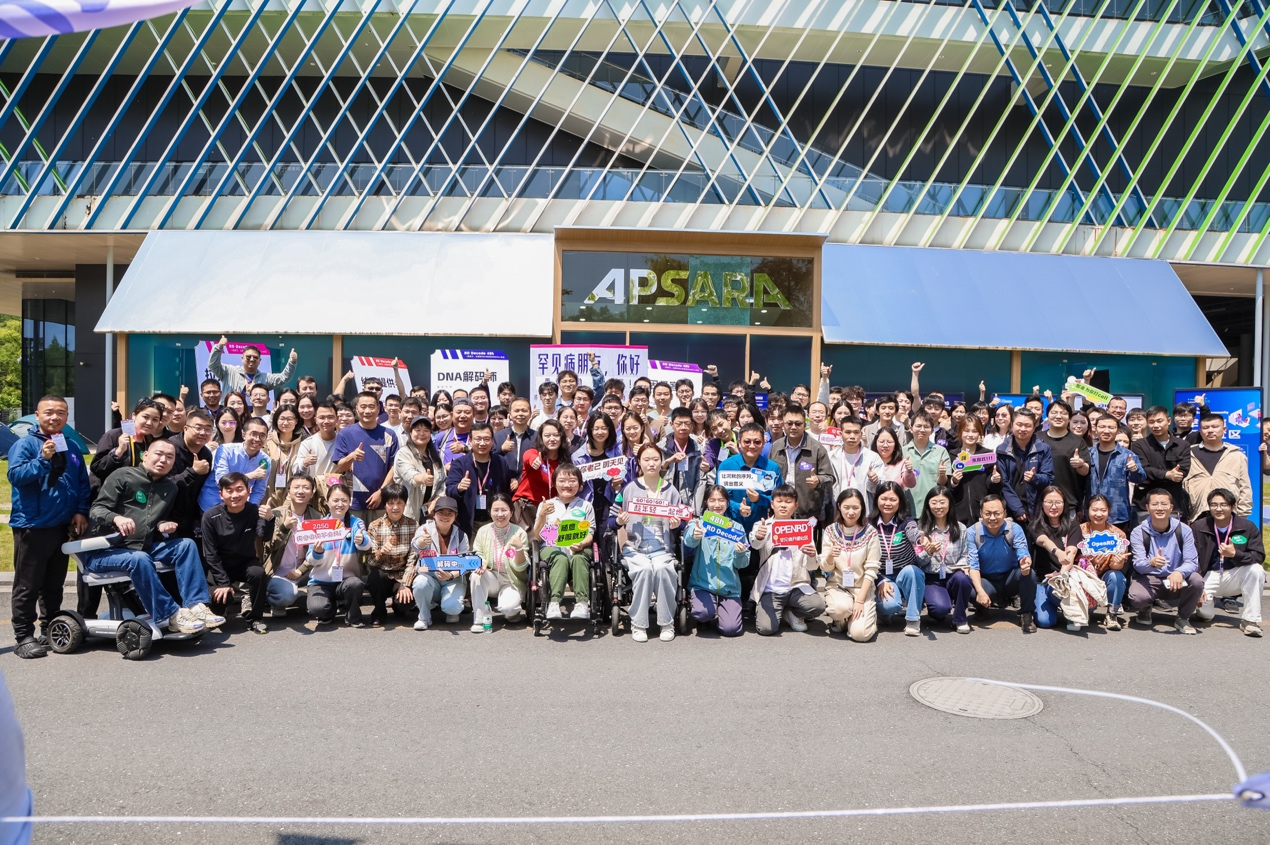 All participants in the 48-Hour AI Rare Disease Hackathon.
The event brought together clinicians, patients, data scientists and developers to work on 16 real-world undiagnosed rare disease cases, using genomic data and artificial intelligence tools to identify potential disease-causing variants, improve interpretation and develop open-source tools for future research and diagnosis.
Addressing a Long Diagnostic Journey
China is home to an estimated 25 million people living with rare diseases. Many patients spend years seeking answers, often moving between hospitals and specialists before receiving a diagnosis, if they receive one at all.
“Can we compress four or five years of suffering into 48 hours, even if only to give one person a better chance at clarity?” said Aili, one of the event’s initiators, founder of the Khub Rare Disease Open-Source Community and initiator of the Rare Disease Mutual Aid Program.
Aili, who was diagnosed with facioscapulohumeral muscular dystrophy after doctors had once predicted he would not live past the age of 18, said the goal was to use AI to challenge the delays and uncertainty that define the rare disease diagnostic process.
AI and Genomics at the Center
BGI Group CEO Dr. Yin Ye served as chief navigator for the event and participated throughout the hackathon. Speaking at the opening session, Dr. Yin said advances in sequencing and AI are opening new possibilities for understanding previously unexplained disease mechanisms.
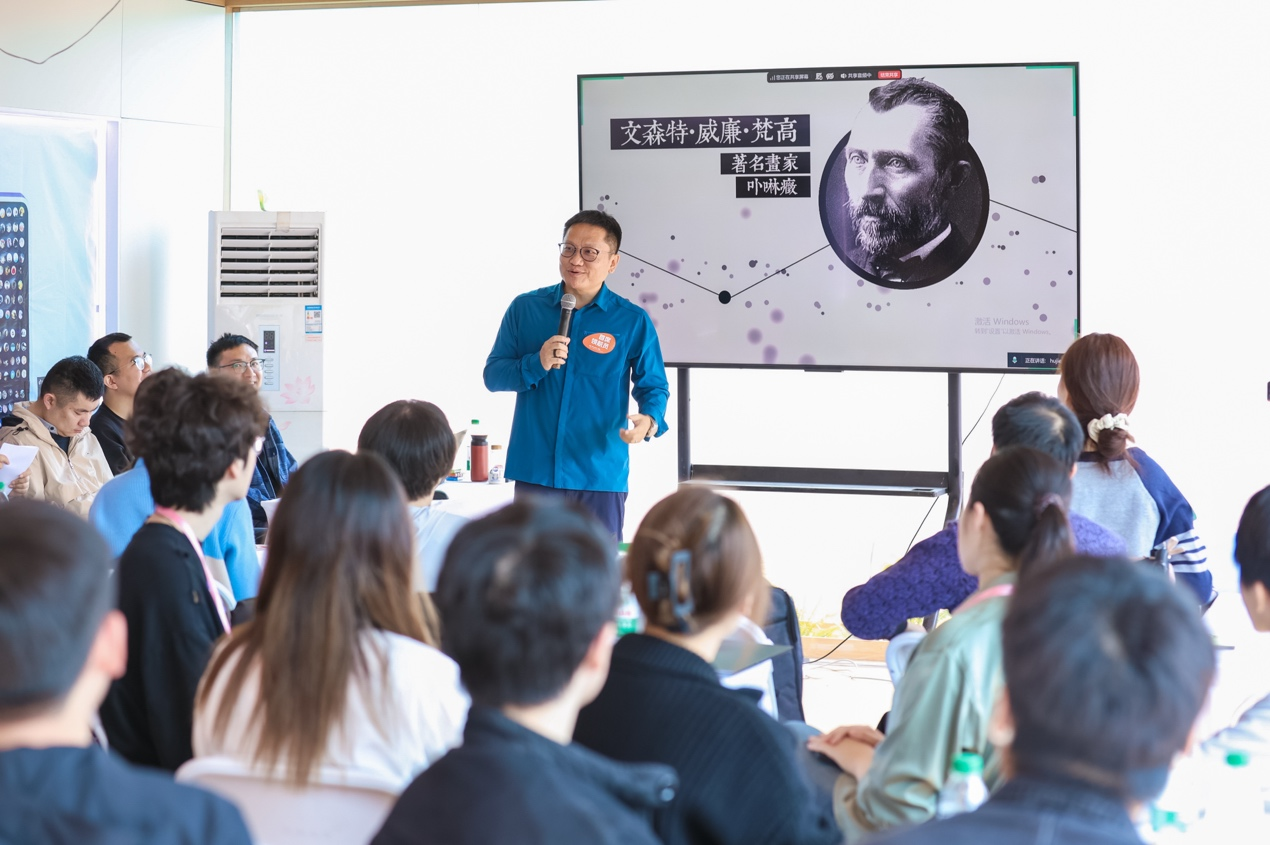 BGI Group CEO Dr. Yin Ye served as chief navigator for the event and delivered the opening science talk.
“No one is genetically perfect,” Dr. Yin said. “Many rare diseases are not simply defects, but characteristics that need to be understood. What patients need is not pity, but recognition, visibility and understanding.”
Dr. Yin referred to Genos, released by BGI-Research and Zhejiang Lab in 2025, and its application in GeneT, BGI Genomics’ multimodal genomic model for clinical interpretation of hereditary disease testing.
“Our long-term goal is to create a new paradigm for life sciences driven by big data and AI through the integration of AI and biotechnology,” Dr. Yin said. “Technology is what seemed impossible in the past, difficult today and ordinary in the future.”
Fourteen Teams, Sixteen Cases
Fourteen teams joined the challenge and worked across four areas: interpretation of variants of uncertain significance, linking fragmented clinical symptoms with genomic data, converting diagnostic logic into patient-friendly reports and developing open-source tools for future rare disease diagnosis.
Final submissions were due at 10 p.m. on April 25. During the closing presentations, teams delivered AI-based analyses of all 16 cases. Organizers said the work produced candidate pathogenic variants and mechanisms in several cases and generated reusable tools for future rare disease research.
Neuron Spark, Seek Rare and Unrare won first, second and third place, respectively.
Winning Team’s Approach
The first-place team, Neuron Spark, analyzed a family case involving multiple pregnancies affected by severe multisystem fetal abnormalities. Rather than assessing each symptom separately, the team reconstructed what it described as a core pathophysiological chain beginning with sharply reduced or absent fetal movement, which may have led to joint contractures and a series of secondary structural abnormalities.
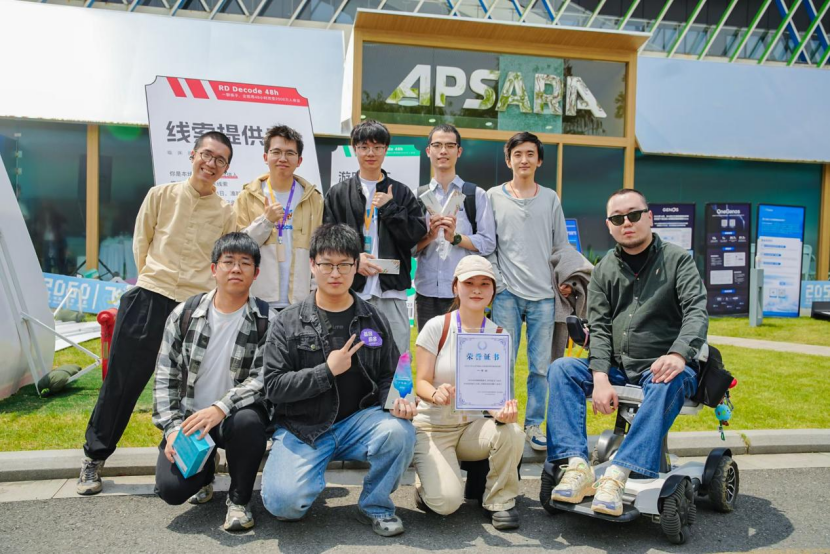
The first-place team, Neuron Spark, with event’s initiator Aili (right).
Based on that hypothesis, the team focused on gene variants associated with neuromuscular development and fetal movement. To evaluate variants previously classified as having uncertain clinical significance, the team used models including Genos, DeepRare and AlphaGenome for base-level functional simulation. The organizers said the team identified high-risk candidate pathogenic variants in each of the three difficult cases assigned to it.
Still, the event was intended to provide leads for follow-up validation and future clinical research, rather than replace clinical diagnosis, the organizers added.
Looking ahead, the organizers said, the combination of large-scale whole-genome data with models such as Genos, scGPT and AI reasoning systems including DeepSeek is making the language of biology more readable than ever before. As artificial intelligence and biotechnology converge, what was once a long and uncertain search for answers may increasingly become a faster and more precise process, offering new hope for patients moving from diagnosis toward better-informed health management.