



On September 18, investigators from the State Key Laboratory of Genome and Multi-omics Technologies at BGI-Research, Shanxi Medical University and partner institutes report in Science Advances that the blood of people with a regular exercise habit carries a distinctive molecular signature, and that much of it is written inside individual immune cells.
The study “Multi-omics Profiling Identifies Molecular and Cellular Signatures of Regular Exercise in Human Peripheral Blood” was published in Science Advances.
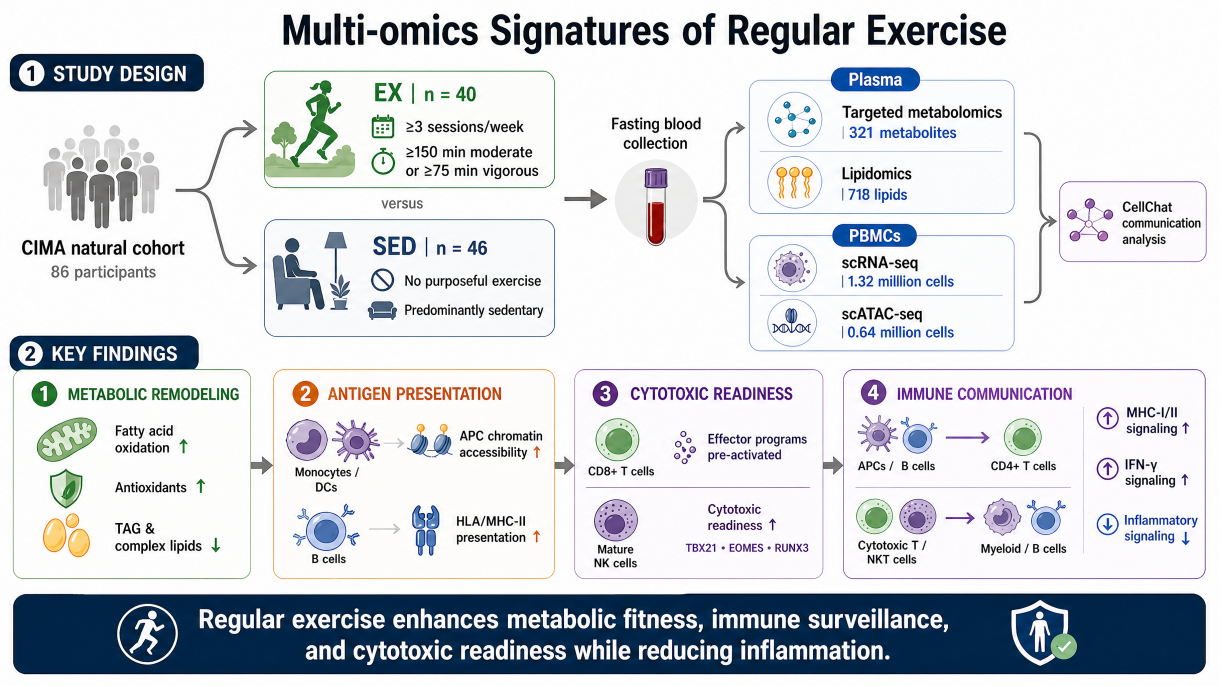
Study design and key findings.
The comparison behind that observation was deliberately sharp. Working from the Chinese Immune Multi-Omics Atlas (CIMA), an open Chinese population immune multi-omics resource, the team set 40 adults who reported at least three planned exercise sessions a week, reaching volumes informed by WHO physical activity guidance, against 46 who reported no purposeful exercise and predominantly sedentary days. All were aged 20 to 40 and non-obese. Fasting morning blood samples supplied plasma metabolites and lipids, single-cell gene expression from 1,317,665 immune cells and, in a separate assay, chromatin accessibility from 644,045 cells. No new samples were collected: the work reanalysed data CIMA had already generated and released.
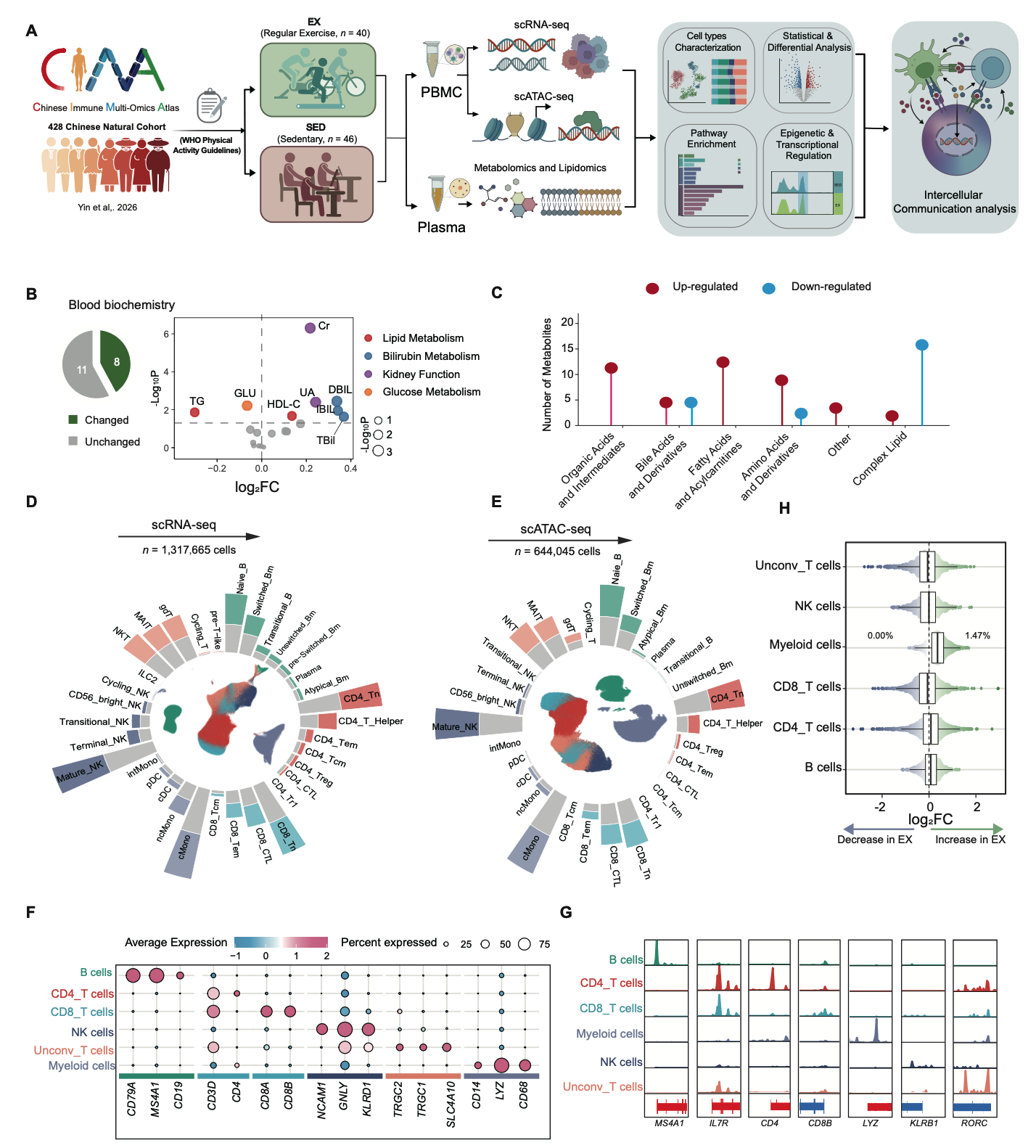
Eighty-six CIMA participants, 40 regular exercisers and 46 sedentary controls, were profiled across plasma metabolites and lipids, single-cell gene expression and single-cell chromatin accessibility, complementary views that locate differences within specific immune subsets.
The plasma chemistry differed as well. Acylcarnitines, 3-hydroxybutyrate and acetic acid, molecules that accompany the use of fat for fuel, were higher in the exercise group, while triacylglycerols and several membrane lipid classes were lower. Routine biochemistry pointed the same way. Eight of 19 clinical indices differed, with lower fasting glucose and triglycerides and higher HDL cholesterol. Alongside this, metabolites involved in antioxidant defense were elevated, including betaine, 3-hydroxyanthranilic acid and 2-hydroxybutyrate, suggesting a stronger buffering capacity against the oxidative by-products of higher energy flux.
Among the immune changes, one process was consistently enhanced: antigen presentation, by which cells display molecular fragments of whatever they have encountered so that T cells can inspect them. Classical monocytes, dendritic cells and B cells all showed stronger expression of antigen presentation genes. In classical monocytes the two layers agreed: HLA-DQA1 and HLA-DQB1 were both more highly expressed and showed greater accessibility at their promoters, with a regulatory module inferred around the transcription factors SPI1, IRF1, KLF4 and STAT1. B cell subsets did not change in proportion, but several naive and memory subsets upregulated MHC molecules (HLA-DQB1, HLA-DQA1, HLA-F) alongside transcription factors that govern B cell activation, pointing to a greater capacity to present antigen. An analysis of myeloid abundance further found intermediate and classical monocytes expanded in the exercise group.
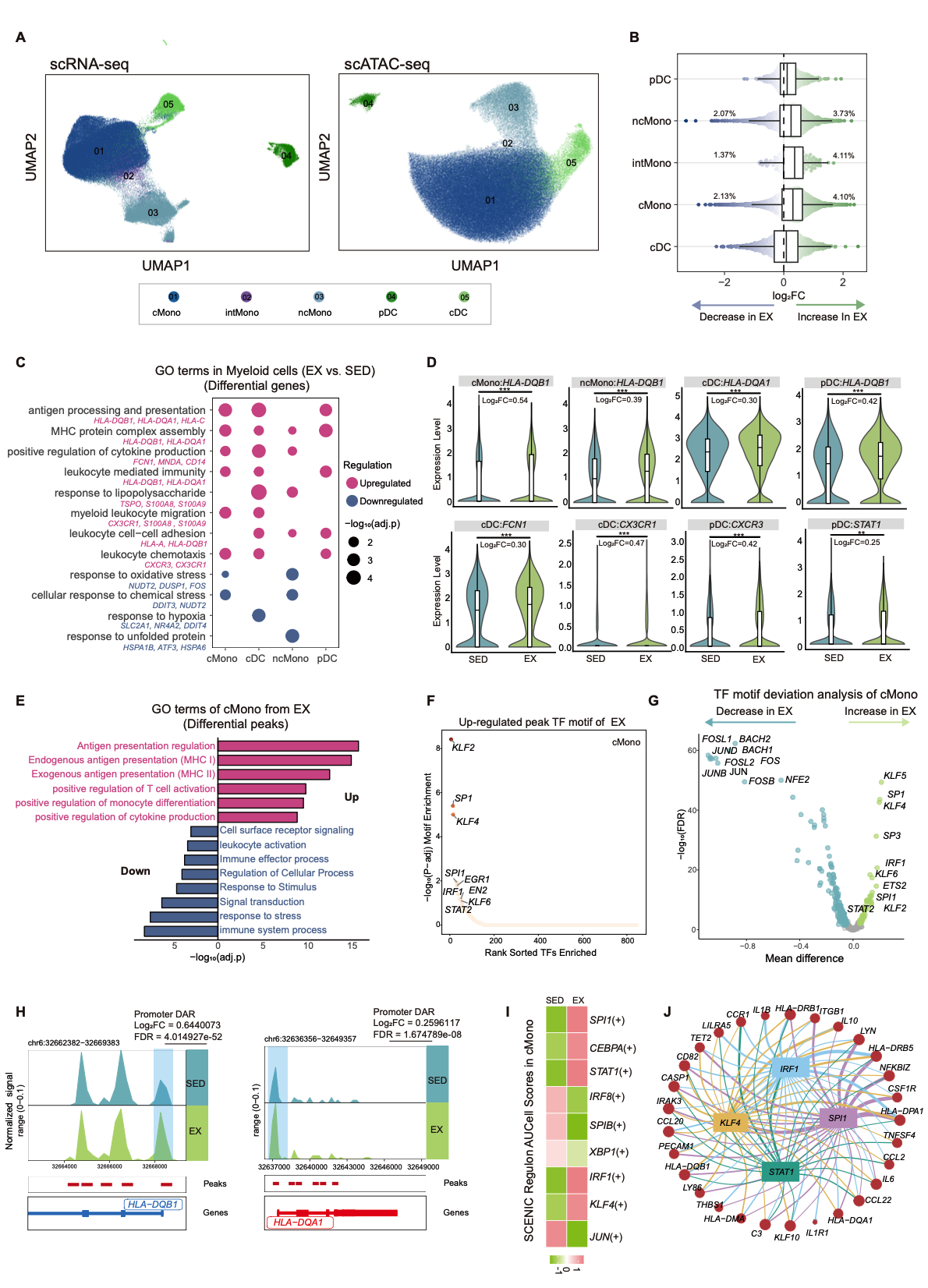
In classical monocytes, HLA class II genes were more highly expressed and their promoter regions more accessible in regular exercisers, placing the antigen presentation difference in gene expression and chromatin together.
A second set of differences involved the cells that kill. In CD8-positive cytotoxic T cells, regulatory regions of the effector gene GZMB were more accessible. In those cells and in mature NK cells, the short DNA sequences recognized by RUNX3, TBX21 and EOMES, three transcription factors that steer cells towards killing, were more accessible as a group. The authors call this epigenetic pre-activation: the packaging around those effector genes sat in a more available configuration in the exercise group. The picture is cell-specific. Selected inflammation-associated features were lower in mature NK cells and higher in switched memory B cells.
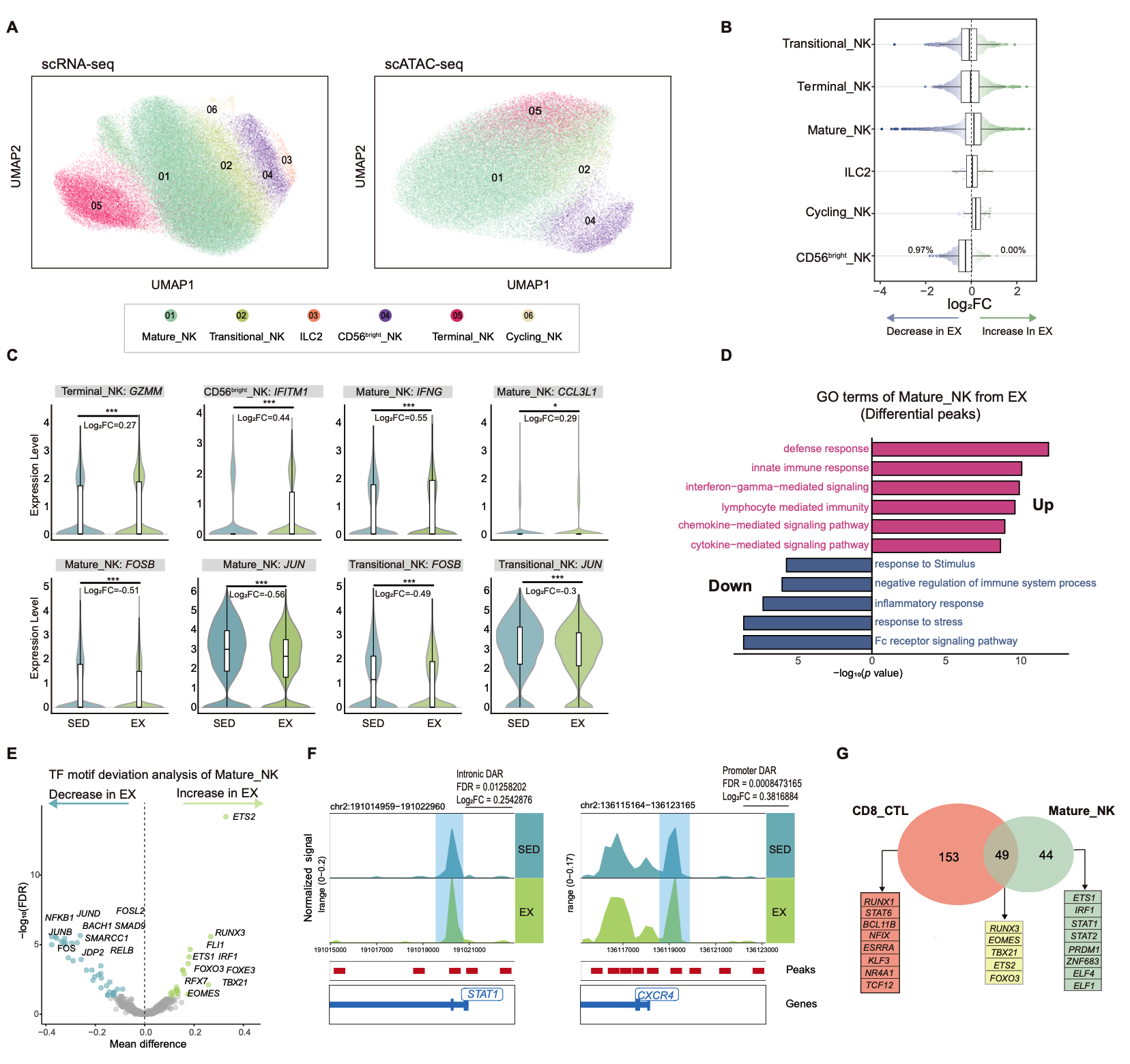
Mature NK cells of regular exercisers showed greater accessibility at effector-associated regions and lower accessibility at several inflammation-associated motifs, with the effector-associated motifs also more accessible in CD8-positive cytotoxic T cells.
From a scientific perspective, this study suggests that the health benefits of long-term regular exercise extend far beyond caloric expenditure, encompassing metabolic reprogramming and multidimensional, coordinated epigenetic alterations in the immune system. These findings provide new population-level evidence for understanding the molecular basis by which exercise improves health, and offer a reference for identifying potential biomarkers and regulatory pathways underlying exercise adaptation.
These findings give researchers a way to explore a question that matters to anyone making time for exercise: how might regular activity support the body's defenses against infection? Following people as they take up exercise, while measuring immune responses and recording infections, could show whether the molecular patterns identified here are linked to better protection in daily life. Extending this work to different ages and health conditions could eventually help shape exercise advice around individual needs. The study received ethical approval, and all participants gave written informed consent.
This research can be accessed at https://doi.org/10.1126/sciadv.aeh0260.